

Essential Oils for Students That Actually Work
It's 11:17 p.m., your laptop is still open, and tomorrow's exam hasn't gotten easier just because your roommate finally fell asleep. You've already made tea, re-read the same page twice, and started wondering whether that tiny bottle of lavender your friend keeps in her backpack is doing anything. That's where essential oils for students tend to enter the picture, not as a miracle fix, but as one of the few tools that can fit into a packed campus day without extra equipment, a class, or a long routine.
If you're a high school student, a college student, a grad student, or a parent buying something simple and practical, the question usually isn't whether scent feels nice. It's whether it can help with focus, stress, or sleep in a way that's realistic for dorm life. For a broader productivity angle, students who use planning tools alongside study aids sometimes pair this kind of routine with resources like AI tools for college students, but the value here is simpler, a calm cue that fits inside a real study schedule.
Table of Contents
- Why Students Are Reaching for a Small Bottle
- How Essential Oils Reach Your Brain
- The Five Oils Every Student Should Know
- What the Research Says and Where It Stops Short
- Dorm-Friendly Ways to Use Essential Oils
- The Shared-Room Safety Question Most Guides Skip
- Building a Realistic Student Aromatherapy Routine
- Safe Use, Dilution, and Answers to Common Questions
Why Students Are Reaching for a Small Bottle
The appeal is obvious the first time you look at it. A small bottle takes almost no space, costs far less than most wellness gadgets, and doesn't need a charger, an app, or a 20-minute break you don't have. That matters when the problem is not “How do I become a wellness person?” but “How do I get through tonight's reading without spiraling?”
Essential oils are concentrated plant extracts used in aromatherapy, usually through smell rather than food or medicine-style use. For students, the usual goals are simple, focus, stress relief, and sleep support. Those are the same pressure points that show up during midterms, late lab reports, and the week when every class seems to assign a quiz at once.
Practical rule: essential oils can support a study routine, but they don't replace sleep, hydration, movement, or active recall.
That's the honest frame. The oils don't do the heavy lifting for learning, but they can become a cue your brain starts to associate with a specific task, like opening a practice test or shutting down for the night. If you like structure, that cue can be as useful as a music playlist or a favorite pen. If you don't like complicated routines, that's even more reason to keep it minimal.
The best student use case is not a spa day. It's a repeatable little habit that can happen before a study block, before bed, or right before a stressful exam. The point is not to make life “more wellness-y,” it's to make the next five minutes easier to start.
How Essential Oils Reach Your Brain
A quick map from scent to feeling
You open a bottle before a study block, and the effect can feel immediate. That happens because scent moves through a different path than sight or sound. When aroma molecules enter the nose, they activate receptors that send signals into brain systems tied to emotion and memory, which is why a smell can bring back a place, a person, or a semester more quickly than a photo sometimes can.
For students, the format matters. Inhalation aromatherapy is the most practical option because it fits a dorm room, a desk, or a bathroom routine. Topical use is different, since it involves skin contact and usually needs dilution. Students also see labels like “therapeutic grade,” but that phrase does not tell you whether a product is safe, effective, or a good fit for shared spaces. It mostly signals branding, not a proven student outcome.

The student-relevant effects usually fall into four buckets, and it helps to keep them separate. Focus and concentration means staying on task. Stress and anxiety relief means lowering the mental noise before a quiz or presentation. Energy and alertness means getting through morning sluggishness. Sleep and wind-down means helping the evening feel like evening.
A useful way to judge claims on social media is to ask one question, “Is this being inhaled, or rubbed on skin?” If the answer is inhaled, you are in the right category for most student routines. If the answer is topical, dilution and sensitivity matter much more. That one distinction keeps you from buying a product for the wrong use case.
For a closer look at the basic aromatherapy pathway, this explanation of how essential oils work and why people use them breaks down the idea in plain language. It matches the same core point here, scent enters, the brain notices, and your state shifts a little.
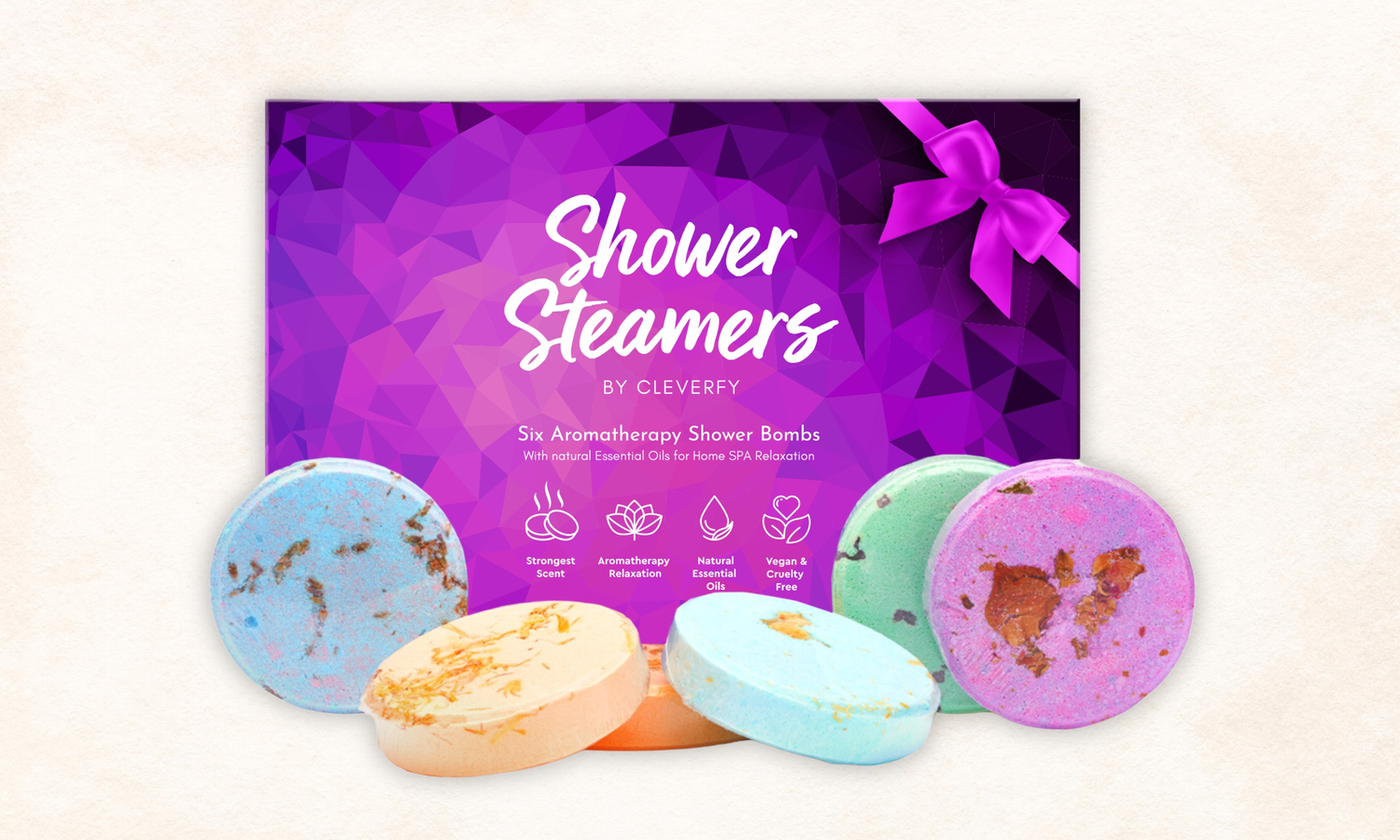
A shower-based format can fit that same logic. One example is the Cleverfy Purple Gift Set of 6 Shower Steamers, which is a six-tablet shower steamer set with essential oils that is meant to release scent in the shower rather than through skin application. For students, that kind of format is useful because it keeps the routine brief and does not require a diffuser or a bottle to stay open on a desk.
The internal mechanics are simple enough to remember. Scent enters, the brain notices, and your state shifts a little. That does not mean every oil will help every student, but it does mean you can judge new claims with a bit more skepticism.
The Five Oils Every Student Should Know
Peppermint, lavender, rosemary, lemon, and eucalyptus
Peppermint comes up first because students keep reaching for it when they want a sharper, cooler scent. It often gets used as a morning or pre-study aroma, especially when the problem is sluggishness more than stress. The limitation is simple, strong mint can feel too intense in a tiny room, so a little goes farther than you might expect.
Lavender is the one many students already recognize as the calm option. It's commonly used before bed or before a stressful academic event, and it also appears often in student-friendly inhalation routines. The catch is that “calming” doesn't mean “sedating” for everyone, and some people just find it too floral for study time.
Rosemary sits in the focus-and-memory conversation because students keep asking about it when they want something more studious-sounding than peppermint. It smells herbaceous and clean, which makes it easier to use during a desk session than sweeter scents. The limitation is that it's better treated as a cue for concentration than as a promise of better recall.
Lemon and other citrus oils work well when you want a fresh start feeling. They're often better for a morning launch than for a late-night wind-down, because the scent reads as bright and clean. The caution is that citrus can still be strong, especially if you overdo it in a closed room.
Eucalyptus rounds out the list because students also look for something that feels open and clear during cold season. The scent is sharp and cool, which some people love and some people can't tolerate for long. It's not a universal study oil, but it does have a place when congestion is part of the problem.
| Oil | Scent Profile | Best Student Use | Best Time | Main Caution |
|---|---|---|---|---|
| Peppermint | Cool, minty | Alertness, quick reset | Morning or before study | Can feel overpowering |
| Lavender | Soft, floral | Calm, wind-down | Evening or exam prep | Not everyone likes floral scents |
| Rosemary | Herbal, clean | Focus cue | Study block | Not a memory guarantee |
| Lemon | Bright, citrus | Fresh start | Morning | Easy to overuse in small spaces |
| Eucalyptus | Sharp, crisp | Open, clear feeling | Cold season or short sessions | Can be intense for sensitive noses |
A practical comparison like this is useful because not every student wants the same outcome. If you need wake-up energy, peppermint and citrus make more sense. If you need to stop buzzing at night, lavender usually fits better.
For another consumer-facing overview of mood-based scent categories, the best essential oil scents for every mood page groups options in a way that matches how a lot of students already think about them, by feeling rather than by chemistry.
What the Research Says and Where It Stops Short
Dorm study routines are one thing, and the evidence for aromatherapy is another. The strongest student-specific study in the brief is a 2022 meta-analysis on college students' test anxiety. It pooled 7 randomized controlled trials with 425 participants and found a significant reduction in anxiety, with a standardized mean difference of −0.67 and p < 0.01. In plain English, aromatherapy was linked with a meaningful drop in test anxiety compared with control conditions, but the effect was not identical across every student or every setup. The review also reported high heterogeneity, I² = 72%, and no difference versus placebo controls in one subgroup. Frontiers in Psychology, 2022
What mattered most in that review
The same analysis found stronger results for compound essential oils, with an SMD of −0.91, and for using cloths or pads as the aroma device, with an SMD of −1.03. That matters for student life because a cloth, pad, or inhalation-style method is easier to use than a setup that needs more equipment or attention. The delivery method seems to matter a lot, not just the scent itself.
A pilot study of college-age students adds a useful reality check. It found 62% had used essential oils themselves, 85% of users used them by inhalation, peppermint was used by 77%, lavender by 69%, and 77% of users said they used essential oils for anxiety and stress relief. The same study found 62% considered them safe, 52% viewed them as effective complements to modern medicine, and 71% did not see them as an effective alternative to modern medicine. University of Northern Iowa repository
Students already treat essential oils like a complementary tool, not a replacement for care.
That is the right frame. The evidence points to possible help with anxiety, especially around exams, but it does not give strong proof that any specific oil reliably improves memory or exam scores. It also does not support using a scent instead of medication, counseling, sleep, or actual studying.
A 2024 review on clinical aromatherapy Clinical aromatherapy review, 2024 supports the broader research field while still leaving student learning claims unproven. Washington State health guidance also says evidence is insufficient for health claims, so student guides should stop promising academic gains they cannot prove.
The practical conclusion is narrower and more useful. Inhalation-based aromatherapy, especially student-friendly compound blends before stressful academic events, is the best-supported use case here. Everything beyond that should be treated as a personal experiment, not a guaranteed effect.
Dorm-Friendly Ways to Use Essential Oils
Dorm life changes the rules. A student usually needs something fast, quiet, and low-mess, not a countertop routine that takes over a shared sink. That is why the format matters as much as the oil.
Four formats that fit student schedules
Shower steamers are the easiest fit for many students because they use the shower you already take, and they do not need a flame or an outlet. You place the tablet on the shower floor where steam can activate the scent, then let it do the work while you get ready. A shower-first format is especially useful if your desk is crowded or your room is too small for a diffuser.
Personal inhalers are the most portable option. A few drops sit on a cotton wick inside a small tube, and you can bring them to the library, a common room, or a study carrel without affecting the whole floor. They are the best choice when you want the aroma for yourself without turning the room into a group experience.
Diffusers work best when you have your own room and decent ventilation. Use enough water for the device's tank, keep runtime brief, and do not treat more scent as more benefit. In small rooms, the goal is a light background scent, not a fog you cannot ignore.
Diluted roller blends are the skin-contact option. They can go on pulse points if the oil is properly diluted, which makes them handy for a quick pre-test ritual or a calm-down moment after class. They are not the right answer for everyone, especially if your skin is sensitive or you prefer not to wear scent.
Scent intensity rule: start with one or two drops, not five.
That advice sounds simple, but it matters. Many students overshoot because they expect a stronger smell to mean a stronger effect, when in practice it often means headaches or a roommate complaint. If you share a tiny room, low output is usually the smarter move.
For a dorm setup checklist, the 15 dorm room essentials every college student will use article is useful because it frames aromatherapy as one piece of a compact room setup rather than a standalone hobby. That is the right mindset for this topic.
The Shared-Room Safety Question Most Guides Skip
This is the part most student aromatherapy content leaves out. Your diffuser doesn't stop at your desk, and scent can drift to a roommate with asthma, a classmate with migraines, or someone who just hates strong smells. In a shared dorm room, the question is not only whether you like the scent, it's whether other people can breathe comfortably around it.
The Washington State Department of Health guidance says systematic reviews haven't found enough evidence that essential oils treat health issues, and it warns that essential oils can aggravate asthma, cause respiratory irritation, headaches, and eye, nose, and throat irritation, and emit VOCs such as limonene and pinene that can worsen air quality. Washington State Department of Health guidance
A few room-share rules that actually help
- Ask first: if you share a room, check whether your roommate has asthma, allergies, migraines, or scent sensitivity.
- Keep it brief: don't run a diffuser overnight in a small, poorly ventilated room.
- Use lower-output formats: personal inhalers are easier on shared spaces than open-room diffusion.
- Skip the common bathroom: that space is usually too enclosed and too public for scent to hang harmlessly.
- Choose lighter scents: a mild citrus or lavender note is easier for others to tolerate than a heavy cloud.
Personal-use formats create less room impact because they stay close to your face or your shower routine. Area-diffusion formats affect everyone nearby, which is fine only if everyone agrees and the space can handle it. That distinction matters more than whether the bottle says relaxing, energizing, or study blend.
A considerate student routine doesn't need to be scent-free, it just needs to be proportional. If your roommate can smell your oil from across the room, it's probably too much. If you can use it privately and briefly without changing the whole air in the room, you're in a much better place.

Building a Realistic Student Aromatherapy Routine
The routine that works is the one you keep using during midterms, lab weeks, and the days when your planner is already too full. A Sunday-perfect plan can look tidy on paper and fall apart by Wednesday. Consistency matters more than intensity because you are building a cue for a real day, not staging a spa session.
Four touchpoints that fit a week on campus
Morning launch. A citrus or peppermint inhaler, or a quick shower steamer, can mark the start of a focused block. Pair it with something concrete, such as opening your planner or starting a reading session, so the scent becomes part of a habit rather than a random extra step. The time cost stays small, usually a minute or two.
Midday reset. A 30-second lavender or rosemary inhaler pull can help you shift out of that glazed-over midday slump. Use it before re-reading notes or before sitting down for a practice quiz, not after you have already lost 30 minutes scrolling. The goal is a reset, not a reward.
Exam-week calm. Lavender inhalation 10 to 15 minutes before a test makes the most sense when anxiety is the bigger problem than energy. That timing lines up with the anxiety-focused evidence discussed earlier, and it is easy to repeat across multiple exams. It should feel like a cue to breathe, not a performance ritual.
Wind-down. Low-output lavender diffusion about 30 minutes before bed can work as a final signal that the day is done, then the device should be switched off at lights-out. Keep the scent soft enough that it fades into the room instead of taking it over. If you are in a shared room, a personal inhaler is often the better bedtime choice.
A weekly schedule template can help students place these touchpoints where they will happen, especially during exam weeks or busy lab periods. A tool like student schedule templates 2026 is useful if you want the aromatherapy routine to sit inside a real calendar instead of floating as a good intention.
Simple goal: keep each aromatherapy moment under five minutes.
That is enough for most students. You do not need a long session, you need a repeatable cue that fits between class, work, and studying. When the routine stays short, it is easier to keep using it.
Safe Use, Dilution, and Answers to Common Questions
For skin use, adults usually stay in the 1 to 2 percent dilution range, which works out to roughly 5 to 10 drops of essential oil per tablespoon of carrier oil. That applies to topical blends, not inhalation. Inhalation does not need dilution in the same way because it isn't sitting on skin, though you still want to use low intensity and common sense.
Age matters too. Essential oils are not recommended around infants, and younger teens need extra caution. Older teens and adults can usually follow standard dilution guidance for topical use, but “standard” still means testing carefully and not using more than necessary.
Patch-testing helps avoid unpleasant surprises. Put a small amount of diluted blend on a limited area of skin, wait, and check for redness, itching, or irritation before using it more widely. If you're using the oil neat, meaning undiluted on skin, be more cautious, because that raises the chance of irritation.
A short FAQ students actually ask
Are essential oils safe around pets in a dorm room? Not always. Shared spaces with animals need extra caution, and the safest move is to avoid diffusing around them unless you've checked carefully with a veterinarian or campus housing rules.
Do they interact with medications? They can, depending on the oil, the dose, and the medication. That matters for students taking ADHD stimulants, antidepressants, or other prescriptions, so it's smart to ask a pharmacist or clinician if you're unsure.
How should I store them in a warm dorm? Keep bottles tightly closed, out of direct sun, and away from heat. Warmth can make them degrade faster and can make spills more likely.
When should I not use aromatherapy instead of medical care? If you have severe anxiety, asthma symptoms, persistent headaches, sleep problems, or anything that needs evaluation, aromatherapy shouldn't replace medical care. It can sit alongside care, but it shouldn't stand in for it.
The safest student habit is simple, use low doses, choose the right format, and respect the room you're in. That keeps aromatherapy useful without turning it into a problem.
If you want a dorm-friendly way to bring scent into your day without adding clutter, Cleverfy Beauty focuses on shower steamer tablets and practical aromatherapy formats that fit busy routines. Visit Cleverfy Beauty to see how a shower-based essential-oil routine can fit into student life without taking over your room or your schedule.

