

Self-Care Rituals That Actually Stick in Real Life
You're probably reading this between tasks, with a phone full of notifications, a sink still wet from this morning, and exactly three minutes you can protect for yourself if you're lucky. That's the self-care problem most guides ignore. They sell a calm, candlelit weekend version of your life, then act surprised when it doesn't happen on a Tuesday.
The fix is simpler and more useful. Self-care rituals only stick when they fit the day you have, especially if you live in a shower-first household and your schedule is already crowded. The Global Self-Care Federation's 2022 report makes the point in hard terms, not vibes, by showing self-care practices across 155 countries generate $119.0 billion in monetary savings, 10.9 billion hours of individual time savings, and 1.8 billion hours of physician time savings worldwide, along with 40.8 billion productive days, $1.9 trillion in welfare gains, and 22 million QALYs Global Self-Care Federation report. That's not a lifestyle trend, that's a measurable behavior with real-world value.
Table of Contents
- What a Self-Care Ritual Actually Looks Like When Life Is Busy
- Building Daily Shower Rituals for Morning, Midday, and Evening
- Matching Scent Profiles to the Mood You Want
- Designing Gift-Ready Ritual Kits for Every Occasion
- Troubleshooting When Your Routine Falls Apart
- Your 14-Day Self-Care Ritual Starter Plan
What a Self-Care Ritual Actually Looks Like When Life Is Busy
You hit snooze twice. Coffee's in hand. You've got eight minutes before the day starts, and the only slot that's left is a three-minute shower. That is exactly where a ritual earns its keep, because a ritual doesn't need a perfect schedule, it needs a trigger, a sensory anchor, and a sequence your body starts to recognize.
Stop treating rituals like events
A real ritual is built around something that already happens. The trigger might be shower steam, a desk break, or the bathroom lights going low at night. The anchor might be scent, texture, or temperature, then you repeat the same short sequence until your brain stops arguing with it.
Practical rule: if a routine takes planning energy before you even start, it'll probably die by Thursday.
That's why spa weekends and elaborate wellness projects flop so often. They sound restorative, then they ask for a calendar, childcare, a longer commute, and the kind of motivation nobody has after a hard week. I'd rather see someone do a four-minute morning shower ritual they repeat every day than book one luxurious reset they never take.
A simple morning version can look like this, steamer on the shower floor, water on, one minute to breathe, then a quick rinse and out the door. An evening version can be even smaller, lights dimmed, phone outside the room, and a lavender-scented shower before bed. If you want a deeper philosophy behind that idea, the writing at Momotaro Apotheca mindful mornings frames the same point well, rituals work when they make ordinary moments feel deliberate instead of rushed.
For busy households, showers beat apps. Water forces a pause, and steam carries scent fast, so the ritual is harder to skip than a reminder on your phone. If you're balancing work, family, and the constant squeeze of everyday life, the practical approach is to make the shower do the heavy lifting, not your willpower, and that's why a shower-first setup fits so well with finding balance while juggling work, family, and self-care.
Building Daily Shower Rituals for Morning, Midday, and Evening
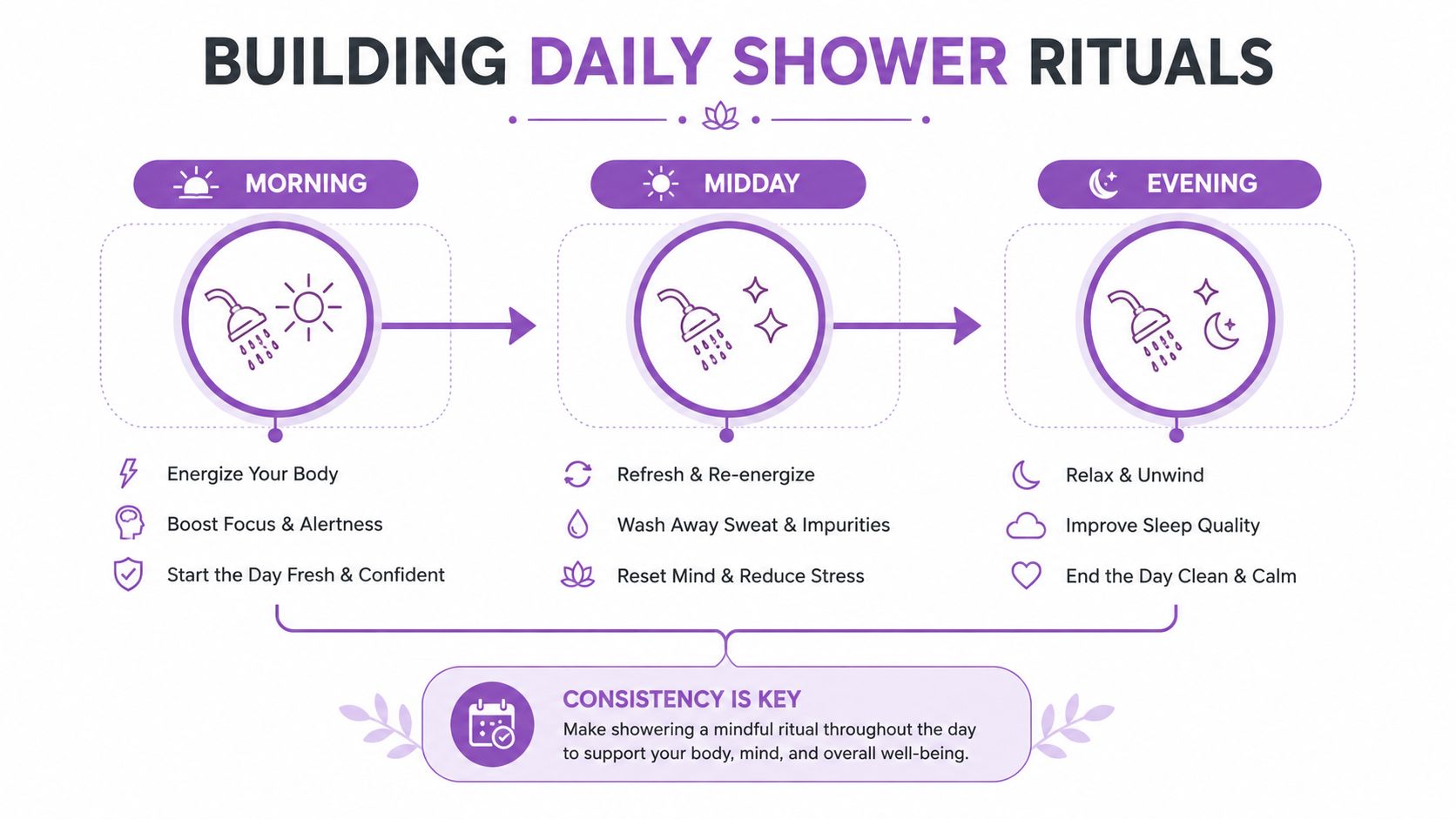
Morning, midday, and evening should not feel like the same ritual in different clothes. They serve different jobs, so I build them differently. If you try to make one scent do everything, you'll either get bored or stop noticing it.
Morning is for wakefulness, not pampering
Use a eucalyptus or peppermint shower steamer, and place it on the floor away from the direct spray so it lasts longer. The point is to let the steam work the scent slowly, not blast it into a puddle in thirty seconds. Finish with 60 seconds of cool water, then get out. That cold end is the hard reset, and it feels especially useful when congestion or grogginess is dragging your whole morning down.
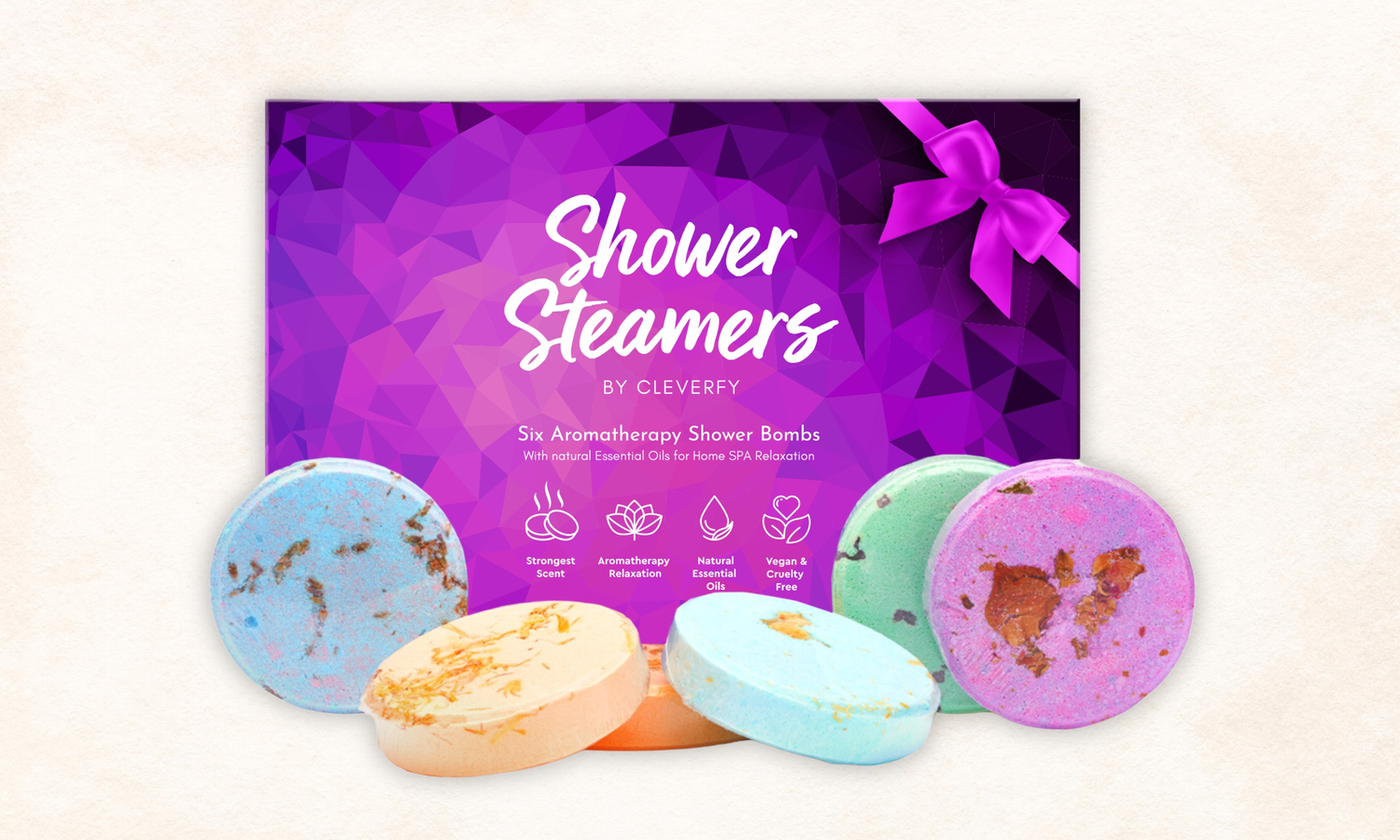
If you want a larger stock-up option for that kind of morning use, the Cleverfy Eucalyptus and Menthol Megapack of 18 Shower Steamers is a straightforward shower-floor format with Menthol & Eucalyptus, and the product snapshot says it's easy to use, vegan & cruelty-free, and made with pure essential oils. Keep the tablet out of the direct stream so you don't waste it.
Midday is a reset, not a replacement shower
Midday rituals need to be portable. I like a portable aromatherapy inhaler, a two-minute face wash, and a scent shift toward rosemary or citrus. That combo marks the transition back into work mode without pretending you have time for a full break.
If you want a body-side version of that reset, beautysecrets.agency dry brush guide pairs well with the idea of a fast circulation boost before you shower. Keep it short, though. Midday rituals should make you feel more usable, not more elaborate.
Evening should make sleep easier
For nighttime, use lavender or cedarwood. Put the steamer on a silicone pad near the steam flow, dim the bathroom lights, and keep your phone outside the room. That last rule matters more than people want to admit. If you're still reading messages in the shower, you're not winding down.
If you only have time for one ritual, protect the evening one first. It changes how the rest of the night feels.
If you need a starting point for using steamers well, the basics in how to use shower steamers are worth checking before you overcomplicate placement or timing.
Matching Scent Profiles to the Mood You Want
Some people shop by scent name and hope the right mood appears later. That's backwards. Choose the feeling first, then pick the scent family that supports it.
Use scent with intent, not decoration
For focus, I reach for rosemary, basil, lemon, or peppermint. These work well in a morning shower or a desk inhaler because they feel clean, sharp, and easier to pair with a busy day than something soft and floral. For calm, lavender, chamomile, and bergamot belong in the evening, especially if your brain keeps revving after the lights go down.
For congestion relief, I stick with eucalyptus, tea tree, and peppermint, which fit best when seasonal stuffiness hits and the shower can do double duty as steam therapy. For sleep, cedarwood, sandalwood, and vetiver feel steadier and more grounded, especially when you're already reducing blue light and trying not to turn bedtime into another work session.
Here's the part most product pages don't explain well. Shower steamers, skin-applied scents, and inhalers don't behave the same way. Steamers throw scent into the air fast, inhalers are more direct and portable, and roll-ons stay closer to the skin, so they're better when you want a personal scent bubble instead of a room-wide effect. If you want a deeper scent map, the best essential oil scents for every mood is the right companion piece.
| Scent Family | Goal | Best Delivery | Rotation Note |
|---|---|---|---|
| Rosemary, basil, lemon, peppermint | Focus | Morning steamer or desk inhaler | Use on workdays, not every single day |
| Lavender, chamomile, bergamot | Calm | Evening steamer | Keep for wind-down windows |
| Eucalyptus, tea tree, peppermint | Congestion relief | Morning shower steam | Best when stuffiness is the issue |
| Cedarwood, sandalwood, vetiver | Sleep | Evening shower steam | Pair with dim lights and no-phone time |
Scent fatigue is real. If you use one family every day, it starts fading into the background. Rotate weekly instead, and if headaches show up, back off the concentration rather than forcing through it. My simplest blending rule is this, citrus top notes with woody bases if you want brightness without making the scent feel slippery or chaotic.
Designing Gift-Ready Ritual Kits for Every Occasion
The easiest gift to give is the one someone can use without a learning curve. That's why ritual kits work, they feel thoughtful, but they don't ask the recipient to become a wellness expert before opening the box.
Build around the occasion, not the price tag
For a holiday reset set, I'd package eucalyptus and peppermint steamers in a magnetic closure box with kraft filler and a silicone soap pad. For a hostess thank you bag, I'd keep it softer, with lavender and chamomile pairings plus a handwritten note that says, “For the next quiet shower you get to take alone.” For a care-package rest day box, I'd lean into citrus and rosemary so the gift feels energizing instead of sleepy.
You can keep it simple at different budget levels. A $15 kit should be one scent direction and one accessory. A $30 kit can hold a duo and a card. A $60 kit can include multiple scent families, better packaging, and a more polished presentation without becoming cluttered.
The most useful packaging details are boring in the best way. Use magnetic closure boxes so the contents don't spill, kraft filler so the discs don't rattle, and a silicone pad so the recipient knows exactly how to use the steamer. A handwritten card matters more than a fancy ribbon because it tells them what the kit is for.
If you want to see how giftable care packages can be when the curation is tight, curated Japanese snack gifts is a good reminder that presentation and restraint beat overstuffing. The same rule applies here.
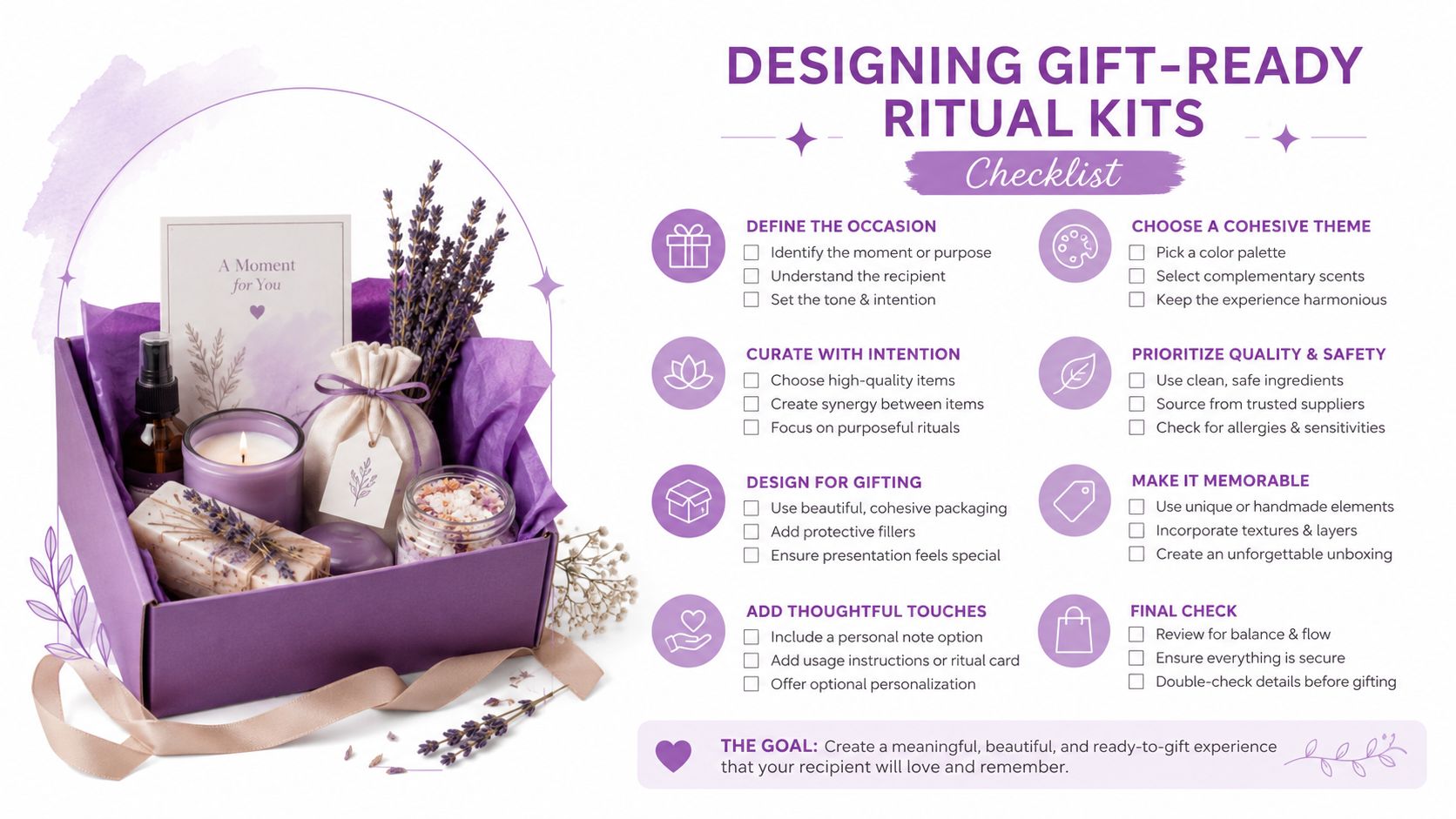
Common gifting mistakes are easy to avoid. Don't ship fragile discs loose in a box. Don't mix clashing scents just because they're both nice alone. And don't build an overambitious kit with six steps when the recipient barely has time to shower.
A good ritual gift makes the first use obvious.
Troubleshooting When Your Routine Falls Apart
Every routine works until life gets loud. Then showers get skipped, bathrooms get shared, travel messes with timing, and your “simple ritual” starts looking suspiciously like extra work. Don't abandon it when that happens. Shrink it.
Keep a rescue version ready
If you missed a shower, use a dry aromatherapy patch or a portable inhaler and take three slow breaths at your desk. If you're in a shared bathroom and can't linger, use a towel-drop steamer method, which means letting the scent rise while you keep the shower brief and functional. If you're traveling, pack single-serve sachets for hotel rooms so you still have a scent anchor even when the bathroom setup is awful.
Sensitive skin needs a different response, not more force. Use lower concentration, patch test new citrus oils, and keep a fragrance-free fallback day in the rotation so you don't turn a soothing habit into an irritation trigger. If the scent starts to feel loud, flatten it. That's the point where less is more.
Scent fatigue also needs its own fix. When one aroma stops registering, don't keep blasting it harder. Switch families, or take a rest day and come back later. The goal is consistency, not sensory exhaustion.
Here's the rescue version I trust on ugly weeks.
- One shower steamer: use it only if you have steam and time to stand still.
- One inhaler: keep it in your bag for workdays that go sideways.
- One reset window: three breaths, one sip of water, and back to the task.
- One rule for skipped days: after two misses, go back to the simplest version.
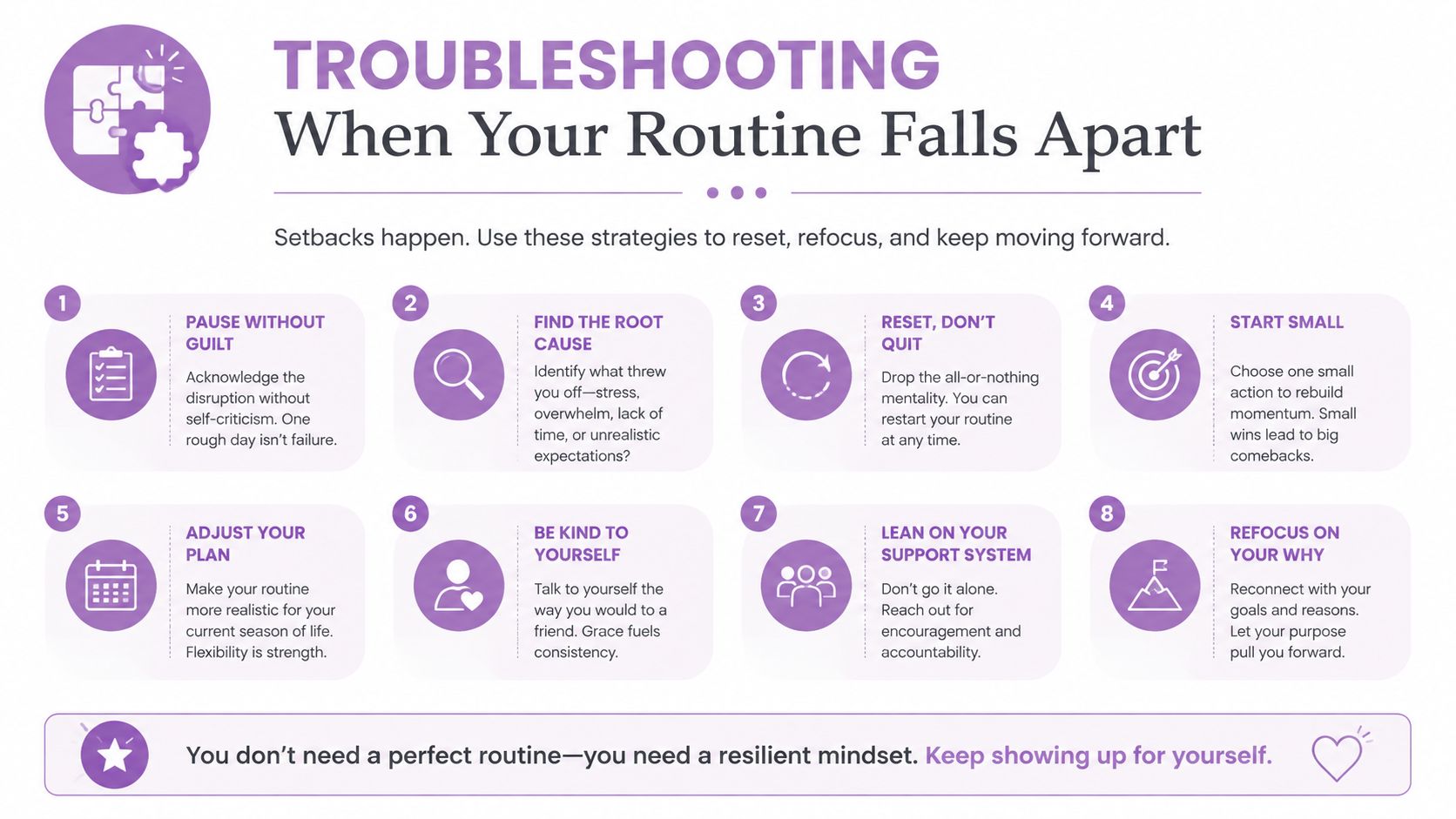
Reset trigger: if you've skipped it twice, don't “start over” with a grand plan. Drop back to the smallest version and rebuild from there.
Your 14-Day Self-Care Ritual Starter Plan
Two weeks is long enough to tell what sticks and short enough that you won't fake your way through it. Use the first week to make the ritual familiar, then use the second week to test whether it still holds up when you're tired, busy, or bored.
Keep the rotation small at first
In week one, repeat three core pairings: eucalyptus-peppermint in the morning, lavender-chamomile at night, and citrus-rosemary at midday. Keep the times short, 5 minutes when you're in a rush, 10 minutes when you can linger, and save 20 minutes for the one deeper reset day. By the end of the week, you should know whether the scent itself feels useful or just pleasant.
Week two is where variety shows its value. Add a Sunday reset shower with a stronger menthol profile if congestion or mental fog is a problem, and keep one rest day in the middle of the week where you do the simplest version only. That prevents the ritual from turning into homework. On Day 14, package a leftover duo for a friend, because giving away the extra set is a good test of whether you know what you'd recommend.
| Day | Ritual Type | Time (min) | Scent Pairing | Focus |
|---|---|---|---|---|
| 1 | Morning shower | 5 | Eucalyptus and peppermint | Wake up fast |
| 2 | Evening shower | 10 | Lavender and chamomile | Wind down |
| 3 | Midday reset | 5 | Citrus and rosemary | Re-center |
| 4 | Morning shower | 5 | Eucalyptus and peppermint | Repeat the anchor |
| 5 | Evening shower | 10 | Lavender and chamomile | Sleep prep |
| 6 | Rest day | 0 to 3 | Fragrance-free or inhaler only | Reduce fatigue |
| 7 | Sunday reset shower | 20 | Stronger menthol blend | Deeper refresh |
| 8 | Morning shower | 5 | Eucalyptus and peppermint | Rebuild momentum |
| 9 | Midday reset | 5 | Citrus and rosemary | Focus |
| 10 | Evening shower | 10 | Lavender and chamomile | Calm |
| 11 | Morning shower | 5 | Eucalyptus and peppermint | Keep it automatic |
| 12 | Rest day | 0 to 3 | Fragrance-free fallback | Protect the habit |
| 13 | Evening shower | 10 | Cedarwood or lavender | Quiet finish |
| 14 | Gifting moment | 20 | Leftover duo in a gift wrap | Share the ritual |
Track just three things: duration, scent used, and a simple mood score after. That's enough to spot the rituals you'll keep and the ones that only sound good on paper.
If you want shower rituals that fit a packed week, start with the products and formats that make the habit easy to repeat. Cleverfy Beauty focuses on aromatherapy shower steamers, gift-ready sets, and practical accessories that fit shower-first routines without adding complexity. Visit Cleverfy Beauty if you want to build a ritual you'll still use when the week gets messy.

