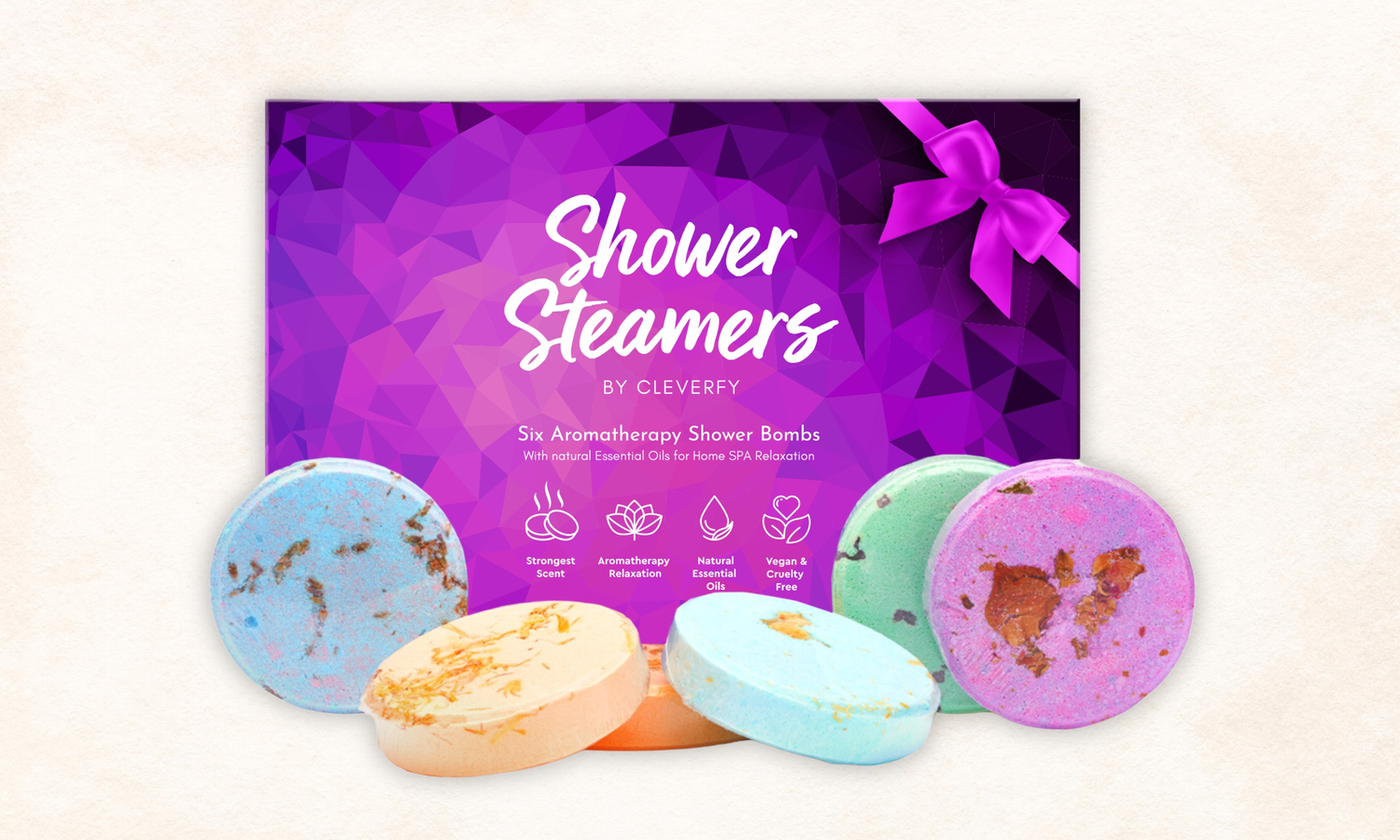


What Are Steamers Used for? a Practical Guide
You step into a hot shower on a rushed morning, and a fresh wave of eucalyptus rises from the floor. For a moment, the bathroom feels less like a utility room and more like a small spa. That compact tablet is a shower steamer, a product designed to release essential-oil aromas when moisture and heat activate it.
The phrase “steamer” can describe several unrelated products. A shower steamer creates an aromatic shower experience, a beauty steamer produces warm mist for facial routines, and a food steamer uses vapor to cook ingredients. This guide focuses on the first category, while separating it from the others so you can choose the right format.
The most useful expectation is also the most honest one. Aromatherapy shower steamers are wellness products, not medical treatments. They can add scent, comfort, and structure to a routine, but they shouldn't replace professional care for illness or breathing problems.
Table of Contents
- A Quick Look at What Steamers Actually Do
- Where Steaming Came From and How Shower Steamers Work
- Everyday Uses for Aromatherapy Shower Steamers
- Matching Steamers to Showers, Baths, Travel, and Gifting
- Safety, Contraindications, and Honest Expectations
- Tips to Get the Most Out of Every Steamer
- Final Thoughts and Common Questions Answered
A Quick Look at What Steamers Actually Do
A shower steamer is usually a small, compressed tablet or pod containing fragrant ingredients, often essential oils. Water activates the tablet, while the warmth and humidity of the shower help disperse volatile aroma compounds through the air. You breathe in the scent naturally as you wash, rather than soaking in it as you would with a bath product.
That difference matters. A bath bomb is made to dissolve in a tub of water, while a shower steamer is generally placed on the shower floor, near but not directly beneath the spray. The indirect contact helps the tablet release its aroma gradually instead of disappearing immediately down the drain.
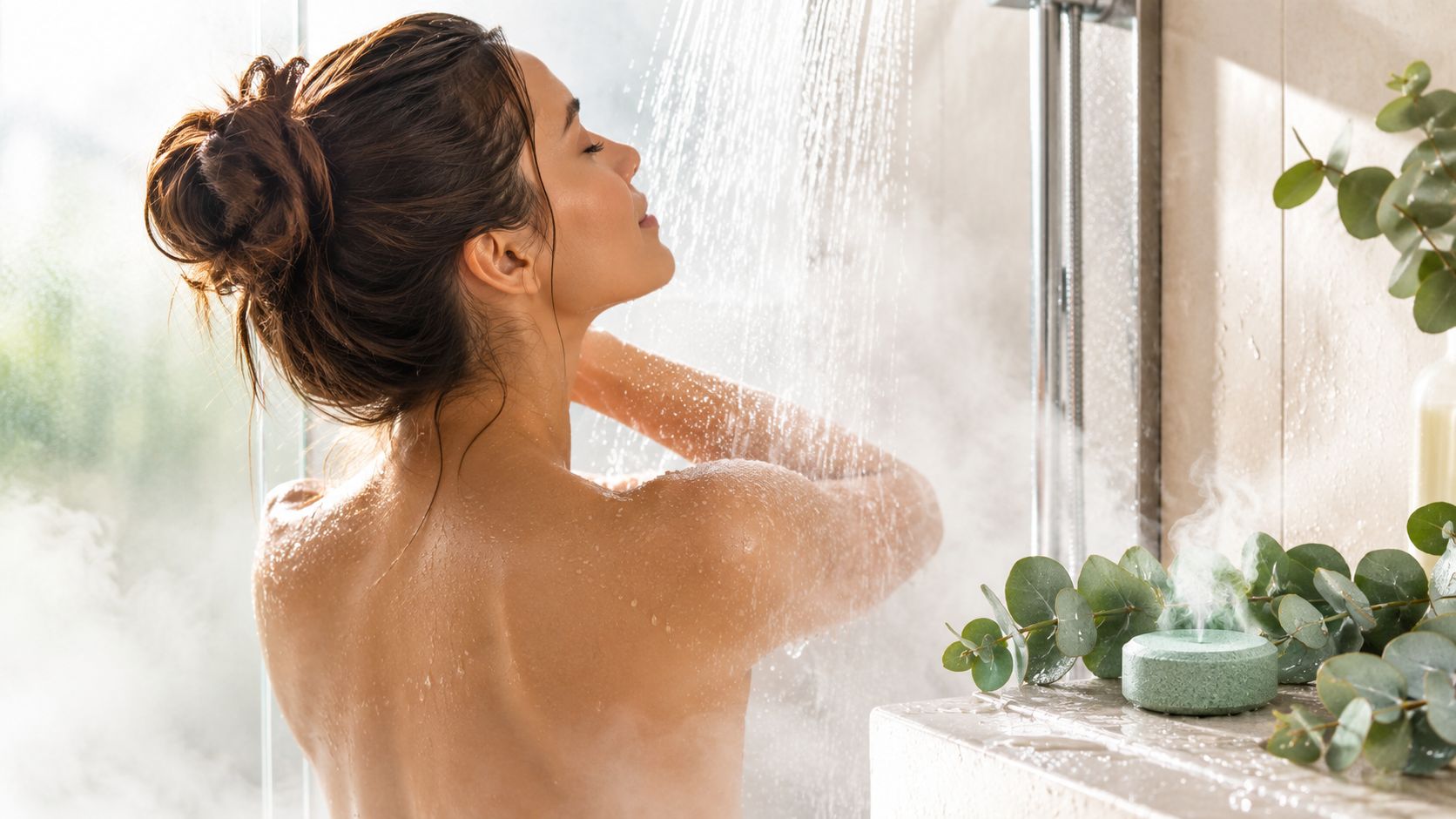
Three products that share one name
A shower aromatherapy steamer belongs in the bathroom and supports a sensory ritual. A facial beauty steamer is an electrical device that produces a directed mist for a skincare routine. A kitchen food steamer uses heated vapor to cook vegetables, dumplings, buns, and other foods.
Confusion often starts because all three rely on vapor, but their purposes are completely different. Don't put a shower tablet in a facial steamer, and don't treat a facial device or kitchen appliance as an aromatherapy product.
For shower use, the most common goals are relaxation, mood support, congestion comfort, focus, and sleep preparation. The effect comes from scent, warmth, and the ritual of slowing down, not from a guaranteed medical action.
Practical rule: Think of a shower steamer as scented atmosphere for your routine, not medicine in tablet form.
Where Steaming Came From and How Shower Steamers Work
People have used heated water and shared bathing spaces for centuries. Roman baths and Turkish hammams made warm, humid environments part of social and personal care, while later steam practices moved into household routines and inhalation traditions. Food steaming has an even longer documented history. Evidence from ancient China points to pottery steamers dating to about 5000 BC, and bamboo steamers have been used for roughly 2,000 years in East Asian kitchens, where steaming remains central to foods such as dim sum and buns (food steamer history).
A simple kitchen analogy explains the mechanism. Put herbs in a simmering pot of tea and the rising warmth carries their scent into the room. A shower steamer works in a similar way, except the tablet sits in a humid shower environment and releases its aroma as water activates the ingredients.
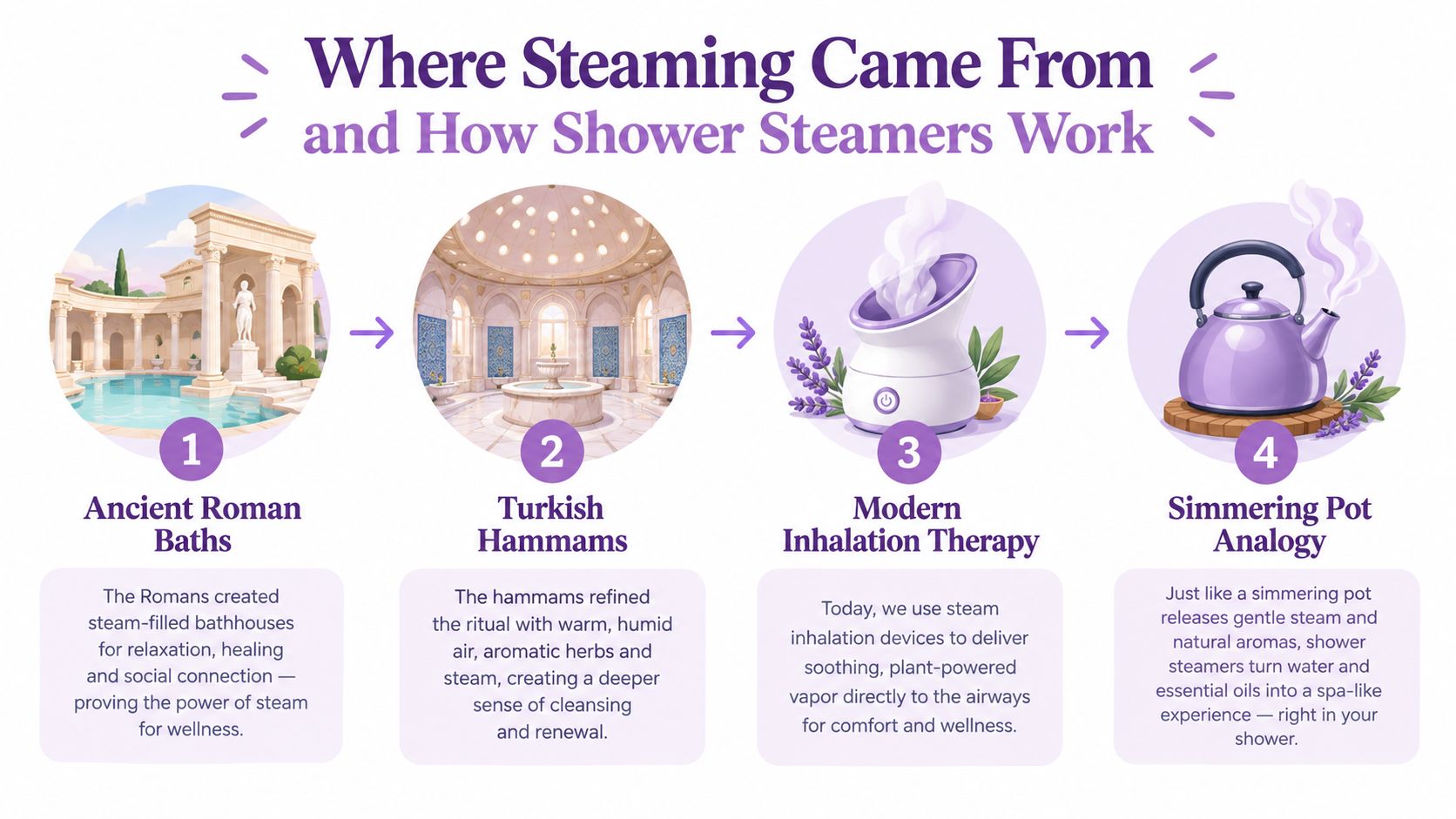
What happens inside the tablet
Many shower steamers use a dry, compacted base similar to a bath bomb. Common ingredients can include baking soda, citric acid, arrowroot or cornstarch, and essential oils. The tablet stays firm until humidity or water reaches the surface.
The baking soda and citric acid react when wet, creating the familiar fizz. That reaction helps break apart the tablet, while heat encourages the essential oils' volatile compounds to evaporate. The enclosed shower then holds more of the fragrance around you than an open room would.
Placement changes the experience. Direct spray dissolves the tablet quickly, while a spot near the water stream allows splashes and humidity to activate it more slowly. If you're learning how to build a calming scent routine, this overview of aromatherapy techniques for relaxation offers useful context about pairing aroma with breathing and daily habits.
A product such as the Cleverfy Eucalyptus and Menthol Megapack of 18 Shower Steamers uses menthol and eucalyptus scents in shower tablets. The catalog describes the set as vegan and cruelty-free, with one scent variant and 18 tablets.
Everyday Uses for Aromatherapy Shower Steamers
The best answer to “what are steamers used for” depends on the moment you want to support. One person may want a quiet transition after work, while another wants a brighter shower before a busy day. The tablet doesn't need to perform a different chemical function for each situation. You change the experience mainly through scent choice, timing, and the meaning you attach to the routine.
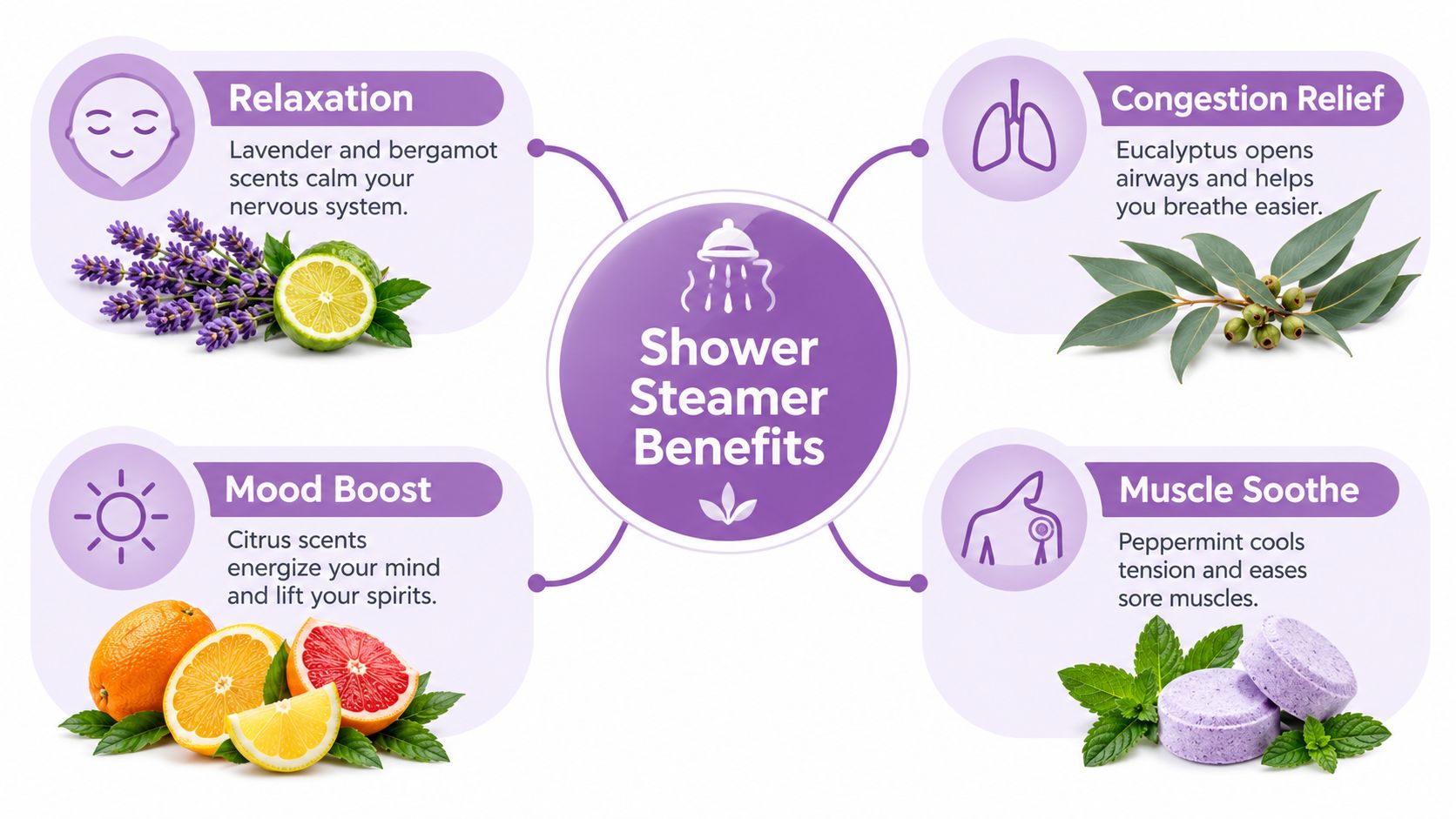
Relaxation and decompression
Lavender, bergamot, chamomile, sandalwood, and vetiver are often chosen for a softer, quieter atmosphere. Their value in a shower comes from the association between familiar scent, warm water, and a deliberate pause. You might use one after a long screen-heavy day, when the physical act of showering helps mark the end of work.
Aromatherapy research is mixed. Some studies find support for anxiety or insomnia, while others don't, and there are no studies focused specifically on shower steamers according to the evidence summary from Medical News Today. That makes “helps create a calming ritual” a more responsible description than “treats anxiety.”
Congestion comfort
Menthol and eucalyptus create a strong, cool sensation that many people associate with clearer breathing. A shower's humidity can also feel soothing when your nose or throat feels dry. Independent health guidance identifies clearing sinus and bronchial congestion, reducing inflammation, and easing tension among the better-supported potential benefits of steam rooms and steam bathing (Healthline's steam room overview).
That isn't the same as treating an infection, sinusitis, or another respiratory illness. Use the aroma for comfort, and seek medical advice when symptoms are severe, persistent, or worrying.
Morning focus and mood
Citrus, peppermint, and rosemary tend to feel sharper and more energizing than floral or woody profiles. A bright scent can give your morning shower a clear starting point, especially when you pair it with music, daylight, or a consistent preparation routine. The likely benefit is behavioral and sensory. You create a cue that tells your brain the day has begun.
Evening wind-down and spa atmosphere
A shower steamer can also make ordinary self-care feel more intentional. Soft lighting, clean towels, and a gentle fragrance create a spa-like setting without requiring a bathtub. This can be useful before bed, although the steamer itself shouldn't be presented as a sleep treatment.
For readers comparing scent combinations, this guide to combining eucalyptus and lavender safely can help you think about ingredient compatibility and exposure. For more ideas about routine benefits, see Cleverfy's guide to shower steamer benefits.
Steamers also fit practical moments that don't need a grand wellness story. You might use a fresh scent after travel, a mint profile before a workout, or a calming blend during a quiet Sunday shower. The product adds atmosphere, while your routine supplies the deeper meaning.
Matching Steamers to Showers, Baths, Travel, and Gifting
The setting changes how a steamer behaves. A shower provides moving water, humidity, and a natural place for aroma to circulate. A bath offers more immersion but can dissolve a shower-style tablet faster and may leave residue on the tub. Travel introduces humidity and storage challenges, while gifting turns scent selection into part of the message.
| Context | Best Format | Key Benefit | Watch Out For |
|---|---|---|---|
| Shower | Dry, compact aromatherapy tablet | Easy activation during a normal wash | Keep it out of the direct spray |
| Bath | Bath bomb or bath-compatible tablet | Aroma and immersion together | Faster dissolving and possible residue |
| Travel | Individually wrapped mini steamer | Portable self-care for hotel routines | Protect it from moisture in luggage |
| Gifting | Gift-ready scent set | Makes a practical wellness present | Choose scents for the recipient, not yourself |
Shower or bath
Choose a shower steamer if you want a quick, low-effort ritual and don't use a bathtub. Choose a bath product when you want the tablet to dissolve in the water and become part of a longer soaking experience. A shower tablet isn't automatically interchangeable with a bath bomb, so check the product's intended use before placing it in a tub.
This comparison of shower steamers versus bath bombs explains why the two formats create different experiences. The key distinction is delivery. Shower steamers release aroma into the air, while bath products are designed for the bathwater environment.
Home, travel, and gifting
At home, you can control placement and store tablets in a dry container. During travel, individually wrapped formats are easier to protect from luggage humidity and simpler to use in a hotel shower. Use discretion in shared bathrooms, especially when strong fragrances might affect other people.
For gifting, scent families make a useful starting point. Lavender and woody notes suit someone who enjoys evening rituals, citrus can feel cheerful, and eucalyptus or menthol may appeal to someone who likes a crisp shower atmosphere. Packaging matters, but the most thoughtful gift matches the recipient's habits.
Safety, Contraindications, and Honest Expectations
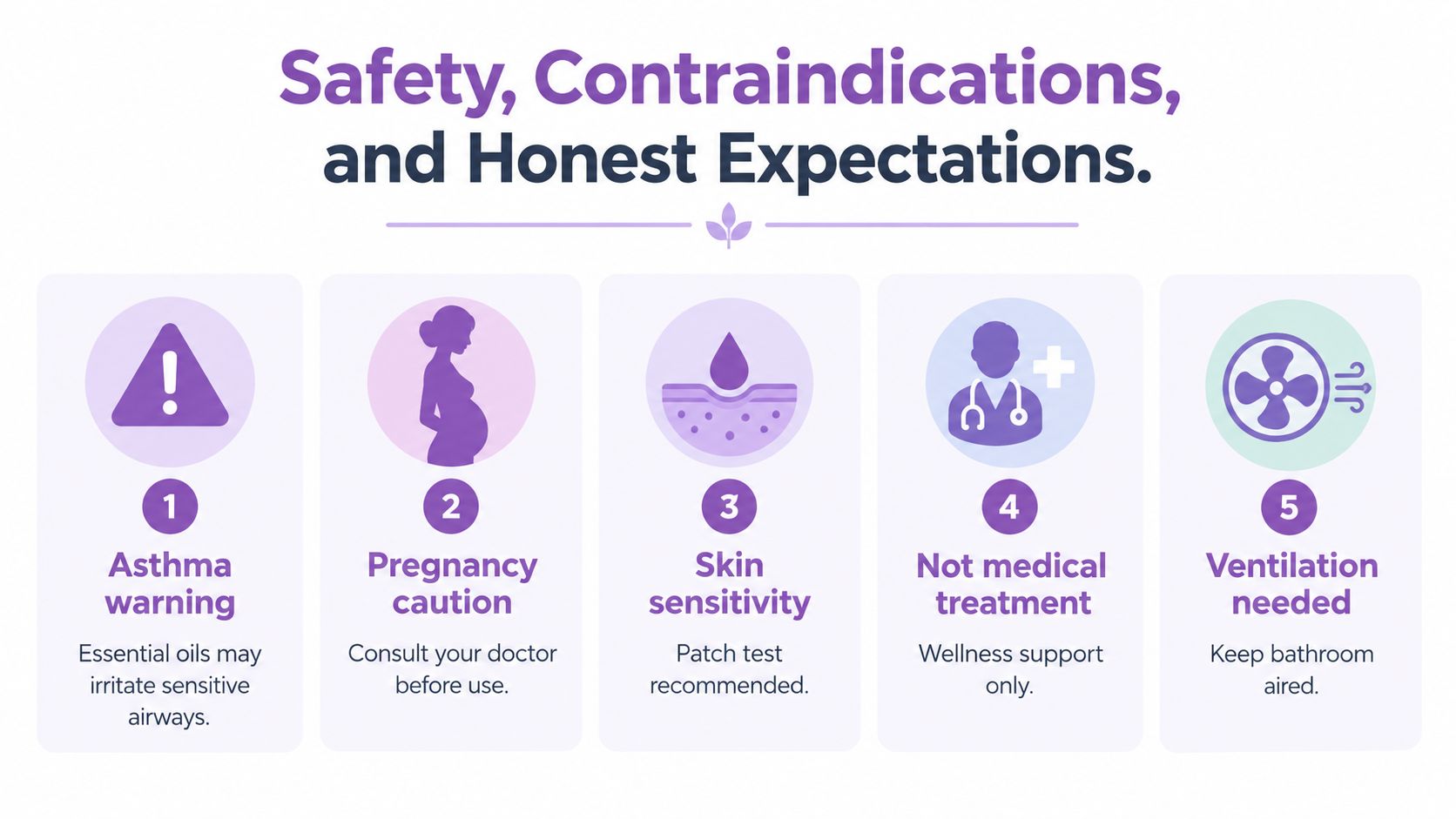
A scented shower can feel comforting, but comfort isn't proof of treatment. This distinction matters most when someone has congestion, asthma, allergies, or another health concern and assumes that stronger steam or more essential oil must be better.
Health sources warn that bowl-based steam inhalation can cause serious scalds, and the benefits for congestion are limited or unproven. A hot shower is considered a safer steam source than leaning over boiling water, but it still involves heat, slippery surfaces, and concentrated fragrance (steam inhalation safety guidance).
Who should take extra care
Essential oils can irritate sensitive airways or skin. If you have asthma, fragrance sensitivity, dermatitis, or a known reaction to a particular oil, read the ingredients and consider avoiding the product or asking a qualified healthcare professional for individualized advice.
Pregnancy also calls for caution because essential oils vary by ingredient and exposure. Young children shouldn't handle shower steamers, and households with children should store tablets securely. Pets should likewise be kept away from concentrated essential oils and from tablets that may be mistaken for something edible.
Safer shower habits
Keep the bathroom ventilated rather than sealing in intense fragrance. Place the tablet away from direct spray, avoid rubbing dissolved residue into your eyes, and rinse the floor if it becomes slippery. Store unused tablets in a dry, sealed container so humidity doesn't activate them prematurely.
Steam can support a relaxing routine, but it cannot diagnose or treat the reason you're congested.
If you experience breathing difficulty, chest pain, a serious allergic reaction, or symptoms that concern you, stop using the product and seek appropriate medical care. The safest aromatherapy routine is one that remains optional, mild, and easy to stop.
Tips to Get the Most Out of Every Steamer
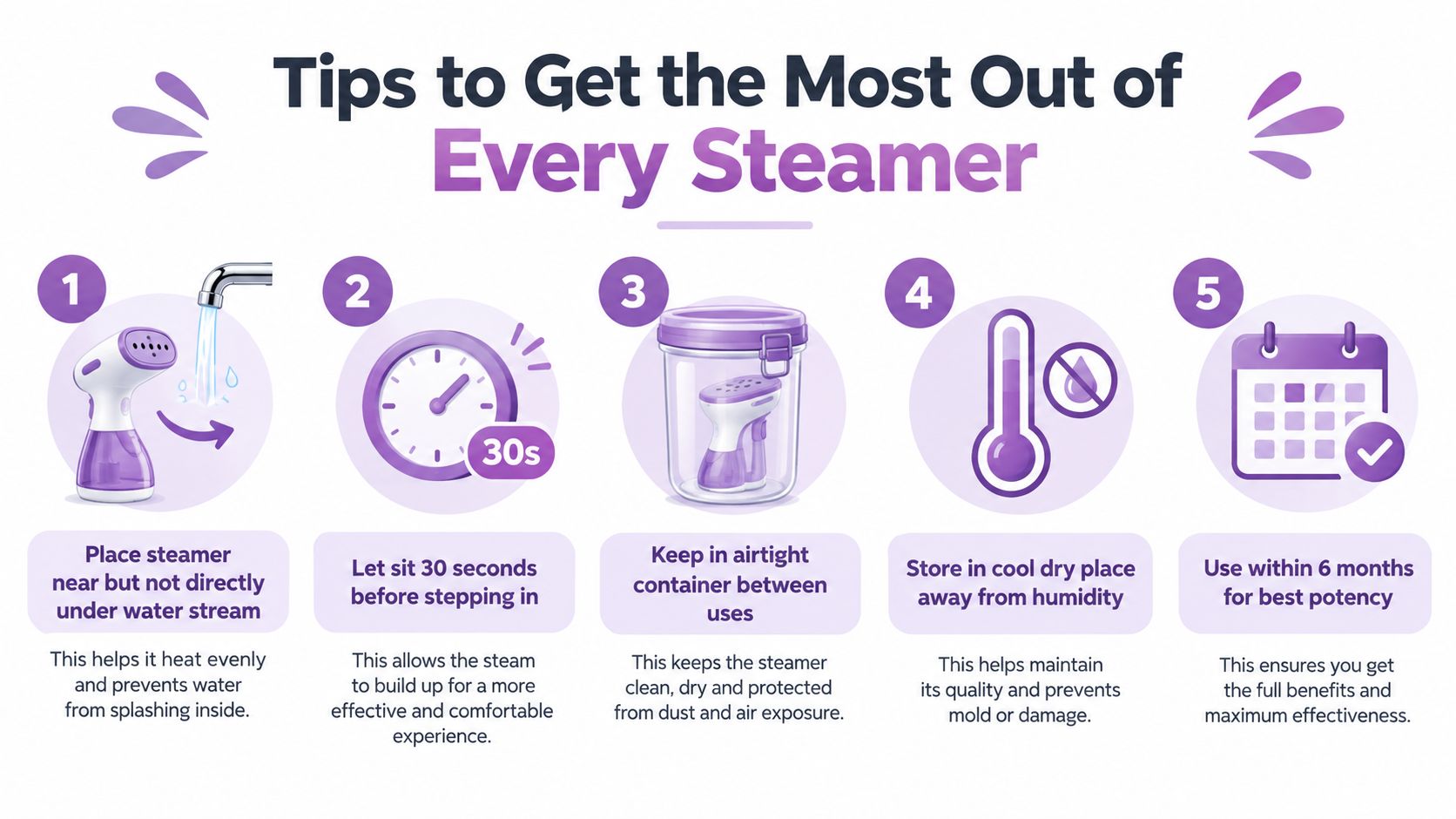
Small placement decisions make a noticeable difference to the experience. Set the tablet on the shower floor near the edge of the water pattern, not directly beneath the strongest stream. Nearby splashes and rising humidity will activate the surface while slowing the tablet's disappearance.
Run the shower until the room feels humid before stepping in, then adjust the temperature to a level that's comfortable for your body. You don't need extreme heat to create an aromatic atmosphere, and hotter water increases the risk of discomfort, dizziness, or burns.
A simple routine for better aroma
- Place it carefully. Use a stable spot where the tablet won't block the drain or slide underfoot.
- Activate it gradually. Let humidity and light splashes do the work instead of flooding the tablet.
- Breathe normally. You can enjoy the aroma without taking unusually deep breaths or forcing exposure.
- Watch your response. Stop if you notice coughing, wheezing, headache, skin irritation, or eye discomfort.
- Dry and seal the rest. Return unused tablets to an airtight container in a cool, dry place.
Rotating scent families can also keep the routine interesting. Use a bright citrus or mint profile in the morning, a floral or woody scent during a slower evening, and reserve eucalyptus for the occasions when its cool aroma feels appealing.
For product-specific placement and use guidance, Cleverfy's instructions on how to use shower steamers provide a practical starting point. Follow the directions for the product you own, because tablet size, ingredients, and recommended placement can differ.
Final Thoughts and Common Questions Answered
Shower steamers are compact aroma-release tablets for people who want a more intentional shower. They're used to support relaxation, mood, focus, sleep preparation, and congestion comfort through scent and atmosphere. Food steamers and facial beauty steamers serve different purposes, so the name alone doesn't tell you which product belongs in your routine.
The evidence for shower steamers themselves is limited, and aromatherapy research has mixed results. The sensible position is simple: enjoy the sensory ritual, keep medical expectations modest, and use safety precautions around heat, fragrance, children, pets, and sensitive airways.
Common questions
How long does one steamer last?
It depends on the tablet's size, water exposure, shower length, and placement. Direct spray usually uses it faster, while indirect contact releases aroma more gradually. Follow the product directions rather than assuming every tablet behaves the same way.
Do steamers expire?
They can lose fragrance and react with humidity over time. Keep them sealed and dry, and discard any tablet that has changed unusually in appearance, smell, or texture.
Can you use one without running a shower?
A tablet needs moisture and warmth to release its aroma effectively. Without a shower or another intended activation method, it may produce little fragrance and may not work as designed.
Should pets stay away from strong essential-oil scents?
Yes. Keep pets away from concentrated oils, tablets, and heavily scented spaces, and ask a veterinarian about ingredients if you're unsure. Ventilation is especially important in a small bathroom.
Try different scent families to match the moment. Lavender can suit a slower evening, citrus can brighten a morning, and eucalyptus can create a crisp shower atmosphere. The goal isn't to turn a steamer into a cure. It's to make an ordinary routine feel more deliberate and comfortable.
Cleverfy Beauty offers aromatherapy shower steamer tablets and gift-ready sets designed to add essential-oil fragrance to a normal shower routine. Explore the available scent collections at Cleverfy Beauty and choose a format that fits your morning reset, evening wind-down, or thoughtful wellness gift.

