

Aromatherapy for Relaxation
You've finished a demanding day, but your mind hasn't received the message. The calendar is still crowded, your shoulders are tense, and the shower may be the only private pause between work, family responsibilities, and sleep. A carefully chosen scent can turn that ordinary pause into a relaxation ritual, without requiring another complicated wellness project.
Aromatherapy for relaxation is best understood as supportive self-care. It may help shape mood, perceived stress, and a calming sensory environment, but it isn't a guaranteed treatment for anxiety, sleep disorders, or other medical conditions. The most useful approach combines a pleasant scent, a realistic delivery method, and a repeatable moment in your day.
This guide explains how scent may interact with the brain, what research has measured, how to choose oils, and how diffusers, inhalation, topical products, and shower steamers differ. You'll also find three short routines, practical shower-steamer instructions, safety boundaries, and a simple way to choose aromatherapy gifts with confidence. The central principle is simple: consistency, context, and personal preference matter more than the strongest possible aroma.
Table of Contents
- Making Relaxation Part of a Busy Day
- How Aromatherapy May Encourage Relaxation
- Choosing Calming Oils and Blends
- Comparing Relaxation Delivery Methods
- Building Morning Evening and Shower Routines
- Using Shower Steamers for Aromatherapy
- Using Oils Safely and Buying With Confidence
- Creating a Sustainable Relaxation Practice
Making Relaxation Part of a Busy Day
Maya closes her laptop after a long string of meetings and walks straight into the shower. She doesn't have time for an elaborate bath, a long meditation session, or a new wellness plan with several moving parts. What she does have is a few quiet minutes, warm water, and the chance to choose a scent that helps mark the end of work.
That distinction matters. Aromatherapy works most naturally when it fits into something you already do. A shower steamer, a brief inhalation pause, or a diffuser used according to its instructions can become a transition between responsibilities rather than another task demanding attention.
The broader evidence is encouraging but not absolute. A 2023 systematic review screened 628 studies, selected 76, and included 6,539 patients in its final review set. More than 70% of the studies reported a positive effect on anxiety levels in the aromatherapy group compared with controls, while 42% of randomized controlled trials measured physiological outcomes such as vital signs or salivary cortisol, not only questionnaires (PubMed review). Those findings support careful interest, not the idea that every scent will work for every person.
Practical rule: Choose a scent and routine you can repeat comfortably. Stronger fragrance isn't automatically better relaxation.
If your schedule is packed, a short shower ritual may be more realistic than a separate appointment or lengthy evening routine. You can also find broader ideas for fitting calming habits into demanding schedules in these ways to cope with stress in a busy work week.
| Reader goal | Useful format | Main consideration |
|---|---|---|
| Create a transition after work | Shower steamer or diffuser | Keep the scent pleasant and controlled |
| Take a brief pause during a busy day | Direct inhalation | Use a short exposure and stop if it feels irritating |
| Build an evening cue | Diffuser or properly formulated topical product | Follow the product directions and keep the routine consistent |
| Enjoy a shower-first spa moment | Shower steamer | Place it where water reaches it intermittently, not constantly |
The aim isn't to chase a dramatic sensation. A familiar scent paired with slow breathing, dimmer light, or the end of a shower can help your mind recognize that one activity is ending and another is beginning. That association may become useful precisely because it is ordinary enough to repeat.
How Aromatherapy May Encourage Relaxation
A quiet shower ends, the room is warm, and a familiar aroma lingers as you slow your breathing. That response begins with biology, but it also depends on context. When you inhale an aromatic product, volatile scent molecules enter the nasal passages and interact with smell receptors. Signals then travel through the olfactory system to brain regions involved in emotion and memory, including pathways associated with the limbic system.
The scent does not act like an off switch for stress. Relaxation can emerge from the combined effects of sensory input, attention, memory, bodily arousal, and the meaning you attach to an aroma.
A fragrance may also become a learned cue. Repeating the same lavender-like aroma during a quiet shower, reading period, or evening wind-down can link that smell with the surrounding routine. The aroma is one part of the pattern, alongside time, place, breathing, temperature, and expectation. Like a familiar closing song, it can signal that the pace of the day is changing.

What the research measures
Research on aromatherapy includes self-reported feelings and physiological measures. Studies use different oils, participants, delivery methods, and comparison conditions, so their results should be read as evidence about specific situations rather than proof that every scent works for everyone.
A 2020 meta-analysis pooled 25 articles covering 32 trials and found statistically significant reductions in anxiety scores. The weighted mean difference was -5.16 for the State Anxiety Inventory and -2.85 for the Trait Anxiety Inventory, with p<0.001 for both outcomes (2020 aromatherapy meta-analysis). Those findings show measurable changes in the anxiety scores studied. They do not establish that one product, oil, or home routine will produce the same result.
A reported 2026 randomized, placebo-balanced two-week inhalation study involving 50 stressed adults should not be treated here as established evidence. Its citation cannot be confirmed for this article, so it does not provide a reliable basis for choosing an aromatherapy product or making a health claim.
Other findings are more specific. In a 2021 single-blind randomized crossover study, lavender inhalation during short sleep did not significantly change cortisol. Salivary α-amylase decreased significantly, with p<0.05, and chromogranin A also decreased significantly, with p<0.01 (lavender inhalation study). This pattern points to a possible change in some autonomic stress markers without showing the same effect across every endocrine measure.
What the evidence cannot promise
Aromatherapy may create a calmer sensory setting and may influence selected relaxation-related outcomes. It cannot identify the cause of persistent anxiety, replace professional support, or guarantee better sleep. Severe, ongoing distress or symptoms that interfere with daily life call for help from a qualified healthcare professional, rather than scent alone.
Practical delivery matters too. A shower steamer, diffuser, or brief inhalation can make an aroma easy to pair with an existing routine, while stronger exposure is not automatically more helpful. For a restorative day away from home, resources such as choose the right wellness spa can help you assess the setting, timing, and sensory experience together. The scent is one part of that environment, not the whole intervention.
Choosing Calming Oils and Blends
A late shower, a quiet bedroom, or a short pause between tasks can each call for a different scent. Choose the aroma for the moment you want to support, rather than searching for one universally “best” oil. Lavender has a soft floral profile that may suit an evening ritual. Frankincense is resinous and woody, which some people find grounding. Sweet or citrus-forward blends can feel warmer and more approachable than a single strong floral note.
Personal response matters. A scent that comforts one person may recall cleaning products, medicine, or an unpleasant memory for another. Test cautiously, notice whether the aroma helps you settle or distracts you, and keep your shortlist small enough to identify what you actually enjoy.
Match the profile to the moment
| Scent profile | Sensory impression | Possible routine fit |
|---|---|---|
| Lavender | Soft, floral, familiar | Evening wind-down or quiet shower |
| Frankincense | Resinous, dry, woody | Reflective pauses or slower routines |
| Sweet blends | Rounded, warm, gentle | Comfort-focused self-care |
| Citrus-forward blends | Bright and fresh | Morning transition or midday reset |
| Menthol, eucalyptus, or peppermint | Sharp, cooling, assertive | Invigorating moments rather than winding down |
| Grapefruit | Crisp and lively | Fresh-start routines for people who enjoy citrus |
Blending can make an aroma feel more balanced because several notes share your attention. More oils do not automatically create more relaxation. In a small bathroom, a crowded fragrance may become distracting, so begin with the least intense option that still feels pleasant.
For readers comparing sleep-oriented scent profiles, the SouthShore Fine Linens sleep guide offers another preference-based perspective on bedtime environments. Use it as a starting point for choosing an atmosphere, not as a medical promise.
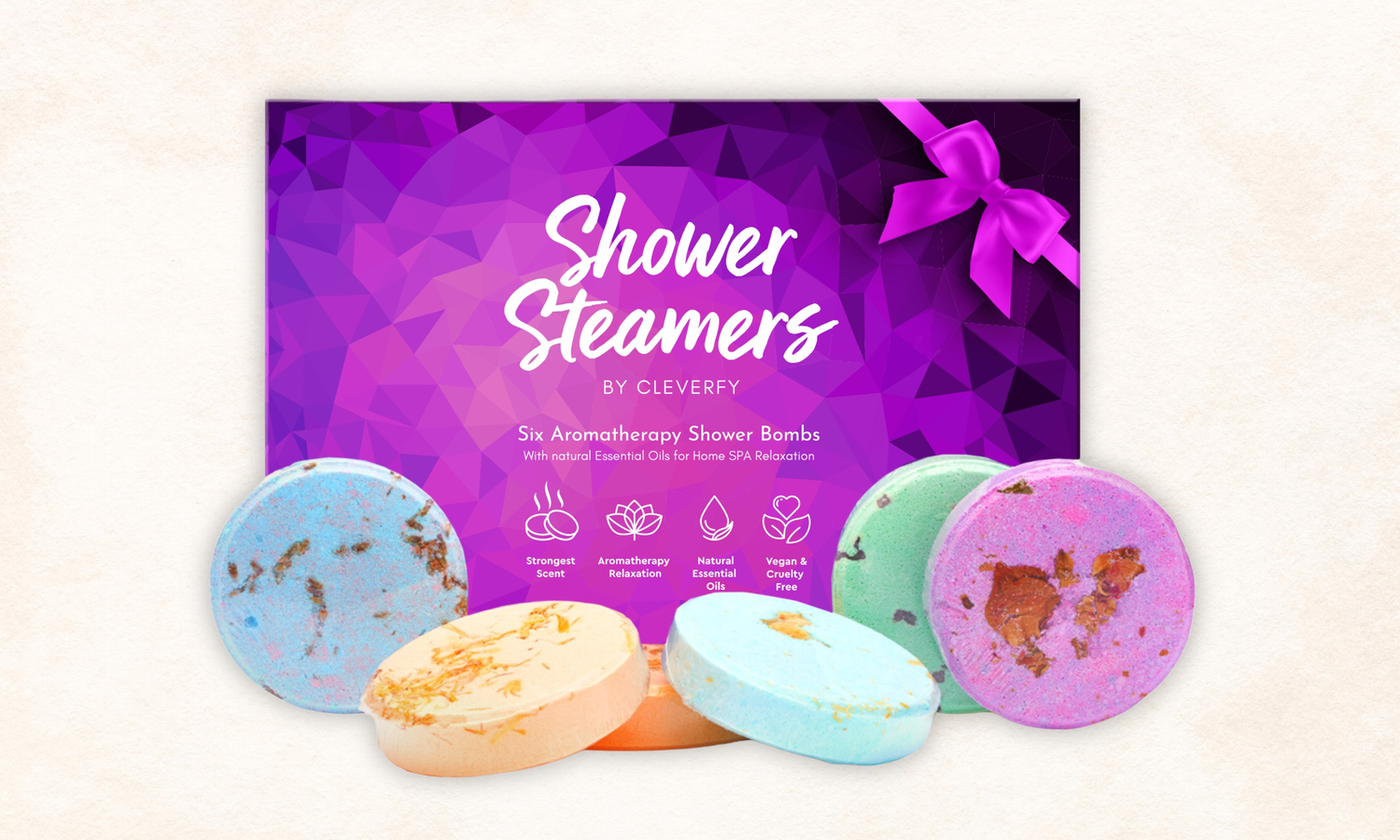
Cleverfy Beauty's Purple Gift Set of 6 Shower Steamers lists lavender, watermelon and vanilla, grapefruit and coconut, menthol and eucalyptus, orange, and peppermint. The set gives a household several profiles to compare, from soft and sweet to citrus, cooling, and sharper aromas. Follow the product label, and place a steamer where it can dissolve without sitting directly under the strongest water flow.
The essential-oil scent guide for every mood can help organize options by the feeling you want to encourage. Before buying, ask three practical questions: Do I like this scent? When will I use it? Can I control how much reaches me? A good choice fits both your preference and your routine.
Comparing Relaxation Delivery Methods
The delivery method changes the entire experience. A diffuser fills a shared space gradually, direct inhalation creates a brief and portable pause, topical use places a properly formulated product on the skin, and a shower steamer integrates aroma into an existing shower.
A diffuser suits someone who wants a room to carry a consistent scent while they read, stretch, or prepare for bed. It requires a suitable device, cleaning according to the manufacturer's instructions, and attention to the room's ventilation and the product label. Because the aroma spreads through the air, you may have less precise control than with a brief inhaler.
Direct inhalation is more contained. You can take a short pause at a desk, while traveling, or before a demanding transition, then put the product away. The advantage is portability and limited setup. The tradeoff is that the scent reaches you more directly, so sensitivity matters.
Topical use is different again. A product intended for the skin should be appropriately formulated, and essential oils generally require dilution before topical application. Don't improvise a recipe or apply a concentrated oil because a scent feels mild. Follow the product label and seek qualified guidance when your circumstances make product selection uncertain.
A shower steamer works through the warm, humid air of a shower. Cleverfy Beauty describes its tablets as dissolving on the shower floor and using essential oils to release aromatic steam, offering a shower-first alternative for people who don't have or prefer a bathtub (Cleverfy Beauty).
| Method | Best suited for | Exposure pattern | Key caution |
|---|---|---|---|
| Room diffuser | Extended use in a suitable room | Airborne and gradual | Follow device and oil instructions; ventilate appropriately |
| Direct inhalation | Brief, portable pauses | Short and concentrated | Stop if the aroma irritates you or feels overwhelming |
| Diluted topical product | Localized sensory use | Skin contact | Use only an appropriately formulated product and follow directions |
| Shower steamer | Shower-first routines | Warm, humid airborne aroma | Keep away from eyes, avoid unnecessary skin contact, and ventilate |
Steam doesn't make essential oils risk-free. Airborne exposure, direct skin contact, and swallowing are separate scenarios, with different safety considerations. Never ingest an aromatherapy product unless a qualified professional has specifically advised you and the product is intended for that use.
Building Morning Evening and Shower Routines
A routine becomes useful when it has a clear job. Morning aromatherapy can create a fresh transition into alertness, evening aromatherapy can signal decompression, and a shower ritual can provide a reset between the two.
Morning fresh start
- Choose a bright scent you already enjoy, such as an orange, grapefruit, or peppermint profile. Use the product according to its instructions rather than trying to create the strongest possible aroma.
- Pair the scent with one deliberate action, such as opening the curtains, preparing water, or writing the day's first priority.
- Take a moment to notice whether the fragrance feels fresh or distracting. If you dislike strong aromas, use less exposure or choose a softer citrus blend.
This routine isn't meant to make you sleepy. It gives the start of the day a recognizable sensory boundary.
Evening wind-down
Use one familiar floral or woody scent during the same part of your evening. A short diffuser window, direct inhalation, or properly formulated topical product can accompany lower screen brightness, quiet reading, or another activity that already helps you slow down.
Think of the scent as a train-platform announcement. The announcement doesn't transport you, but it tells you which stage comes next. Repeatedly pairing the same fragrance with the same calm context may help the routine feel more automatic over time.
If the aroma feels heavy, move the product farther away, shorten exposure according to the label, or switch to a lighter profile. The routine should make the room feel easier to inhabit, not like an endurance test.
Shower reset
Place a shower steamer on the floor where warm water can reach it intermittently, away from the strongest direct stream. Keep ventilation appropriate for the room, then pair the aroma with slower breathing and a few minutes of attention on the water's temperature, sound, and physical sensations.
Afterward, notice whether you feel more settled, unchanged, or overstimulated. That small reflection helps you adjust the next use instead of assuming every scent should feel the same.

A short guided video can also help you turn a shower or breathing pause into a more intentional routine.
The routine doesn't need to last long to be repeatable. A few consistent cues can be more practical than an elaborate ritual you abandon after a busy week.
Using Shower Steamers for Aromatherapy
A shower steamer is a tablet designed to sit on the shower floor and release aroma as water contacts it. The format resembles the sensory idea of a bath bomb, but it suits people who prefer showers or don't have a bathtub.
Placement controls the experience. Direct, constant spray may dissolve a tablet quickly and create a more intense burst, while intermittent water contact may release the aroma more gradually. Shower size, airflow, ventilation, water temperature, and personal sensitivity all affect how strong the fragrance feels.

A controlled shower workflow
- Read the label first. Check the ingredients, placement instructions, ventilation guidance, and any warnings before opening the package.
- Place one tablet carefully. Set it on the shower floor where water can reach it occasionally, not where it will sit in the direct stream continuously.
- Start the shower and ventilate as directed. Allow the warm air to carry the aroma through the room without closing yourself into an overly intense cloud.
- Enjoy without handling the dissolving tablet. Let the product dissolve while you focus on slow breathing or the transition you want to create.
- Rinse and store properly. Remove remaining material as the instructions require, rinse the area if needed, and keep unused tablets dry.
| Before | During | After |
|---|---|---|
| Read directions and inspect the tablet | Keep water exposure intermittent | Rinse away remaining material as directed |
| Choose a ventilated shower space | Avoid touching the dissolving product | Store unused tablets in a dry place |
| Keep children and pets away | Keep aroma away from eyes | Note whether the intensity felt comfortable |
A shower steamer isn't a reason to inhale forcefully if the scent feels irritating. Avoid eye exposure and unnecessary skin contact, and stop using the product if you notice irritation or discomfort. Keep tablets away from children and pets, and don't assume that a product intended for shower use is suitable for ingestion or direct application.
For more practical ideas about incorporating this format into a stressful day, see shower steamers for stress relief. The useful question isn't whether another person's shower produced a strong aroma. It's whether your own setup creates a pleasant, controllable experience.
Using Oils Safely and Buying With Confidence
Safety begins with recognizing that essential oils are concentrated ingredients. Their presence doesn't make a product automatically risk-free, and the right precautions depend on the route of exposure, the full ingredient list, the product directions, and your individual circumstances.
Read the label before use. Keep oils and aromatherapy products away from the eyes and mucous membranes, don't ingest them, and don't apply a concentrated essential oil directly to skin. If you're considering a topical product, choose one formulated for skin use and follow its directions. A patch test may be appropriate for that type of product, but it doesn't guarantee that irritation or sensitivity won't occur later.
Ask a qualified healthcare professional for personalized guidance if you're pregnant, caring for a child, using products around pets, managing a respiratory condition or allergy, or concerned about medication interactions. These situations require individual advice, not a general online routine.
What to check before buying
- Ingredient clarity: Look for a readable ingredient list and instructions that explain the intended route of use.
- Scent variety: Choose profiles that match the recipient's preferences rather than assuming every relaxation gift should smell floral.
- Packaging: Check that the packaging is intact and that products can be stored dry after opening.
- Pack size: A smaller assortment can support trial or gifting, while a larger assortment may suit repeated use or a household sharing scents.
- Guarantee terms: Read the seller's stated money-back guarantee and understand any qualifying conditions before purchase.
- Shipping details: Check the current destination and order requirements. Cleverfy's catalog states free shipping on orders over $50, but eligibility and terms should be confirmed at checkout.
Cleverfy Beauty offers themed six-pack sets, including Purple and Men's assortments, as well as 18-pack assortments for gifting, refills, or broader scent selection. Presenting several profiles can be useful when you don't know whether someone prefers lavender, citrus, sweet notes, menthol, eucalyptus, or peppermint, but variety should never override safety or personal sensitivity.
A responsible gift includes directions, storage guidance, and enough context for the recipient to choose how much exposure feels comfortable. Marketing language can describe a sensory experience, but it can't establish that a product treats anxiety, insomnia, or another medical condition.
Creating a Sustainable Relaxation Practice
A stronger scent isn't a stronger solution. In a small shower or bedroom, excessive fragrance can become distracting, uncomfortable, or difficult to control. The most sustainable routine is pleasant enough to repeat and flexible enough to change when your needs change.
The evidence supports a measured view. Aromatherapy has been associated with relaxation-related outcomes, while sleep findings remain low-certainty and mixed by population and delivery method, as described in Australia's 2024 Natural Therapies Review. A shower steamer is a format choice, not proof that shower-based aromatherapy is stronger than a diffuser, inhaler, or another suitable method.
| Choose | Assign | Use | Adjust | Repeat |
|---|---|---|---|---|
| One scent you enjoy | One reliable daily moment | Follow the label | Reduce exposure if it feels too strong | Keep only what remains useful |
Start tomorrow with one modest experiment. Choose a pleasant scent, use it during a familiar shower or evening pause, and observe your response without demanding a dramatic result. Treat aromatherapy as supportive self-care, not a guaranteed medical solution.
Cleverfy Beauty offers essential-oil shower steamer tablets, themed six-pack gift sets, and larger assortments for shower-first relaxation routines. Visit Cleverfy Beauty to explore the available scent formats and choose a product that fits your preferred moment, intensity, and safety needs.

