

Shower Steamers for Stress Relief: A Practical Guide
You know the moment. You're tired, your phone won't stop buzzing, and you step into a hot shower hoping those ten minutes can do more than rinse off the day. For a lot of people, that's exactly where shower steamers for stress relief fit in, as a small ritual that can turn a routine shower into something calmer, quieter, and more intentional.
What makes the format interesting is that it sits between a scent product and a self-care habit. The wider aromatherapy market is projected to grow from $0.9 billion in 2025 to $1.01 billion in 2026, and then to $1.62 billion by 2030 at a 12.5% CAGR for 2026 to 2030, while a separate estimate places the broader shower steamer market at $0.4 billion in 2025 and $0.8 billion by 2034 at 7.8% CAGR, with North America accounting for 38.5% of consumption (market report). That doesn't prove the products themselves are medical stress tools, but it does show they've moved into the mainstream wellness aisle.
Table of Contents
- Why the Shower Is Becoming a Stress-Relief Space
- What a Shower Steamer Actually Is
- The Aromatherapy Mechanism Behind Stress Relief
- Calming Scent Profiles and What Each One Does
- A Simple Shower Ritual for Maximum Effect
- Safety, Sensitivities, and Who Should Be Cautious
- Choosing the Right Pack Size and Set
- Realistic Expectations and Quick Answers
Why the Shower Is Becoming a Stress-Relief Space
A stressful shower moment usually starts before the water does. You walk in with a head full of unfinished tasks, close the door, and suddenly the noise drops away. The hot water, the enclosed space, and the steady rhythm of steam create a brief pocket where your body can shift out of alert mode and into something closer to rest.
That's part of why a shower steamer feels useful even to people who don't use bath products. It gives a shower a deliberate purpose, not just a cleaning task. For busy professionals, parents, or anyone without a tub, it functions like a bath bomb alternative that fits the space they already have.
Why the shower changes the feel of stress
Warm steam matters because it changes the sensory environment. The shower door creates a barrier from the rest of the house, and the sound of water can make the room feel contained and private. When a scent is added on purpose, the shower stops being purely functional and becomes a short ritual you can repeat.
Practical rule: if a habit has to fit into a crowded day, the best version is the one you'll actually repeat.
That's where the category's appeal starts to make sense. A shower steamer is not just a scented soap, and it's not the same thing as tossing fragrance into hot water at random. It's a designed aromatherapy product meant to release aroma during a shower window, which is why the format keeps showing up in wellness routines built around time pressure and limited space.
What a Shower Steamer Actually Is
A shower steamer is a tablet made to dissolve in shower steam, usually with baking soda, citric acid, and essential oils. The mix fizzes when it gets wet, and that reaction helps release aromatic molecules into the air around you. It's built for the shower floor or a ledge near the water, not for soaking or scrubbing the skin.
The important difference from a bath bomb is simple. A bath bomb is made for full immersion in bath water, while a shower steamer is made for vapor, not a tub. That means the tablet's job is to create airborne aroma as the shower warms up, then fade as the water and steam disperse it.

How to read a label without guessing
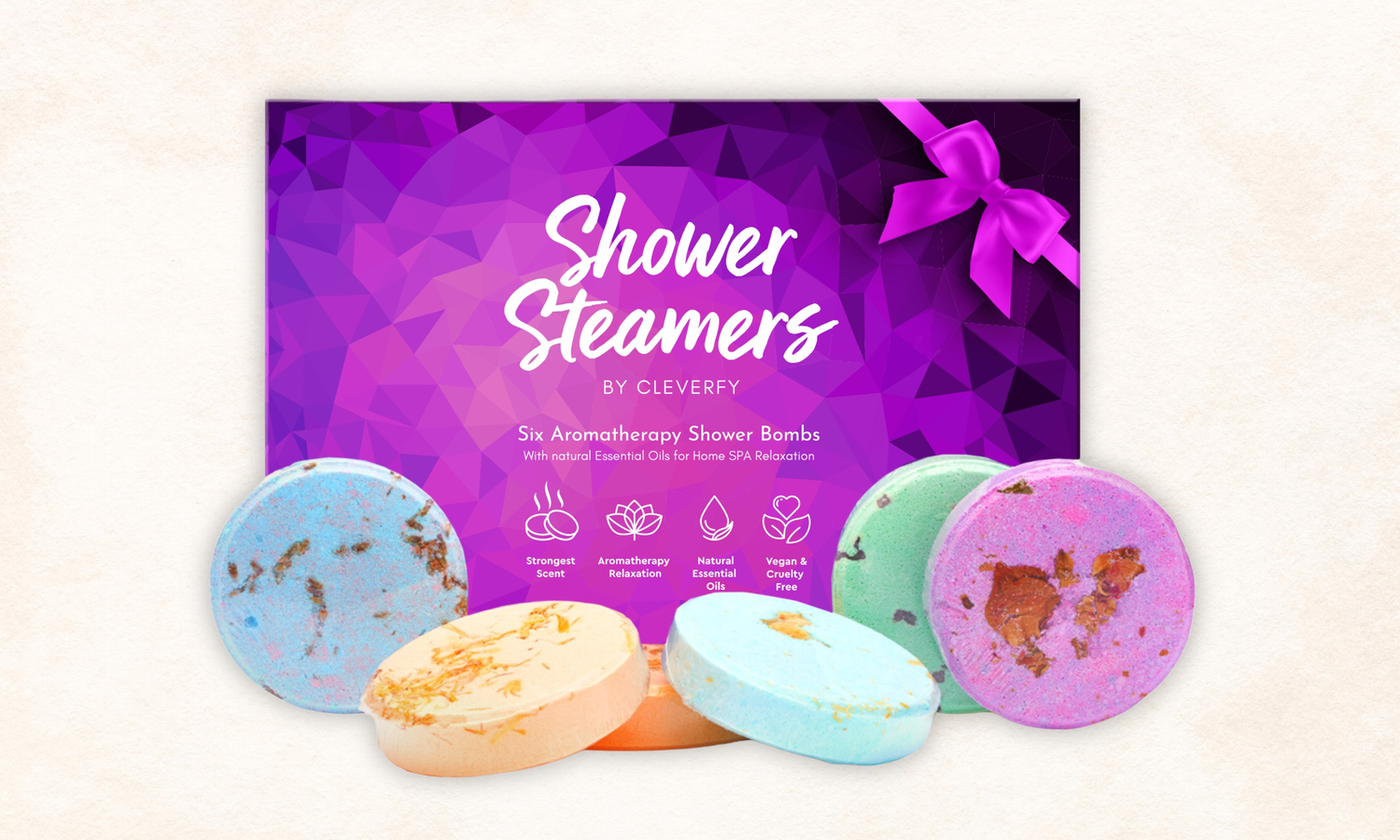
A label should tell you what kind of experience the tablet is built for. If it's marketed for relaxation, look for calmer scent profiles and a format meant to hold up under moisture without disappearing too fast. One example is the Cleverfy Purple Gift Set of 6 Shower Steamers, which is described as a six-tablet set with essential oils, vegan and cruelty-free ingredients, and scents including Lavender, Watermelon & Vanilla, Grapefruit & Coconut, Menthol & Eucalyptus, Orange, and Peppermint.
The main thing to understand is that the tablet's value comes from airborne scent, not from direct skin contact. That's why ingredients and placement matter more here than in a body wash or lotion. If you can recognize that difference, you can shop and use these products with a lot less confusion.
The Aromatherapy Mechanism Behind Stress Relief
Shower steamers work through inhalation-driven aromatherapy. In warm steam, essential-oil molecules become airborne, move into the nose, and interact with olfactory receptors. Those receptors send signals to the limbic system, the brain network tied to emotion and memory, which is why a scent can change how a shower feels before anything else in the room changes.
The most grounded way to think about this is not “the tablet cures stress.” It's “the aroma may help the nervous system settle while the shower is already doing some of the calming work.” That's a more honest model, and it fits the evidence better than marketing language that promises more than scent can deliver.

What the evidence can and can't say
Published market summaries report that lavender aromatherapy has been associated with 15 to 25% cortisol reductions, eucalyptus inhalation improved respiratory function in 68% of trial participants with mild congestion, and use 3 to 5 times per week was linked with 42% improvements in perceived stress and 35% better sleep quality within four weeks (market summary). Those numbers are useful as context, but they don't mean shower steamers themselves have been clinically proven in the same way a medication might be.
That distinction matters because a separate review notes there are no studies specifically on shower steamers, even though broader inhalation and steam research suggests some essential oils may support mood and sleep (Medical News Today). A plain-language way to frame it is this, the aroma may help, the shower ritual may help, and the combination can feel meaningful, but it's still a wellness routine, not a medical treatment.
For a deeper read on how aromatherapy is described in related shower rituals, this guide from Cleverfy explains the broader mechanism in more detail, including how inhalation-based scent experiences are usually framed: aromatherapy in the shower.
Calming Scent Profiles and What Each One Does
Scent choice is where the process can feel complex. The best choice isn't the one with the prettiest name, it's the one that matches the moment you're trying to create. Some scents feel like a bedtime cue, others feel better after a hard workday, and a few are better when you want clarity without harshness.
Matching scent to intent
Lavender is the clearest fit for wind-down routines because it's the scent most associate with rest. Chamomile feels softer and more bedtime-oriented, while ylang-ylang usually reads as richer and more enveloping, which suits slower evenings rather than a quick morning rinse. Eucalyptus is the most practical choice when you want a fresher, more open-feeling shower, and soft citrus works well when you want a lighter reset without the heaviness some floral scents can have.
A useful rule is to think in terms of intensity, not just aroma family. A scent can be calming and still feel too strong if you're sensitive to fragrance. That's why personal preference matters so much, because the scent that relaxes one person can feel distracting to another.
| Calming Scent Profiles at a Glance | Best For | Typical Time of Day | Intensity |
|---|---|---|---|
| Lavender | Wind-down, bedtime routines | Evening | Medium |
| Chamomile | Quiet decompression, gentle calm | Evening | Soft |
| Eucalyptus | Clearer breathing, fresh reset | Morning or post-work | Stronger |
| Soft Citrus | Light mood lift, less heavy calm | Morning or afternoon | Light to medium |
| Ylang-ylang | Slower relaxation, spa-like feel | Evening | Rich |
The scent guide from Cleverfy uses the same kind of mood-matching logic, which is helpful if you're choosing for yourself or shopping for someone else: shower steamer scents for every mood.
A Simple Shower Ritual for Maximum Effect
The ritual works best when it's simple enough to repeat on a Tuesday night. Start the shower and let the room warm up for about a minute before you step in. Then place the steamer near, but not directly under, the water stream so it can release scent gradually instead of washing away instantly.
How to make the scent last
If your shower has a shelf or a ledge, that's often a better spot than the center of the floor. Some people also use a mesh bag or holder to keep the tablet from dissolving too quickly. The point is to control water contact so the aroma stays present long enough to matter.
Keep the bathroom door closed if ventilation allows, because too much airflow can thin out the scent before you notice it.
If the tablet disappears too fast, it was probably too close to the direct stream. If it barely fizzes, it was probably too far from the steam. That kind of adjustment sounds minor, but it's the difference between a shower that smells briefly and a shower that feels intentionally calming.
For people who like a repeatable sequence, the simplest version is warm water, tablet placement, slow breathing, and a short, unhurried rinse. The routine doesn't need to be elaborate to feel different from an ordinary shower.
Safety, Sensitivities, and Who Should Be Cautious
A relaxing shower can become uncomfortable if the scent is too strong for your body. Strong essential oils can bother people with headaches, asthma, or fragrance sensitivity, especially in a small bathroom with poor airflow. The easiest guardrail is to keep the tablet away from direct skin contact and treat it as an inhalation product, not a skin treatment.

Sensitivity checks that actually help
If you're scent-sensitive, start with a milder tablet and leave the door open a bit for airflow. If you already know that certain botanicals trigger symptoms, don't assume a “natural” label means it will suit you. Natural ingredients can still be intense.
A few practical boundaries make the ritual safer for more people:
- Keep it off the skin: Shower steamers are for vapor, not direct body use.
- Use airflow thoughtfully: Good ventilation matters if strong fragrance bothers you.
- Treat intensity as personal: A scent that feels soothing to one person can feel overwhelming to another.
- Be selective with children and pregnancy: Extra caution is sensible with strong botanicals, especially when scent sensitivity already exists.
Independent coverage also notes that aromatherapy may help with symptoms like anxiety and insomnia, but it isn't proven as a medical treatment and is never used as a curative treatment for any illness (Allure). That's a useful reminder to keep expectations realistic. If stress symptoms are persistent, the steamer can sit alongside other tools, but it shouldn't replace care that addresses the underlying issue.
Choosing the Right Pack Size and Set
Pack size is really about use pattern. A 6-pack works well when you're testing a scent family, buying a single-recipient gift, or keeping a small backup for travel or a guest bathroom. An 18-pack makes more sense if you know you'll use one regularly, or if multiple people in the house might reach for the same set.
When different formats make sense
A themed set is often the easiest choice when you're buying for someone else because the scents are already grouped around a mood or use case. That's useful for self-care gifts, thank-you presents, and care packages where the recipient may not know which aroma they prefer yet. Trial sizes are good when you're still figuring out whether floral, minty, or citrus-leaning scents fit your routine.
The most practical question is simple. Are you buying for curiosity, consistency, or gifting? If it's curiosity, a smaller pack lowers the risk of ending up with a scent you don't love. If it's consistency, a larger format keeps you from running out just as the routine starts to feel useful.
Realistic Expectations and Quick Answers
A shower steamer can change the tone of a shower, but it is not a treatment for chronic stress. The effect is closer to turning down the volume in the room than solving the whole problem. A warm shower, a steady scent, and a few quiet minutes can make the routine feel more organized and easier to settle into. For many readers, that small repeatable ritual is the point.
Fast answers to the questions people ask most
How often should I use one? Use it as often as it fits your routine and your scent tolerance. Broader aromatherapy discussions often describe repeated use as part of a calming habit, but that does not mean everyone needs the same schedule. If you want a plain-language overview of common questions, the shower steamer FAQs page is a useful place to compare typical use cases.
Is one steamer enough? Usually, yes, if the placement is right and the scent matches the mood you want. One tablet can do its job well when the shower stream releases the aroma gradually. Adding more tablets does not always improve the experience, since a stronger scent can move from calming to overwhelming.
What if the scent feels too strong? Move the steamer farther from the direct stream, open the shower a little more for airflow, or choose a softer scent family. Sensitive users often do better with a lighter release, especially in a small bathroom where fragrance builds quickly.
Can I combine it with other stress tools? Yes. Journaling, breathwork, stretching, or a no-phone shower can sit naturally beside the ritual. The steamer sets the sensory tone, while the other habits give the moment a clear shape.
If you are still deciding whether a shower steamer fits your routine, Cleverfy Beauty offers shower steamer sets built around essential-oil scent profiles and gift-ready formats. A smaller set makes sense if you are testing what feels calming. A larger assortment works better if you want a simple routine you can keep using on busy weekdays.

