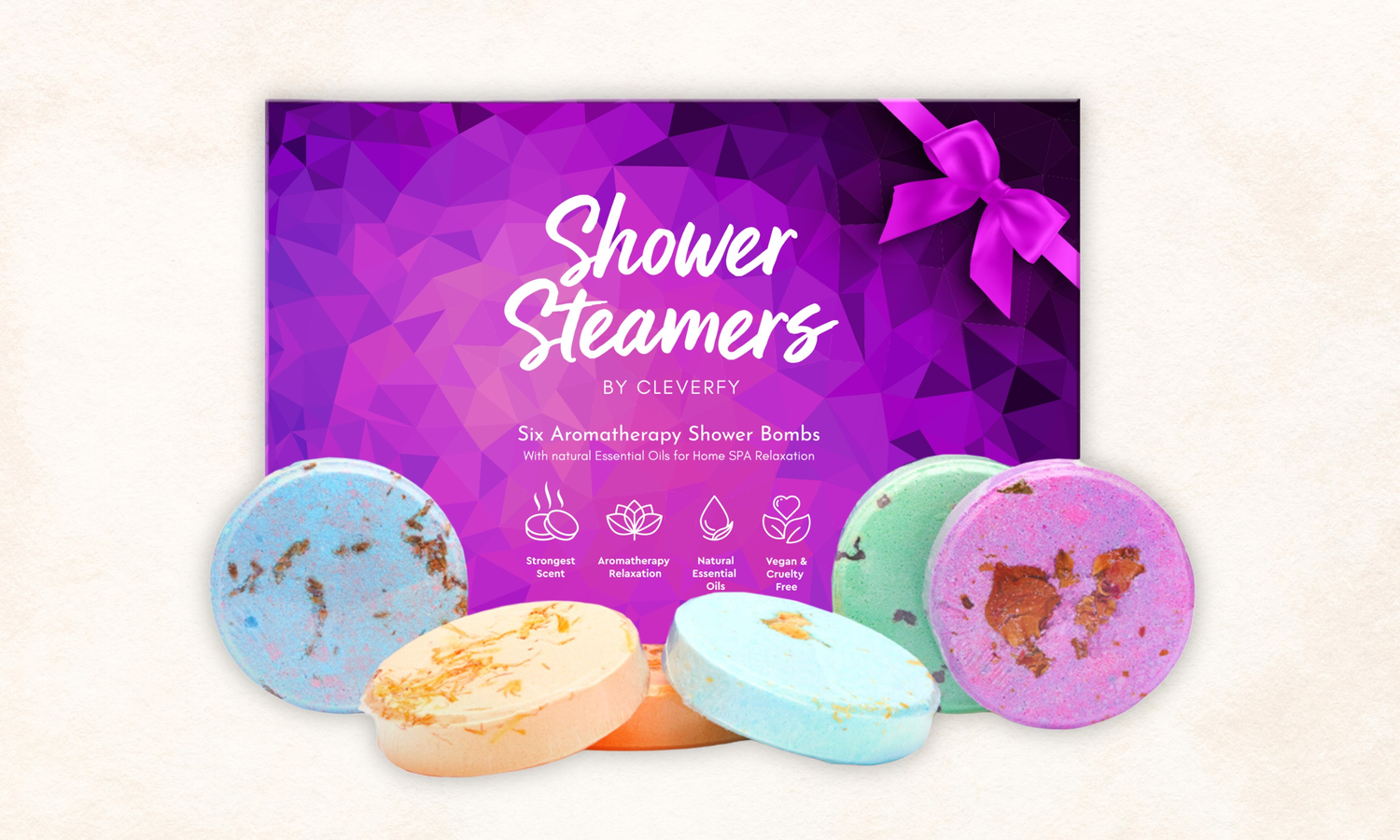


Cozy Autumn Aromatherapy for Shower Steamers
You come home after dark, your coat's still cold from the street, and dinner, messages, and tomorrow's list are already competing for attention. You don't have time for a long bath, and you may not even have a tub. A warm shower, though, is already part of your evening. That's exactly where cozy autumn aromatherapy can fit, as a brief sensory cue that helps the day feel finished.
Table of Contents
- Welcome to Cozy Autumn Aromatherapy
- Prepare Your Autumn Shower Space
- Build the Shower Steamer Routine
- Match Shower Aromatherapy to Your Mood
- Create Autumn Scent Blend Recipes
- Keep the Routine Comfortable and Safe
- Turn the Routine Into a Seasonal Gift
Welcome to Cozy Autumn Aromatherapy
A busy professional steps into the shower at seven, still rehearsing a meeting in her head. She places a steamer where splashes reach it, lets warm water build light steam, and breathes in an orange and vanilla scent she already likes. Nothing about her schedule changes. The shower becomes a short, repeatable pause instead of another task to rush through.
The same routine works for a quiet evening at home. You lower the lights, leave your phone outside the bathroom, and let the familiar scent signal that work's done. If you don't own a bathtub, you aren't missing out. A shower steamer dissolves on the floor and releases aroma into the steam, so you get the scent experience without filling a tub.
Central principle: Cozy should feel pleasant and breathable, not overwhelmingly fragrant.
That distinction matters because scent isn't a medical treatment. A 2023 systematic review and network meta-analysis of 44 randomized controlled trials with 3,419 participants found a statistically significant reduction in state anxiety, with a weighted mean difference of -6.63 points, yet heterogeneity was high, with I² = 93.2%, so results varied considerably across studies, as detailed in the 2023 network meta-analysis of essential oil aromatherapy for anxiety. You're building comfort, not chasing a guaranteed outcome for anxiety, congestion, insomnia, or mood.
Think of cozy autumn aromatherapy as atmosphere with boundaries. Pick a scent you enjoy, keep the intensity moderate, and repeat the same small steps on busy days. When the routine's easy, you'll use it.
The set below shows the simple, bath-free format this routine relies on.

Prepare Your Autumn Shower Space
Good preparation takes two quiet minutes, and it prevents most disappointments. Start by choosing one tablet or one scent blend, not several at once. A single profile, such as warm citrus with a herbal note or a soft woody scent, is easier to judge. If you stack competing fragrances, you won't know which one felt too strong or which one you'd happily repeat tomorrow.
Next, read the product instructions before you turn on the water. Labels vary, and they tell you where the tablet belongs and how it's meant to be used. Pick a water temperature that feels warm and comfortable, not punishingly hot. Very hot water can make the whole experience feel intense, while steady warmth gives you steam without making the small room feel heavy.
Clear the Floor and Check the Air
Move bottles and razors away from the spot where the tablet will sit. You need stable footing and a clear patch of floor where splashes reach the steamer. Keep it away from the strongest direct stream. Direct impact breaks a tablet down quickly and can push the scent up all at once, while indirect splashes release it more gradually.
Then confirm that you can ventilate the bathroom. Crack a window, plan to run the exhaust fan, or leave the door slightly open after you finish. In a small or poorly ventilated room, a lighter scent is usually the smarter choice because fragrance concentrates faster. A meta-analysis of inhalation aromatherapy in college students found the most favorable subgroups used compound essential-oil blends, with a standardized mean difference of -0.91, and cloth or pad delivery, with a standardized mean difference of -1.03, suggesting controlled, indirect release may be preferable, as reported in the meta-analysis of inhalation aromatherapy for test anxiety.
The visual checklist below sums up this two-minute setup.
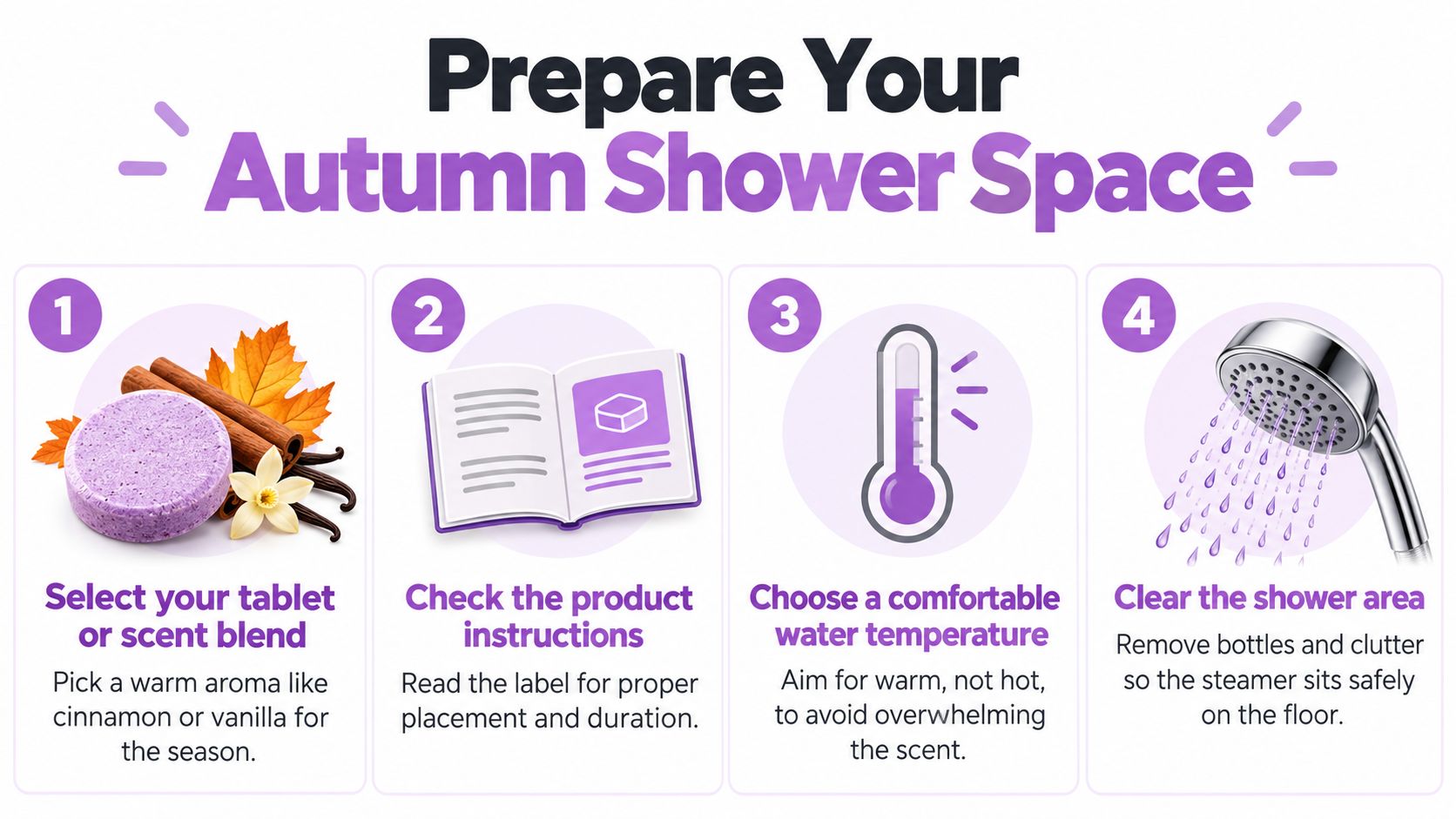
Your Pre-Shower Checklist
- Airflow ready: The fan works or a window can open, so scent doesn't linger too heavily.
- Placement planned: You've picked a floor spot reached by splashes, not the full force of the spray.
- Sensitivity checked: You've chosen a milder profile if strong fragrance usually bothers you.
Build the Shower Steamer Routine
Begin by choosing a single steamer that matches the moment you're in. If you're using Cleverfy Purple Gift Set of 6 Shower Steamers, its listed scents include Lavender, Orange, Peppermint, and Menthol and Eucalyptus, and the set is described as Vegan and Cruelty-Free. Pick one scent for tonight and leave the rest for another day. That restraint keeps the aroma clear and your feedback honest.
Place the tablet on the shower floor where water splashes it lightly. Turn on the shower, step in once the temperature feels comfortable, and give the steam a moment to carry the scent through the space. You don't need to stand directly over the tablet or hold it in your hands. Let the water do the work while you wash as usual.
The three-stage flow below shows this placement and activation sequence.
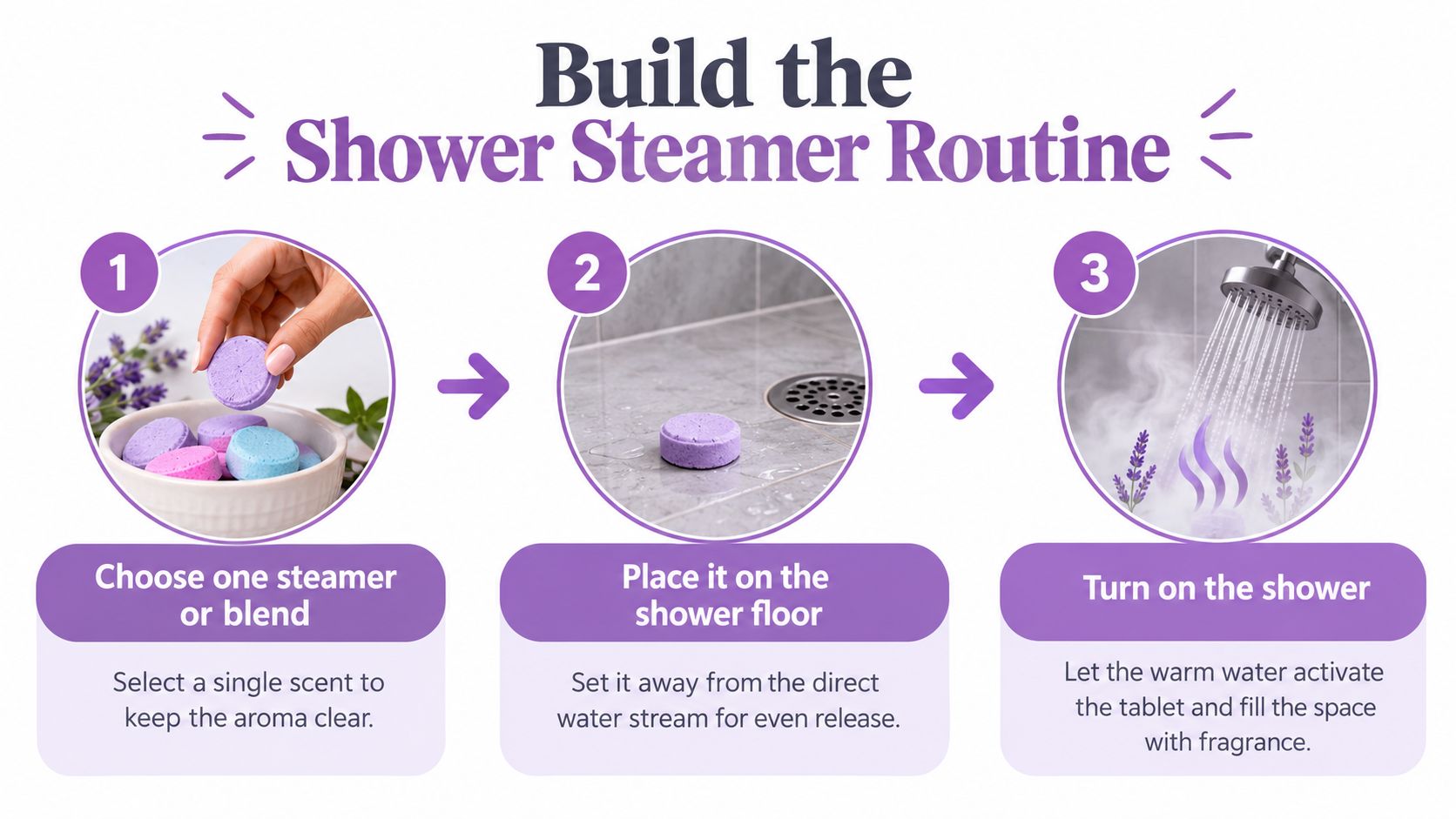
Two Real Evenings, Two Small Adjustments
After work, one person might choose an orange scent, keep the shower brief, and rate how relaxed she feels afterward using a simple 0 to 10 rating. That note helps her decide whether the same routine deserves a repeat. Before bed, another person might choose lavender, dim the bathroom light, and move more slowly, treating the scent purely as a cue that the day's ending. A 2022 systematic review in people with cancer reported a stronger result for lavender essential oil, with a standardized mean difference of -1.12 versus controls, as shown in the 2022 systematic review of aromatherapy for anxiety and depression in people with cancer, though that clinical evidence doesn't transfer directly to healthy consumers at home.
You can adjust as you go. If the aroma feels faint, nudge the tablet closer to the splashes. If it's dissolving too fast, move it slightly away from the main flow. Small changes beat adding a second tablet.
Watch the short demonstration below to see placement and activation in a real shower.
When Something Feels Off
If the fragrance becomes too strong, increase ventilation or finish your shower without the steamer nearby. If the tablet crumbles quickly, it probably sat in the direct stream, so move the next one farther out. If the floor feels slippery, step carefully, rinse the area, and clean up any residue before you leave. Comfort and steady footing matter more than finishing a tablet.
Match Shower Aromatherapy to Your Mood
Your goal should decide the scent, the timing, and even the lighting. A shower meant to help you unwind shouldn't look exactly like one meant to get you moving. When you name the mood first, cozy autumn aromatherapy stops being a vague idea and becomes a choice you can repeat on purpose.
For relaxation, keep everything moderate. Choose warm water, a fragrance at comfortable strength, dim lighting if you can, and a short stretch without added demands. Leave your phone outside and don't use the time to plan tomorrow. The scent supports the mood, but the quiet and warmth do much of the work.
The comparison below contrasts a calming evening approach with an alert morning one.
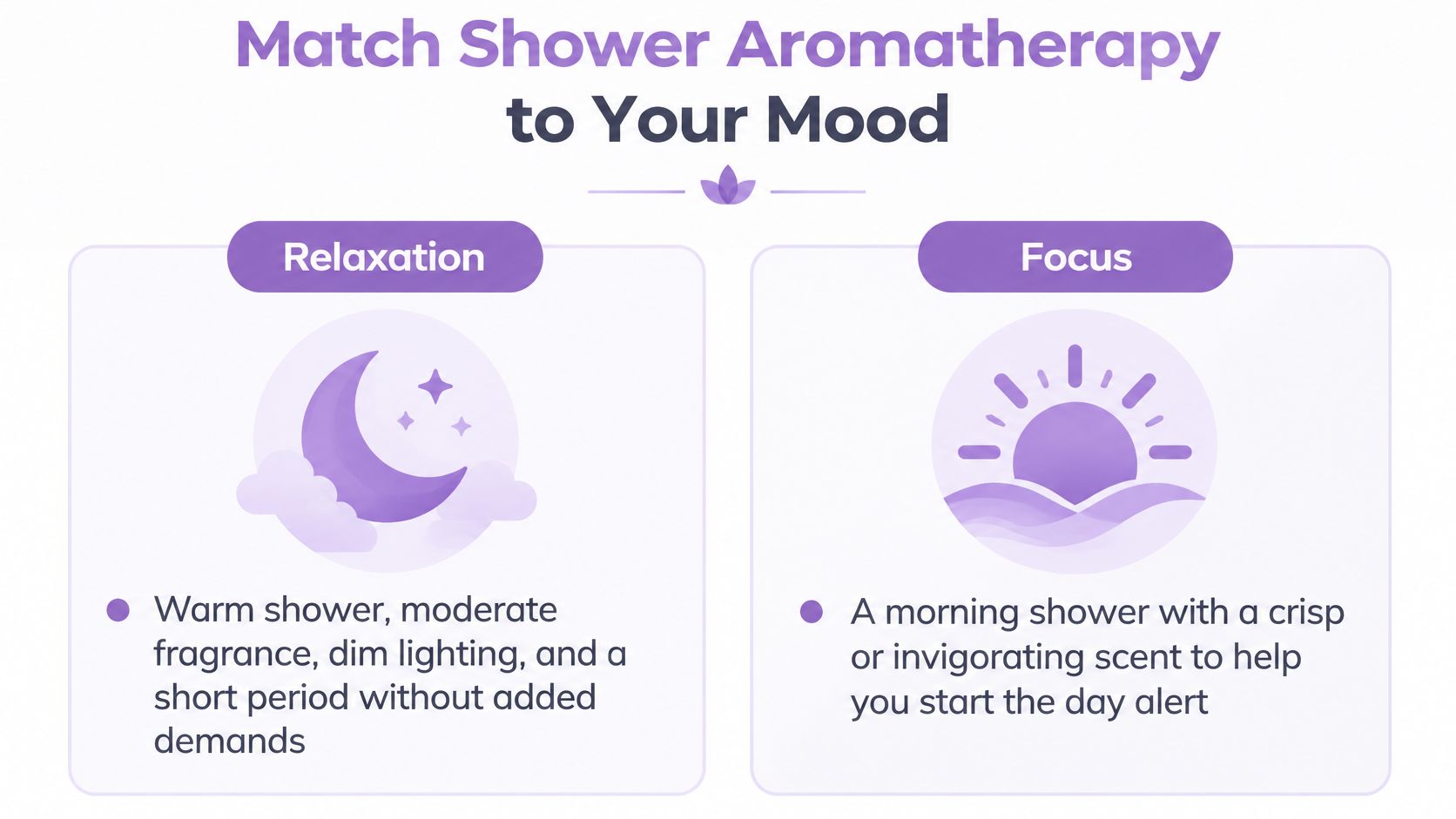
For focus, shower in the morning or early in the day. Pick a crisp scent you already associate with feeling alert, such as a citrus or mint profile you personally enjoy. That's a preference, not a medical promise. Brighter light and a brisk pace reinforce the same cue, so the whole routine points in one direction.
For sleep preparation, treat the scent as a brief pre-bed signal. Shower close to bedtime, keep the light low, and follow it with the same calm steps each night, such as changing into night clothes and reading briefly. You're building an association between that scent and winding down, not relying on fragrance alone. If you'd like more help pairing fragrances with daily goals, the guide to matching essential oil scents to energize, relax, focus, and sleep walks through mood-based choices in plain terms.
| Mood | Best timing | Scent direction | Routine focus |
|---|---|---|---|
| Relaxation | Evening after work | Warm, familiar, moderate | Dim light, quiet, no phone |
| Focus | Morning or early day | Crisp citrus or mint | Brighter light, brisk pace |
| Sleep preparation | Just before bed | Soft, familiar favorite | Low light, same steps nightly |
Your physical setup also shapes the mood. Soft towels, a clear counter, and gentle light can make an ordinary bathroom feel calmer without a remodel. If you're working with a tight budget, practical ideas to create a spa bathroom affordably can help you prioritize small changes first. Start with what changes the feeling most, not what costs the most.
Create Autumn Scent Blend Recipes
You don't need a complicated formula to make a shower smell like autumn. Start with one familiar note you already enjoy. Add a second note only if you want contrast. Then stop. Two notes are easier to understand, easier to adjust, and far less likely to become muddled or overpowering in a small, steamy room.
Think in scent families instead of chasing a perfect recipe. Orange feels bright, vanilla feels soft, lavender feels familiar to many people, and peppermint or eucalyptus feels sharper and cooler. None of these reactions is universal. Your memories shape what reads as cozy, so treat every blend below as a starting point you can accept, tweak, or abandon.
Three Starting Points by Mood
- Cozy relaxation: Pair orange with vanilla, and let the citrus lift the softer note so the blend feels warm rather than heavy.
- Morning focus: Pair a citrus note with peppermint for a crisper profile, and keep the overall strength moderate so it stays comfortable.
- Evening wind-down: Pair lavender with vanilla for a gentler finish, and use the same combination consistently so it becomes a recognizable bedtime cue.
Coconut can soften a sharper partner, while a woody or spiced direction adds the seasonal feeling many people want in October. If you enjoy comparing how autumn scents are layered outside the bathroom, browsing autumn candle scents and styling can spark ideas about which warm notes you naturally gravitate toward. Notice your preferences there, then bring only one or two of them back to the shower.
Keep Experimenting Simple and Safe
Change one thing at a time. If tonight's blend feels too sharp, soften it next time rather than adding a third scent on the spot. If you're sensitive to fragrance, fewer notes and lower intensity are the sensible default, and a ready-to-use product may suit you better than improvising.
Follow manufacturer directions for any commercial steamer you use. Don't improvise ingestion or skin application with products meant for the shower floor, and don't assume a diffuser recipe belongs in a shower. If you're curious about one specific warm combination, this overview of ginger and orange essential oils in aromatherapy explains that pairing in more detail. Read it as scent education, not as a reason to layer extra products. The best blend is the one you can breathe comfortably and would choose again.
Keep the Routine Comfortable and Safe
Stronger isn't better. That's the assumption worth challenging, especially in autumn when windows stay closed and bathrooms hold steam longer. A concentrated scent in a small, sealed room can stop feeling cozy very quickly. Your goal is an atmosphere you barely have to think about, not a cloud of fragrance you have to tolerate.
Essential oils contain volatile organic compounds, often shortened to VOCs, and UK respiratory guidance notes these can trigger symptoms in some people with asthma or other lung conditions, advising people to avoid aromatherapy when strong scents are known triggers, as explained in UK respiratory guidance on complementary therapies and essential oils. That doesn't mean every person reacts the same way. It does mean intensity and airflow deserve real respect.
The do and avoid panels below summarize the habits that keep a routine breathable.
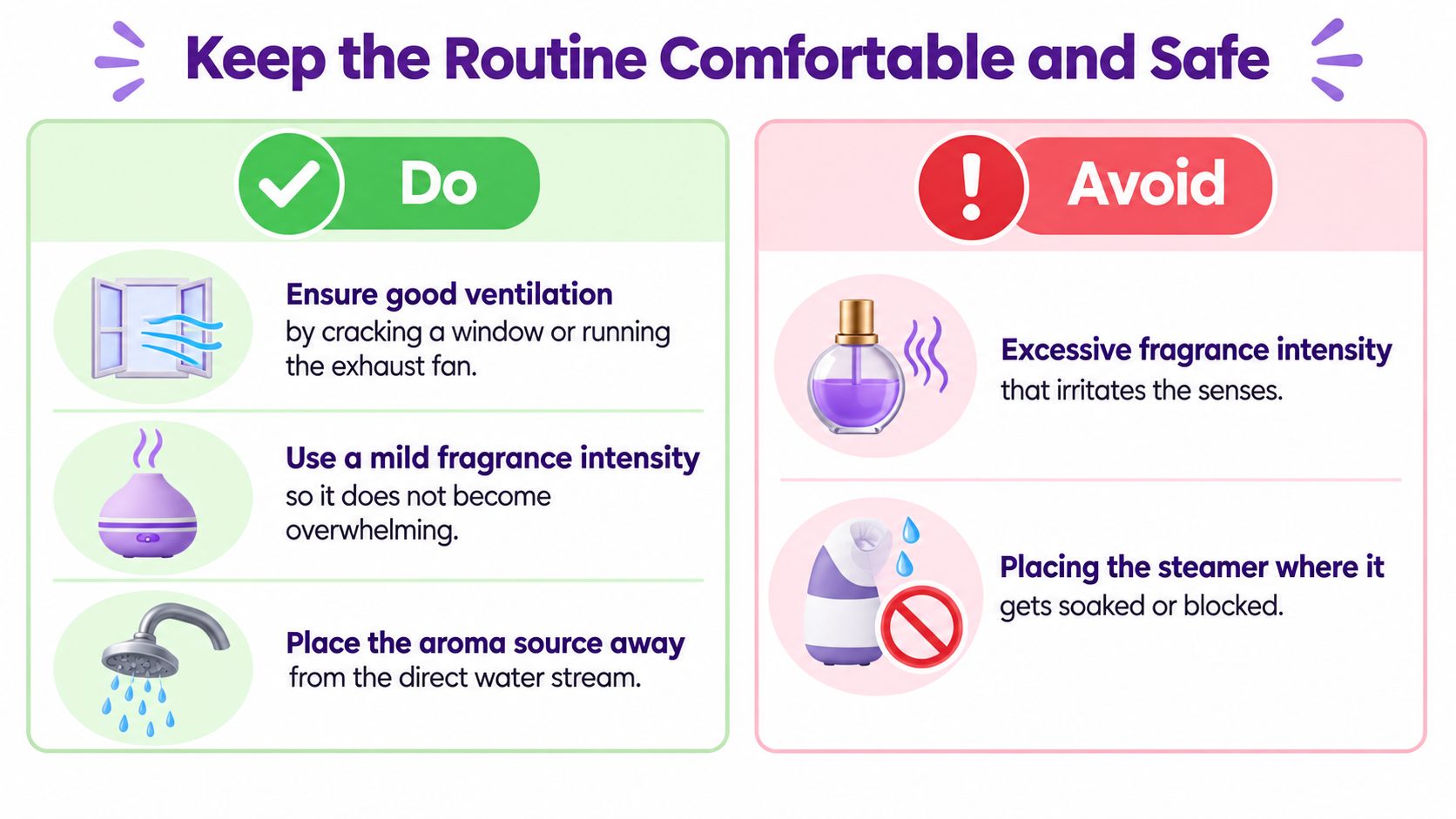
Run the exhaust fan or crack a window, even in colder months. Keep the steamer away from direct water impact so the release stays gradual. Stop at the first sign of coughing, throat or eye irritation, headache, or breathing discomfort. Pushing through discomfort isn't self-care, and you'll learn more from ending one session early than from forcing it.
Extra caution is sensible around children, pets, pregnancy, asthma, COPD, and fragrance sensitivity. Situations differ, so this article can't make an individual medical recommendation for you or your household. Cleveland Clinic notes there's no strong evidence that essential oils are safe or effective as an allergy treatment, while warning that VOC exposure may worsen breathing conditions such as asthma or COPD, as set out in Cleveland Clinic guidance on essential oils for allergies.
A pleasant seasonal ritual is not treatment for a respiratory illness, an allergy, or a sleep disorder.
Shower steamers are an aromatic shower product. They aren't a treatment for allergies, congestion, anxiety, insomnia, or seasonal depression. If symptoms persist or worry you, talk with a qualified clinician rather than increasing scent strength or session length. That boundary protects both your health and your trust in the routine.
Your Cozy but Breathable Checklist
- Ventilate first: Fan on or window cracked before the steam builds.
- Keep it mild: One tablet, indirect splashes, no layering extra scents.
- Listen early: End the session if irritation or discomfort appears.
Turn the Routine Into a Seasonal Gift
Choosing a shower steamer set for someone works like packing their suitcase: everything inside has to suit their trip. The same things you weighed for your own routine, pack size, scent variety, and comfortable use, now become the filter for a gift the recipient will reach for.
Start with pack size. A six-pack suits a trial, a small present, or someone who reaches for scent only occasionally. An eighteen-pack suits extended use, refills, or a larger occasion where variety matters. Cleverfy Beauty sells both formats and ships to the U.S. and Canada. Its shipping page states free shipping on qualifying U.S. orders of 50 USD and above and lists a money-back guarantee.
Match the box to the person.
A recipient who likes variety may enjoy an assortment spanning lavender, citrus, vanilla, and mint directions so they can find a favorite. A fragrance-sensitive recipient usually does better with a smaller set and gentle, familiar profiles than a large box of unknowns. Themed sets, such as a purple gift set or a men's gift set, work as starting points based on their listed scent profiles; how the recipient responds to each scent is theirs to discover in the shower.
If you want to compare formats before buying, this guide to choosing aromatherapy gift sets walks through matching assortment size to the occasion. Read the listed scents and weigh them against the recipient's bathroom, schedule, and sensitivity. A thoughtful match beats the biggest box.
Include the how-to with the gift. Tell the recipient to place the tablet away from the direct stream, keep the fan on or a window cracked, and stop if a scent feels uncomfortable. That small note turns a seasonal present into a routine that stays cozy and breathable from the first use.
A handwritten tag keeps expectations warm and honest: For cozy autumn showers. Place one steamer where light splashes reach it, keep the fan on, and enjoy a few quiet minutes that are only yours. The tag promises a few quiet minutes and a pleasant scent, which keeps the gift low-pressure and the ritual entirely theirs.
When you are ready to build your own routine or choose a seasonal gift, the six-pack gift sets and eighteen-pack assortments from Cleverfy Beauty give you a starting point. Pick the scent profiles that suit your mood and your bathroom, begin with one tablet and good ventilation, and let tonight's ordinary shower become your first repeatable autumn ritual.

