

Master Your Mental Wellness: A 2026 Guide to Well-being
You know the feeling. The day starts with a half-finished breakfast, three tabs open on your laptop, a message you meant to answer yesterday, and that quiet sense that you're keeping up on paper but not inside your own head. Mental wellness matters in moments like that, not as a luxury, but as a basic part of living well.
Table of Contents
- Starting Your Journey to Mental Wellness
- What Mental Wellness Really Is
- The Four Pillars of Daily Well-Being
- Building Your Mental Wellness Toolkit
- The Role of Scent and Aromatherapy
- Create Your Daily Aromatherapy Ritual
- Your Questions Answered and Next Steps
Starting Your Journey to Mental Wellness
The good news is that you don't need a dramatic life overhaul to feel more grounded. A calmer mind often starts with ordinary moments, the shower, the commute, the first sip of coffee, the five minutes before bed, when you decide to do one small thing on purpose instead of running on autopilot. That's why people often look for support that fits into real life, including local options like Kelowna trauma counselling services from Interactive Counselling when stress feels too heavy to sort out alone.

The reason this topic matters so much is simple. The World Health Organization reported in September 2025 that more than 1 billion people were living with mental health conditions worldwide, and those conditions are among the leading causes of disability globally, which makes mental wellness a persistent public-health issue, not a niche concern WHO.
Practical rule: start with a routine you already have, then attach one calming action to it. That makes the habit easier to keep than adding a brand-new task to an already full day.
People often think they need to wait until life gets less busy before they can care for their mind. In reality, mental wellness is built during busy seasons, one repeatable ritual at a time.
What Mental Wellness Really Is
A stressful morning can make mental wellness feel abstract, until you notice the basics. Did you sleep well? Can you concentrate? Do small setbacks feel manageable, or do they pile up quickly? Those everyday signals give you a clearer read on mental wellness than any slogan ever could.
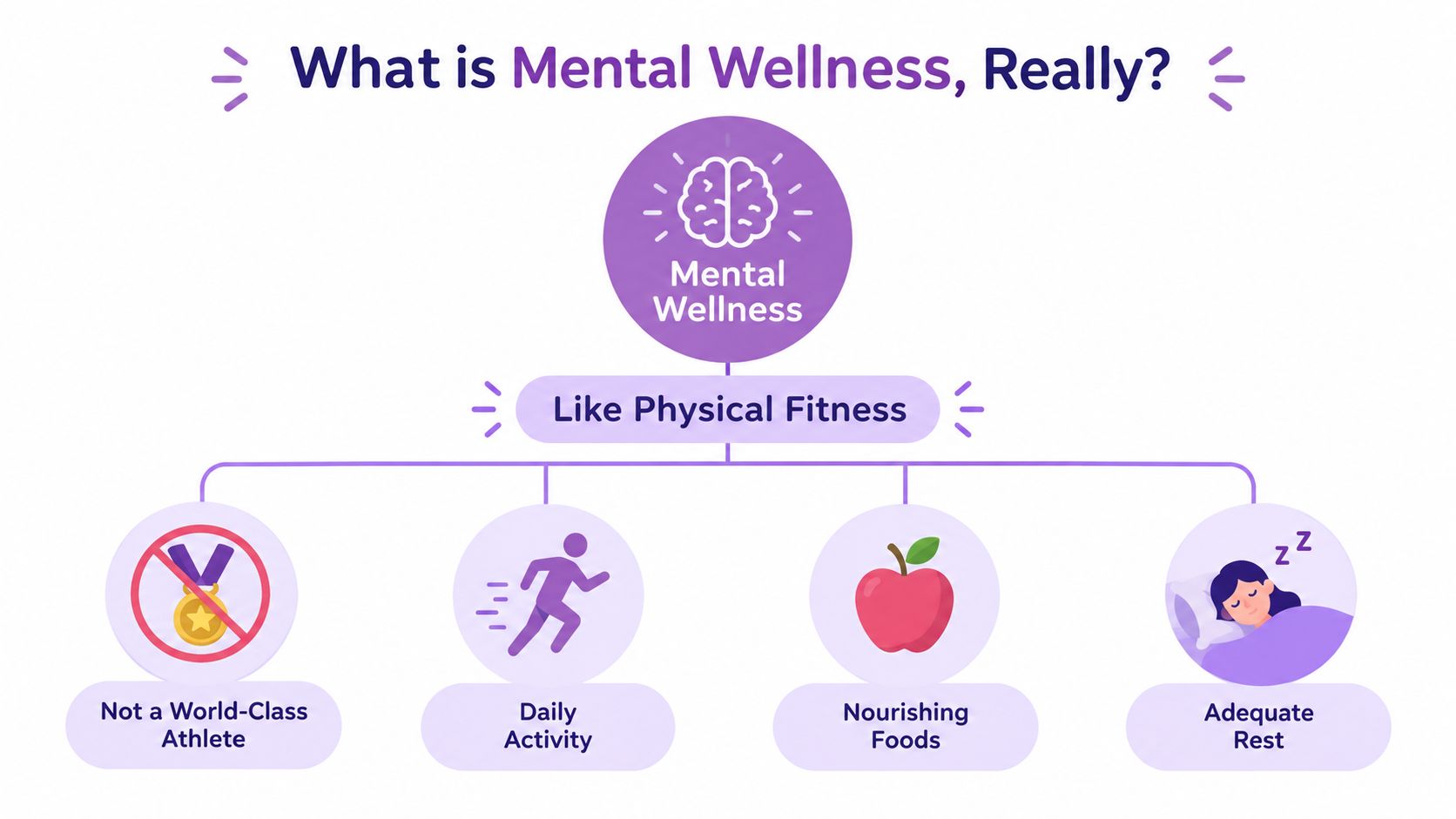
A helpful comparison is physical fitness. You do not have to be an athlete to benefit from movement, and you do not need a problem-free life to care for your mind. What matters is building strength, steadiness, and the ability to recover when stress shows up.
Mental wellness also sits on a spectrum. At one end, people may feel drained, disconnected, or overwhelmed. At the other, they tend to feel more resilient, more present, and better able to handle ordinary pressure without spiraling.
The Institute for Health Metrics and Evaluation reported in 2026 that global mental disorders have nearly doubled since 1990, and that they are now the leading cause of years lived with disability globally IHME. That trend makes the topic a public health issue, not a niche self-improvement topic. For a closer look at how stress affects both mind and body, see the science behind stress.
What changes when mental wellness improves
When mental wellness improves, the changes usually show up in ordinary life. Stress feels easier to handle, conversations carry less friction, and after a hard day, returning to baseline takes less effort.
Physical fitness helps your body do life more comfortably. Mental wellness helps your mind do life more comfortably. The two support each other in ways people often overlook.
Wellness does not look the same for everyone, and Zoe Behavioral Health on varied wellness is a good reminder of that. Some people need more rest, some need more structure, and some need more connection. Those differences can still fit inside the same healthy picture.
You can make the idea concrete in daily life. A morning shower can become a small anchor point, and Cleverfy Energy Boost Megapack of 18 Shower Steamers is described as a shower routine option with 18 tablets, pure essential oils, and scents like Ginger & Orange, Grapefruit, and Cocoa & Orange. That kind of ritual links care for your mind to something you already do.
Mental wellness grows through repetition. One small routine, kept often, matters more than waiting for a perfect moment.
The Four Pillars of Daily Well-Being
The quickest way to understand mental wellness is to look at the foundation underneath it. Four supports matter again and again, sleep, movement, connection, and mindful attention. If one of those starts slipping, your mind usually feels it before you can name why.
Recent evidence also shows that distress isn't only personal, it's shaped by daily conditions. In the U.S., 80% of adults said uncertainty about the future harms their mental health, 78% cited cost of living increases, and 56% mentioned social isolation or loneliness, which is a strong reminder that internal coping skills work best when they're paired with real support AXA Global Healthcare.
Quality sleep
Sleep is where your mind sorts, settles, and repairs. When sleep gets patchy, emotions feel sharper, patience gets thinner, and small problems start to feel bigger than they are.
Regular movement
Movement doesn't have to mean exercise in the formal sense. A short walk, a few stretches, or standing up and resetting your posture can all change how your brain handles stress.
Meaningful connection
Humans regulate through other humans. A brief check-in with a friend, a real conversation at dinner, or a message that says “thinking of you” can interrupt isolation before it becomes a heavy spiral.
Mindful attention
Mindfulness is not about emptying your mind. It's about noticing what's happening inside you so you can respond with more choice and less autopilot.
Some days, the most effective wellness habit is not adding something new. It's noticing what your body has been asking for all along.
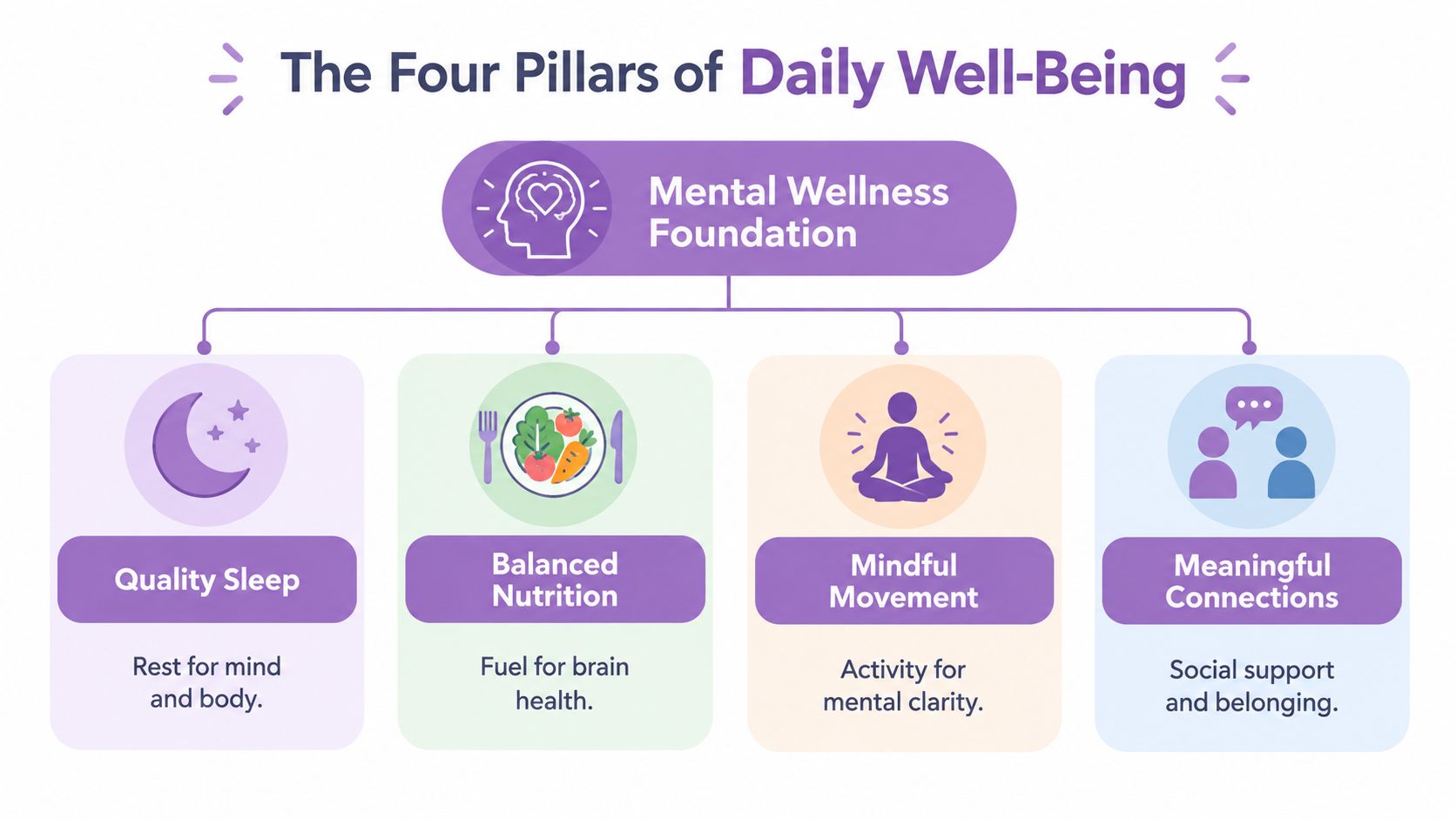
These pillars matter because they're practical. They don't require perfection, just enough consistency to keep your nervous system from feeling like it's constantly bracing for impact.
Building Your Mental Wellness Toolkit
A good toolkit feels small enough to use on a rough day. If the habit needs too much willpower, it probably won't survive real life. The goal is to pair each pillar with a tiny action that fits into something you already do.
Sleep that starts before bedtime
A wind-down routine doesn't need to be long. Fifteen quiet minutes can be enough if you use them consistently, for example by dimming lights, putting your phone away, and doing one repetitive action that tells your body the day is ending.
Movement that sneaks into the day
Think in short bursts instead of workouts. A brisk walk to the mailbox, a stretch between meetings, or standing while you take a call can all act like “exercise snacks,” which is often easier than trying to carve out a full gym session.
Connection that doesn't feel forced
Meaningful contact can be simple. Send a text that asks a real question, not just a thumbs-up emoji. Try, “What's been taking up most of your energy lately?” or “What helped you get through today?”
Mindfulness in one minute
If your thoughts are racing, breathe in slowly, hold for a comfortable beat, then exhale a little longer than you inhaled. One minute won't solve everything, but it can stop a stress reaction from snowballing.
The point is to make support automatic. If you have to debate whether to do the habit, the habit is too big.
For a broader look at gentle routines, terpenes and emotional balance offers another way to think about how sensory cues can fit into self-care. And if you like turning daily care into a repeatable ritual, this self-care routine guide shows how a regular shower can become a dependable reset.
A simple structure can help you remember it:
- Morning: one action that wakes you up without urgency.
- Afternoon: one reset that breaks tension before it builds.
- Evening: one signal that tells your mind it can soften.
- Anytime: one social touchpoint that reminds you you're not carrying everything alone.
That's enough to begin. Mental wellness grows faster when your habits feel familiar instead of demanding.
The Role of Scent and Aromatherapy
Smell has a direct line into memory and emotion, which is why scent can change the tone of a moment so quickly. A familiar aroma can make a routine feel safer, calmer, or more energizing, and that matters when you're trying to build habits that stick.
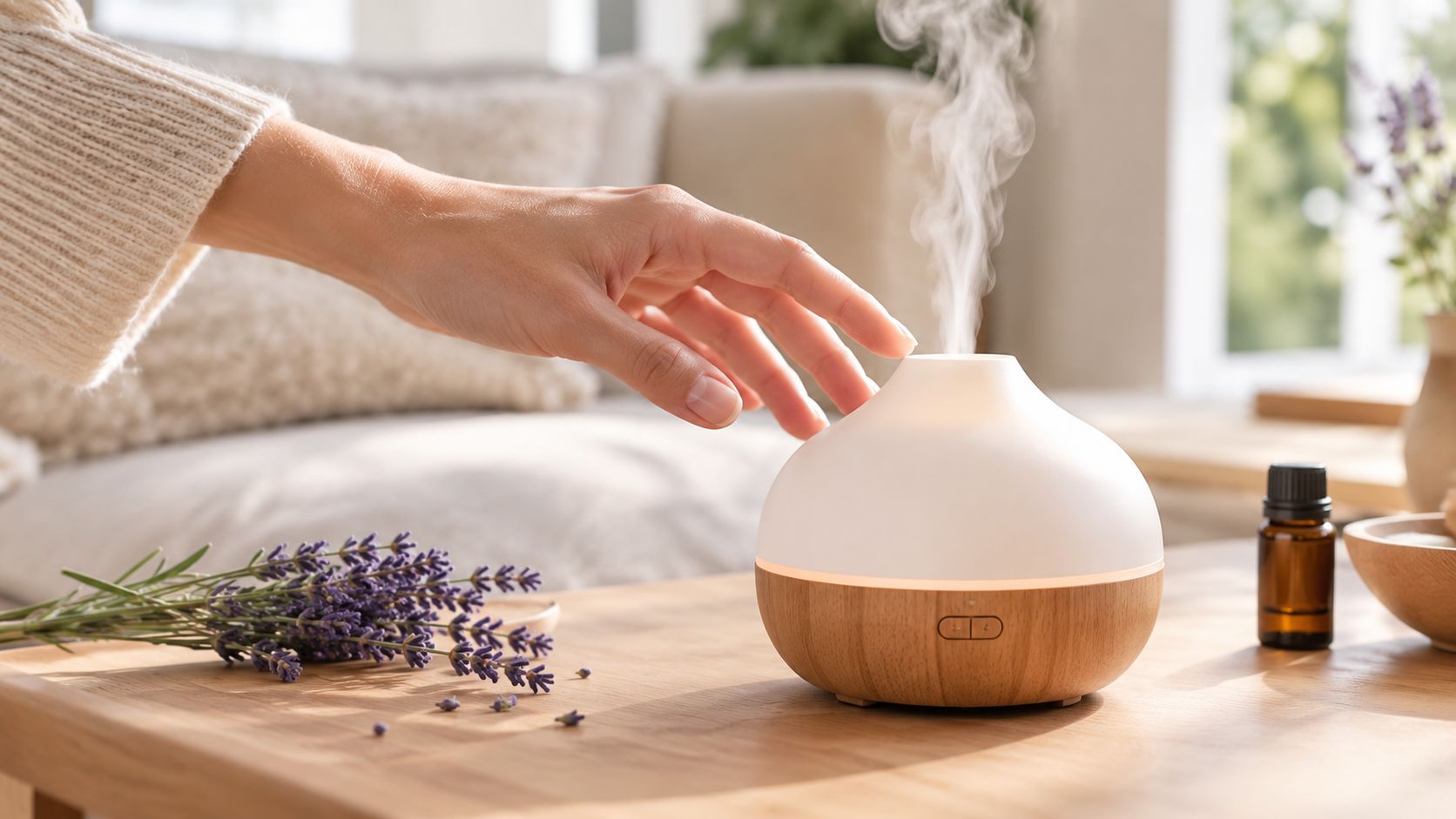
That's also why aromatherapy works well as a cue. If the same scent appears every time you do your wind-down shower, your brain starts linking that smell with relaxation. Over time, the scent itself can become part of the signal that it's time to slow down.
Why scent feels so personal
People react to aroma in different ways because scent is tied to memory and experience. One person may find citrus stimulating, another may connect it with cleanliness and a fresh start, and another may enjoy the ritual of noticing a fragrance in a quiet bathroom.
That's why aromatherapy fits mental wellness best when it supports an existing habit instead of trying to replace one. It works as a small anchor, not a magic fix.
For readers who want a plain-language overview of the mechanism, this explainer on how aromatherapy works and how it can help with anxiety, stress, and depression is a useful companion.
How to use scent without overcomplicating it
Choose one scent for one purpose. A bright aroma can signal morning energy, while a softer scent can signal evening calm. Keep the association simple, and repeat it often enough that your brain learns the pattern.
That's the key power here. Scent gives your routine a recognizable beginning and end, which makes self-care feel less like a chore and more like a cue your body can understand.
Create Your Daily Aromatherapy Ritual
A good ritual should be easy enough to repeat on a tired Tuesday. If you already shower every day, that's a perfect place to build a consistent sensory habit without adding extra time to your schedule.
Here's a simple way to divide it by mood:
| Scent | Primary Benefit | Best For |
|---|---|---|
| Peppermint or citrus-forward blends | More alert, awake-feeling mornings | Early showers, slow starts, mental fog |
| Lavender | Calmer evenings and softer transitions | Night showers, pre-bed wind-down |
| Ginger and orange | Brisk, bright, uplifting energy | Getting moving before work |
| Gentle floral or herbal scents | A steadier, quieter mood | Stressful days, after-work reset |
Morning showers
Use a scent that feels bright and clean, then keep the moment focused. Step into the shower, place the steamer where water can activate it, and take three slow breaths before you start the rest of your routine. That tiny pause is what turns a shower into a ritual.
Evening showers
Choose a softer scent and protect the boundary around it. Put your phone away, lower the lights afterward, and move into the next part of your night without reopening work messages or social feeds.
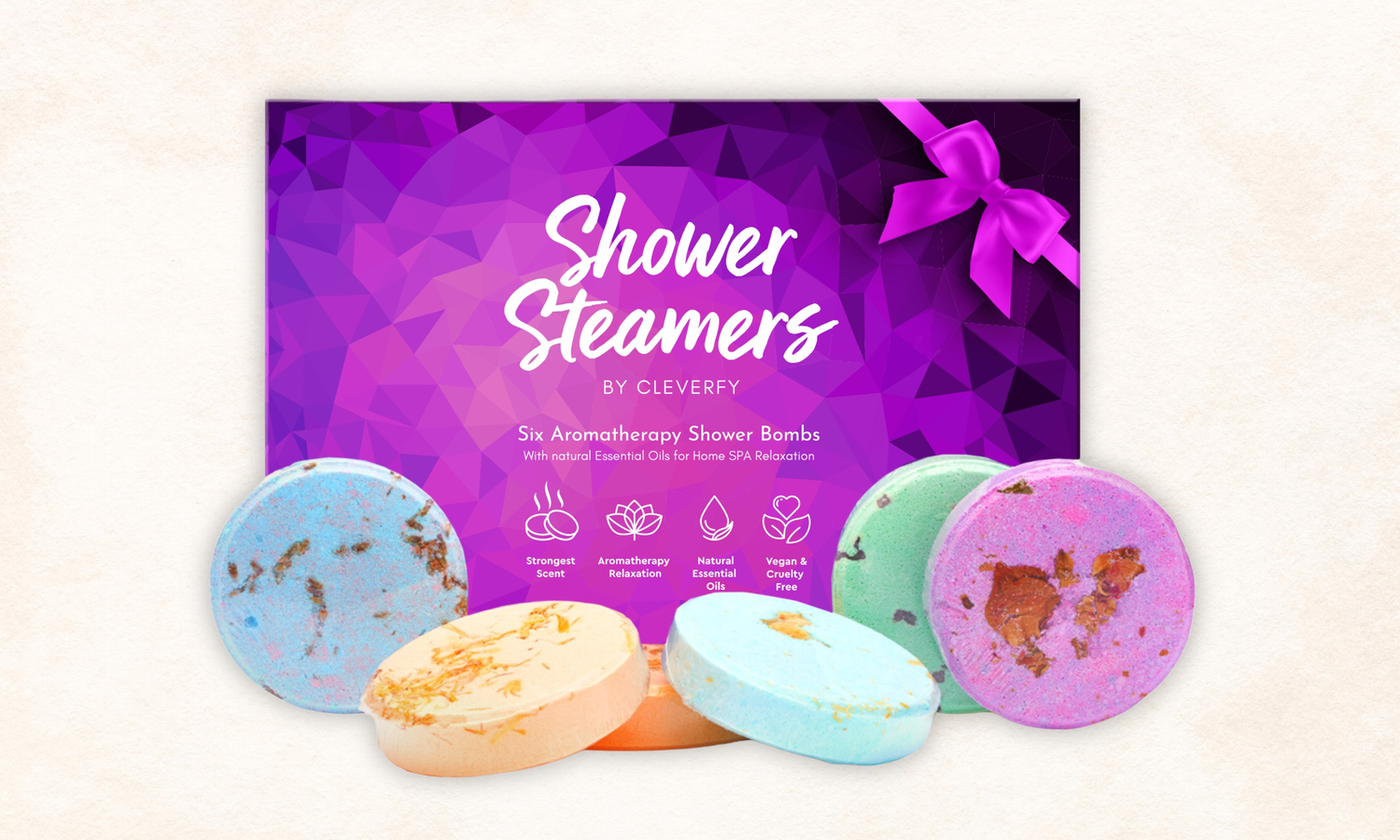
If you like giftable options, themed shower steamer sets can be a thoughtful way to support someone else's routine too. The brand offers men's, purple, and red assortments, along with a 18-pack energy-focused set and a lavender-focused relax set, which makes it easier to match a scent with a daily goal or to give a practical present that still feels personal.
Simple test: if the shower leaves you feeling more intentional than when you walked in, the ritual is doing its job.
The best rituals are the ones you keep. Start with one scent, one time of day, and one reason to return to it tomorrow.
Your Questions Answered and Next Steps
What's the difference between mental health and mental wellness? Mental health usually refers to your overall psychological state, including conditions that may need clinical care. Mental wellness is the day-to-day practice of supporting that state with habits, routines, and choices that help you feel steadier.
How long does it take to feel a difference? That depends on the habit and the person. Some changes, like a calmer shower or a short breathing break, can feel helpful right away, while deeper steadiness usually comes from repeating small actions over time.
Is aromatherapy safe for children or pets? That's a question to discuss carefully with a qualified professional, because scent sensitivity and safety needs vary. If you're sharing a home, keep any fragrance use measured, ventilated, and age-appropriate.
A few credible places to turn if you need more support include the World Health Organization mental health resources, Mental Health America, and the Centers for Disease Control and Prevention mental health information. If you're in immediate danger or thinking about harming yourself, contact local emergency services right away.
Mental wellness works best when it's both gentle and honest. Small rituals can support you, and professional help is still a strong, wise option when your load gets too heavy to carry alone.
Cleverfy Beauty creates shower steamer routines that turn a daily shower into a simple wellness ritual, which fits the kind of mental wellness habits covered here. If you want an easy way to pair scent with a morning reset or an evening wind-down, visit Cleverfy Beauty and explore the shower steamers that fit your routine.

