

Personal Growth Through Everyday Aromatherapy Rituals
You've probably had this moment, maybe this morning. The shower is running, the room is warm, and for the first time all day nobody needs anything from you. You drop a citrus-mint steamer on the floor, breathe in, and your shoulders ease without any big decision or pep talk. That tiny shift matters because personal growth usually starts the same way, with a repeatable cue that makes a better choice feel normal instead of forced.
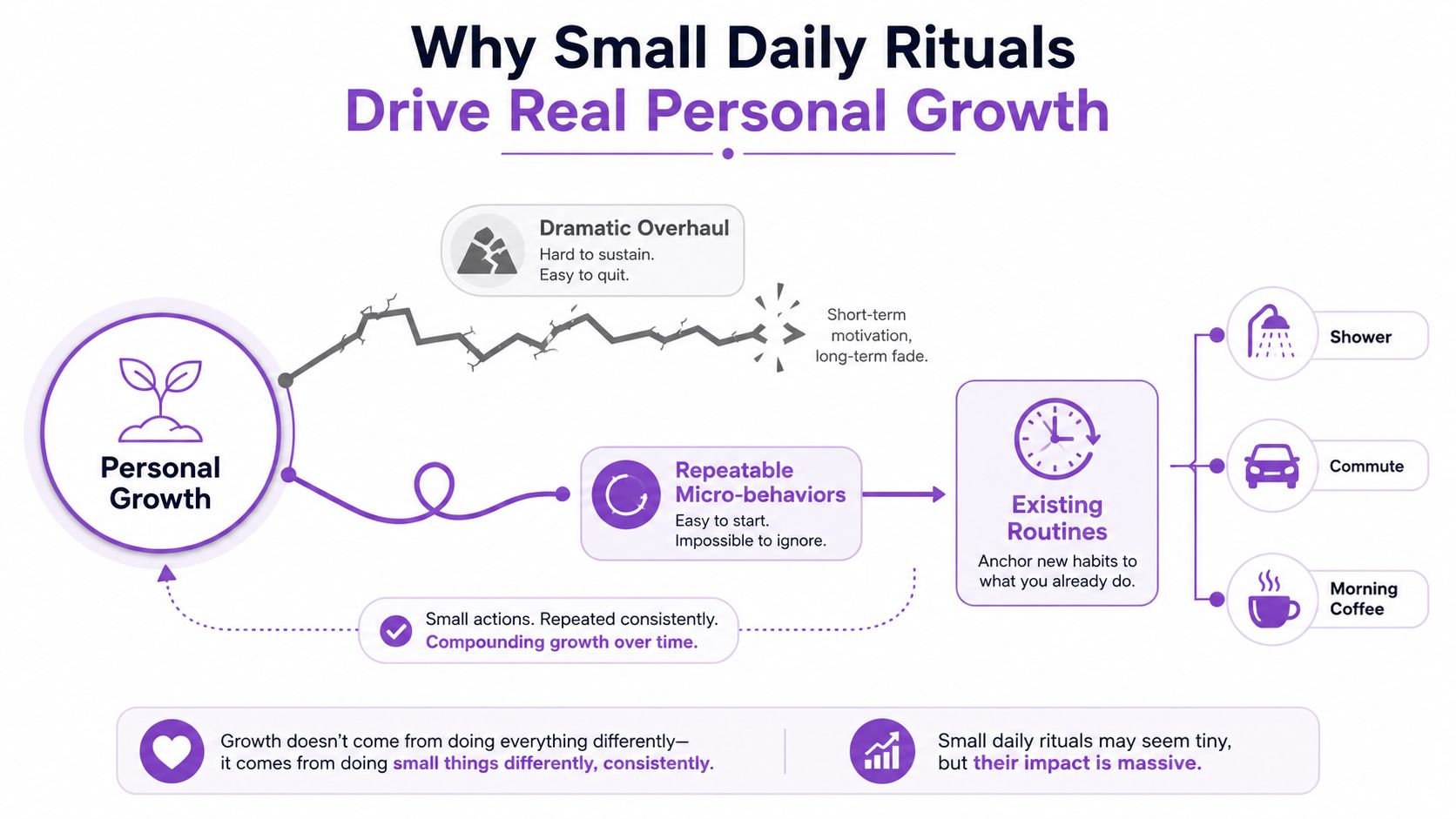
The problem is that many people try to change their lives like they're renovating a house in one weekend. They aim for a dramatic reset, then run out of energy before the new routine has a chance to stick. A calmer approach works better, one that treats daily rituals as the building blocks of identity, mood, and follow-through.
Table of Contents
- Why Small Daily Rituals Drive Real Personal Growth
- The Personal Growth Landscape and Why Routines Matter
- Essential Oil Gift Formats Worth Knowing
- Safety, Purity, and Allergy Considerations for Oils
- Matching Scents and Formats to the Recipient
- Designing a Growth Routine Without Willpower Burnout
- Packaging, Shipping, and Gifting Logistics
- Building Your Own Aromatherapy Growth Habit
Why Small Daily Rituals Drive Real Personal Growth
A tired commuter stepping into a hot shower with a citrus-mint steamer isn't just chasing a nicer smell. They're using a fixed moment, one that already happens, to signal a new state of mind. That's why small rituals feel so powerful, they attach change to something already in place.
The shower works because it's already a cue
Behavior change becomes easier when the cue is obvious. A shower is private, time-bound, and hard to skip once the water is on, which makes it a useful anchor for a new habit. You don't need extra motivation to “start the ritual,” because the ritual begins inside a routine you already trust.
That's the core idea behind tiny, repeatable actions. A new behavior doesn't have to be impressive to matter. It just has to be easy enough to repeat often, so the brain starts pairing the cue with the outcome you want.
Practical rule: if a ritual needs heroic motivation, it's too big for day one.
Why scent is a useful growth tool
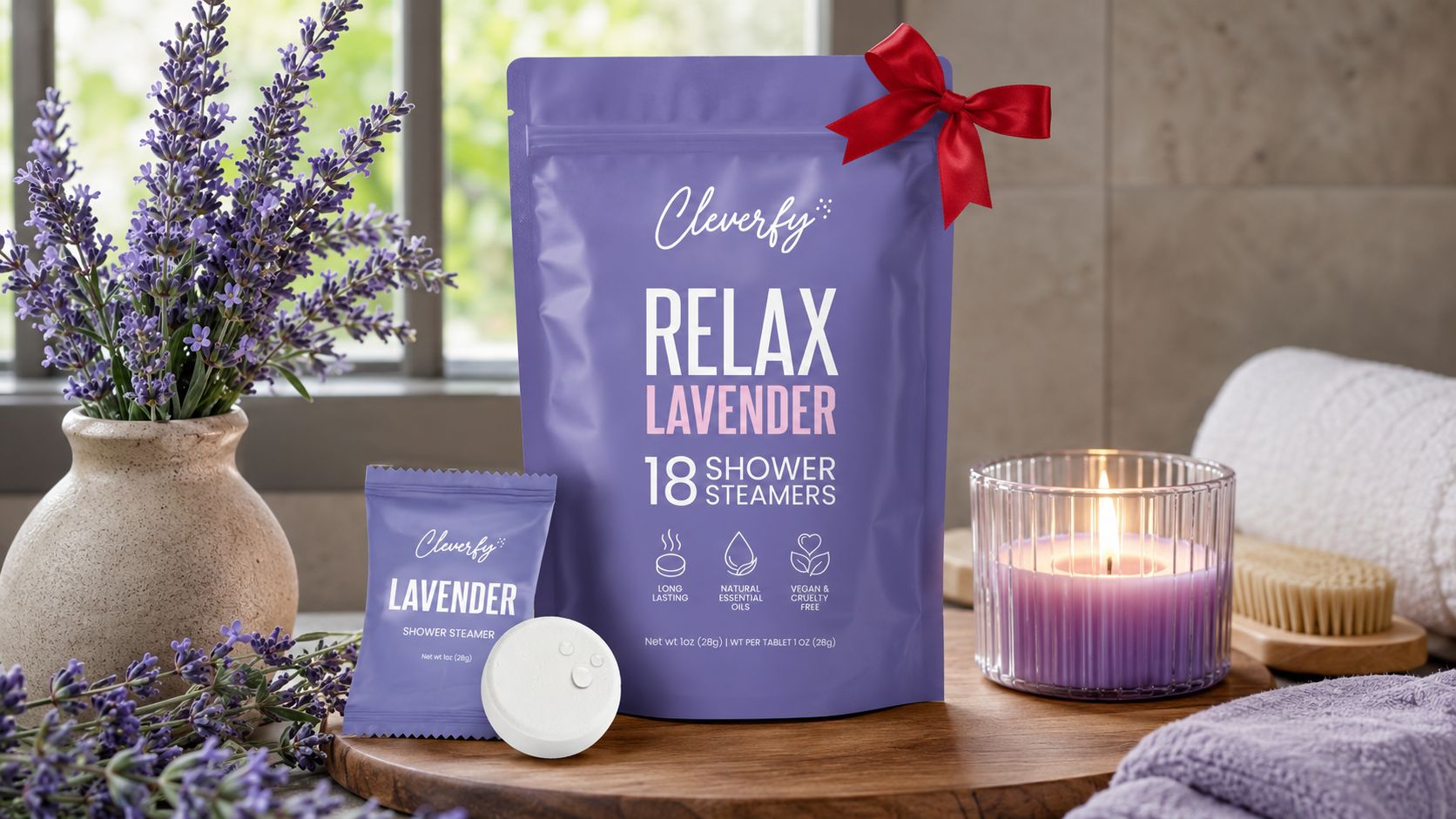
Scent is especially helpful because it joins the cue instead of competing with it. You can pair a shower steamer, a roll-on, or a diffuser with a moment that already exists, then let the aroma become part of the memory of that moment. Over time, the ritual feels like “what I do,” which is how identity starts to shift in everyday life.
That's also why aromatherapy gifts can be more than pretty objects. They become scaffolding for the person someone is trying to become, a reminder to slow down, reset, or focus without needing a long checklist. If you want a gentle place to begin, you can also explore free self-improvement programs as a broader way to support daily change.
The Personal Growth Landscape and Why Routines Matter
Personal growth isn't a niche corner of the wellness world anymore. One independent market report values the global personal development market at USD 46.73 billion in 2024 and projects USD 69.57 billion by 2032, with a 5.10% CAGR over the forecast period, while another 2026 summary places it at about USD 57.45 billion in 2026 after USD 54.14 billion in 2025 (Databridge Market Research). That scale says something simple, people are already spending on books, coaching, courses, and tools because they want change that lasts.
The same market summary estimates that roughly 250 million people globally took part in some form of personal development program in 2024, a 14% increase from 2022 (Databridge Market Research). That doesn't look like a tiny self-help crowd. It looks like a mainstream behavior category where the issue isn't interest, it's staying power.
Why routine fit beats inspiration
The habit problem is familiar. A University College London study found that forming a new behavior took a median of 66 days, with cases ranging from 18 to 254 days (Better.com review of the study). The same evidence set notes that about 80% of New Year's resolutions are abandoned by February (Better.com review of the study). The message is blunt: wishful thinking fades fast, routine does the work.
Personal growth lasts longer when it sits inside a moment you already repeat.
That's why the shower, the bedside table, the desk, and the evening wind-down matter so much. They're not grand life redesigns. They're anchor moments where a scent, a breath, or a short pause can fit without resistance.
Personal Growth and Wellness Participation at a Glance
| Category | Engagement Scale | Key Insight |
|---|---|---|
| Personal development market | USD 46.73 billion in 2024 and projected USD 69.57 billion by 2032 | Growth is a major consumer category, not a fad (Databridge Market Research) |
| Program participation | About 250 million people in 2024 | Many people are already trying to improve, so the challenge is adherence (Databridge Market Research) |
| Habit formation | 66 days median, with a wide individual range | Repetition matters more than intensity (Better.com review) |
| Resolution drop-off | About 80% abandoned by February | Intentions need routines to survive (Better.com review) |
If a shower steamer feels like a small purchase, that's the point. A small ritual can be the bridge between wanting change and living it, especially when it attaches to a part of the day that already happens.
Essential Oil Gift Formats Worth Knowing
Aromatherapy products work best when you know what each format does. Think of them like kitchen tools, not all-purpose gadgets. Flour, a whisk, and a stove each serve different jobs, and essential-oil gifts do the same thing in different settings.
Four formats you'll see most often
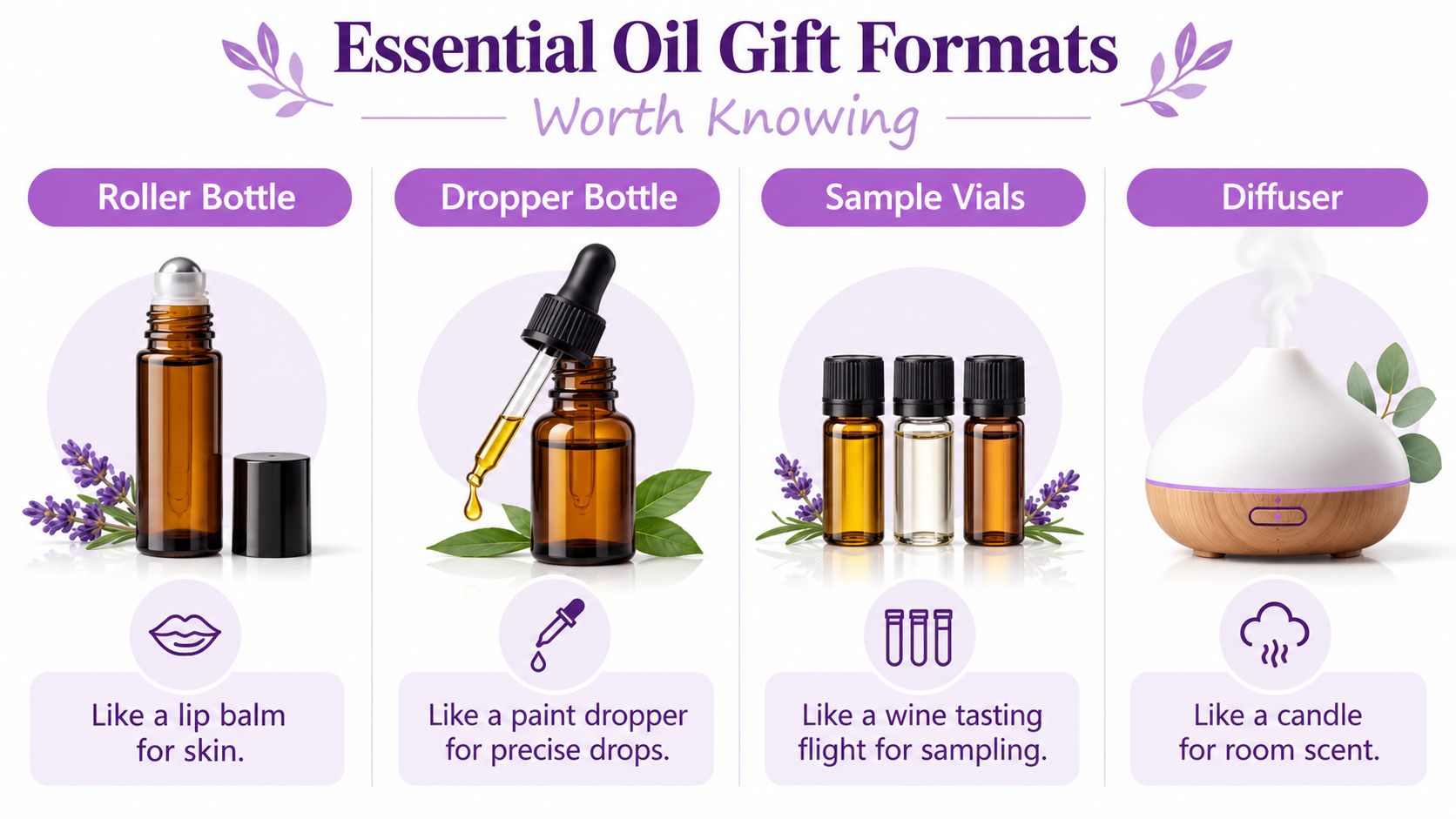
Single-note or blend oils usually come in 5 to 30 ml dropper bottles. They're the base ingredient, like flour in baking, because you can use them in a diffuser or dilute them for skin if the product is meant for that. If someone likes flexibility, this is the format that leaves the most room for customization.
Roll-ons are pre-diluted, often in jojoba or fractionated coconut oil, so they're ready to apply to wrists or temples. They're pocket-friendly and easy for travel or office use, which makes them a good match for people who want a fast ritual without setup.
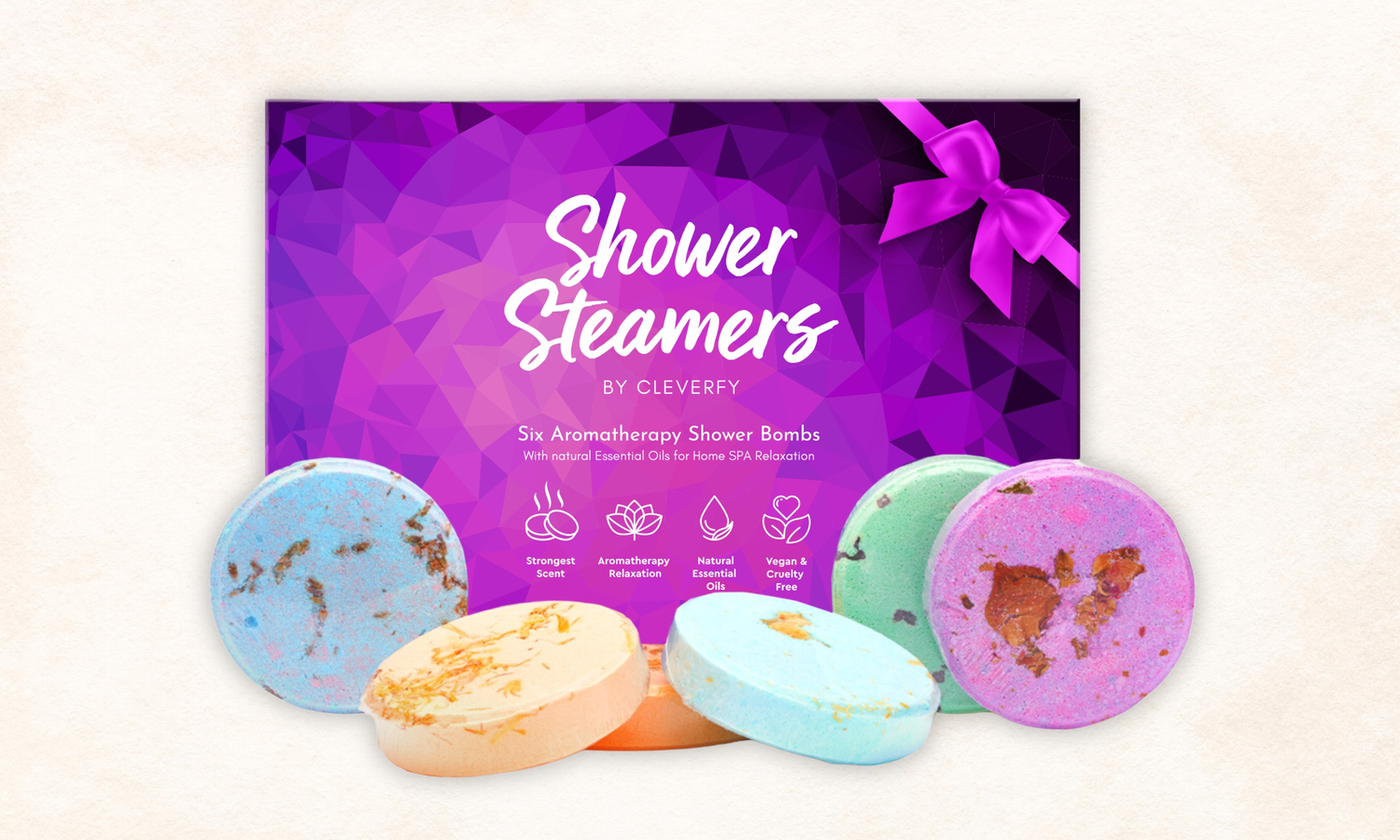
Shower steamers and bath bombs are the no-fuss choice. They release essential oils into steam, so there's no diffuser to clean and no technique to learn. For a shower-first household, that simplicity matters.
Ultrasonic or nebulizing diffusers are the home-base option. They fill a room with scent for longer stretches, so they suit desks, bedrooms, or work-from-home spaces where the person stays in one place for a while.
How to choose without overthinking it
If the gift is for daily use, match the format to the recipient's actual routine. A roll-on makes sense for the person who leaves the house early. A steamer makes sense for the person who showers at night. A diffuser fits someone who wants the room itself to feel different.
If you want a broad starting point, a bundle that pairs a diffuser with a few starter oils or steamers gives someone immediate use instead of another unopened box. For a deeper look at bundle logic, this guide to aromatherapy gift sets is useful because it shows how formats work together in a real routine.
Safety, Purity, and Allergy Considerations for Oils
A good scent should feel welcoming, not uncertain. Safety checks don't need to be intimidating, they just need to be fast enough that a person can say yes with confidence before the product ever reaches the shower shelf or bedside table. The simplest question is whether the product page gives clear information or hides behind vague labels.
What to check before you buy
Look for GC/MS-tested purity or another clear third-party testing disclosure when possible. Skip products that lean on the phrase “therapeutic grade” without explaining what that means, because the label itself doesn't tell you how the oil was tested or handled. If the product is meant for skin use, it should also include the carrier oil or dilution details.
For adults, roll-ons are typically diluted around 1 to 3%, and a patch test helps confirm that the skin tolerates the blend before regular use. Citrus oils can create photosensitivity, so they're not a casual fit for skin that will see sun soon after application. Common fragrance allergens such as limonene and linalool should also be clearly listed if they're present.
Quick filter: ingredient list, testing disclosure, dilution guidance, and allergen labeling should all be easy to find.
Who needs extra caution
Pregnant recipients, children, and pet owners need more careful selection. Some oils that seem harmless in a gift set can be poor choices around small children or animals, and that's where clear labeling becomes essential. If the product page leaves those details vague, choose something simpler, like a shower-only format or a non-skin application.
A practical shopping page should answer four questions right away. Is the ingredient list there? Is the dilution clear? Is there a note about testing? Is there a warning about allergens or photosensitivity? If one of those is missing, the gift may sit untouched because the recipient doesn't feel safe using it.
For shoppers who want a consumer-friendly reminder to think through seasonal sensitivity, this allergy-season aromatherapy guide is a useful reference point.
Matching Scents and Formats to the Recipient
The easiest gift is the one that already fits the person's day. A scent can be lovely in theory and still fail in real life if the format doesn't match the moment it's supposed to live in. So the better question is not “What smells nice?” but “What routine will this support?”
Four common recipient matches
| Recipient Type | Scent Profile | Best Format | Routine Moment |
|---|---|---|---|
| Overworked professional | Eucalyptus, peppermint | Shower steamer | Early shower before work |
| Anxious overthinker | Lavender, chamomile | Roll-on | Bedside table before sleep |
| Fitness-focused friend | Fresh, herbal, cooling blends | Shower steamer or body-safe roll-on | Post-workout reset |
| Curious beginner | Mixed discovery set | Diffuser or sample bundle | First use at home |
Why the match matters
The overworked professional usually doesn't need another task. They need a wake-up cue that fits into a morning shower without changing the rest of the day. A steamer with eucalyptus or peppermint works because the shower already happens, and the scent just sharpens the transition into work mode.
The anxious overthinker needs something smaller and quieter. A lavender and chamomile roll-on on the bedside table can become a short bedtime signal, one that invites slower breathing and fewer scrolling loops. The fitness-focused friend often wants a post-workout refresh that feels clean and uncomplicated, not another elaborate recovery ritual.
A gift works when it removes friction, not when it adds a new chore.
Curious beginners usually need variety before loyalty. A curated discovery set or diffuser bundle lets them test scent families without committing to one favorite too soon. That matters because people often don't know whether they prefer crisp, floral, herbal, or sweet notes until they've tried them in a real routine.
You don't need to over-design the choice. If the format is easy to use and the scent family fits the moment, the gift is doing real work. If either one is off, even a beautiful package can feel like clutter.
Designing a Growth Routine Without Willpower Burnout
Willpower is overrated as a daily strategy. People don't fail because they're lazy, they usually fail because the setup is awkward. If a habit asks for too many decisions, too much setup, or too much self-convincing, the brain chooses the easier path.
Make the environment do the heavy lifting
A shower becomes a better cue when the steamer sits where you'll see it. A roll-on becomes useful when it's already labeled and within reach. A diffuser becomes part of the day when it's tied to a recurring calendar block, like the hour after dinner or the first hour of work.
The logic is simple. Set out gym clothes the night before, and the next morning feels easier. Leave a book on the pillow, and reading becomes the default before sleep. Personal growth works the same way when the environment lowers the activation energy.
A friction-removal checklist
- Place the product in sight: keep the steamer or roll-on where the routine starts, not in a drawer.
- Pre-prepare the format: if it's a roll-on, make sure it's diluted and labeled before the first use.
- Attach it to a cue: pair the scent with shower time, a lamp turning on, or a work break that already repeats.
- Reward the feeling: notice the calm, focus, or lift that follows, because the brain remembers pleasant endings.
If you want a fuller framework for habit design, this self-care habit stacking guide offers a practical way to pair tiny actions with existing routines.
For readers who want a broader roadmap for growth planning, the personal growth plan guide is helpful because it keeps the focus on realistic behavior instead of grand intentions. That same idea applies to scent rituals, the job isn't to feel disciplined, it's to make the next step obvious.
Packaging, Shipping, and Gifting Logistics
A fragrance gift should arrive intact, clear, and safe to use. That means packaging matters as much as the product itself, especially when the contents include glass, oils, or temperature-sensitive materials. A well-packed gift feels considered before it's even opened.
What to look for in the box
Glass bottle protection should mean bubble wrap and an inner box, not just loose filling. Internal dividers matter because bottles can knock into each other during transit, especially in longer shipments. If the product includes wax- or butter-based pieces, ask whether the packaging is designed for heat exposure, since temperature swings can change how the item arrives.
Smell bleed is another practical issue. If the gift is shipping with clothes, paper, or other porous items, the fragrance can transfer, so separate compartments or sealed inner packaging help keep everything clean. A recyclable kraft box, unbleached tissue, and soy-ink inserts can still feel premium without looking overbuilt.
Shipping details worth confirming
Carrier choice should match the weight and destination, and international gifts need ingredient declarations so customs paperwork doesn't get messy. Alcohol-based tinctures can also trigger adult-signature rules in some shipping contexts, so it's smart to check before you pay. Return policy details matter too, especially whether unopened diffusers can be returned and whether used items are excluded.
Practical rule: a gift is easier to enjoy when the label, seal, and return policy are all clear before checkout.
Printed dilution guides, tamper seals, and allergen cards do double duty. They make the package feel thoughtful, and they also reduce uncertainty the moment the recipient opens it. For birthdays, holidays, and recovery milestones, order early enough that the package can travel without stress, especially if it's going across borders or in a season with weather extremes.
Building Your Own Aromatherapy Growth Habit
Start small enough that you won't negotiate with yourself. Pick one format, one cue, and one goal, then use it for two weeks before you add anything else. A morning shower steamer can support focus, a bedside roll-on can support wind-down, and a diffuser can support the room you work in, but each one should begin as a simple repeat rather than a project.
For a focus block, try rosemary and peppermint. For evening calm, lavender and bergamot make a natural pair. For a fresher, clearer feel, eucalyptus and tea tree fit better in a shower or room ritual than in a complicated routine.
Keep the ramp gentle. In week one, just build the scent association. In week two, add one slow breath or a short intention. In week three, add a tiny journaling note, maybe one sentence about how you felt before and after the ritual.
Rotate only two or three scents so your nose doesn't get bored. That keeps the ritual fresh without turning it into a collection hobby. A modest starter set is enough, because the point is consistency, not variety for its own sake.
Personal growth becomes easier when it feels sensory, repeatable, and kind. One shower, one scent, one small promise kept each day is more useful than a dramatic plan you never want to start.
Cleverfy Beauty focuses on shower steamer tablets and gift-ready aromatherapy sets that fit into real routines instead of asking for extra time. If you want a simple way to turn daily showers into a calm, repeatable growth ritual, visit Cleverfy Beauty and look at the formats that match your mornings, evenings, or gifting needs.

