

Self Care Package Delivery: The Complete Guide
You're probably trying to send comfort, not just products. Maybe it's for a friend who's had a brutal month, a parent who lives far away, or a partner who needs a small reset and won't ask for one. A good self care package delivery turns that intention into something they can open, use, and remember.
Table of Contents
- What Self Care Package Delivery Really Means
- How a Delivered Self-Care Package Is Experienced
- The Core Building Blocks of a Self-Care Package
- Theme Ideas and Personalization That Make It Feel Personal
- Shipping, Timing, and Logistics for Self-Care Gifts
- Packaging and Unboxing Tips That Protect the Gift
- Your Pre-Ship Checklist and a Note on Aromatherapy Pairings
What Self Care Package Delivery Really Means
A self care package delivery isn't just a box of nice things. It's a small ritual that arrives at someone's door, already shaped around the moment they're likely to use it. If your friend is recovering from a long week, your sibling is juggling work and parenting, or your partner rarely slows down, the package works best when it fits their real life, not a fantasy one.
The idea has deep roots. The CARE organization traces the first CARE Package to 1945, when a shipment of practical goods was sent to Europe after World War II, and that original model turned a simple box into a standardized way of sending help to a person rather than an institution. Today, that same idea has expanded into wellness gifting and subscription formats, with the global self-care subscription box market valued at $8.6 billion in 2025 and projected to reach $21.4 billion by 2034. Beauty and personal care made up 38.4% of the product mix in 2025, which helps explain why gift-ready self-care now includes scent-led sets, mood-based bundles, and repeat-use formats such as shower steamers. CARE's history of the CARE Package

What makes it different from a generic gift box
The difference starts with intent. A generic gift box says, “I picked these things out.” A real self care package delivery says, “I thought about the exact moment you'll use this.” That's why the strongest packages usually have three things in common, a sensory anchor, a clear use moment, and packaging that survives transit intact.
A sensory anchor is the part the recipient feels. For many people, that's scent or texture, and in shower-based gifting, the anchor often becomes a steamer, a bar, or another aromatic item that changes an ordinary routine. If you want examples of how that kind of gift is framed for different occasions, relaxing subscription boxes at Jackpot Candles offer a useful comparison point for the broader category.
Practical rule: if you can't describe when they'll use it, the package probably isn't specific enough yet.
How a Delivered Self-Care Package Is Experienced
The recipient's experience starts before they even open the box. It begins with the package on the doorstep, then the pause while they read the note, and then the first decision, whether to unwrap it now or save it for later. That sequence matters because receiving parcels has become normal, not special, in many markets, and a self care package delivery has to feel personal enough to stand out. Americans received an average of 66 packages per person in 2024, U.S. parcel volume reached 22.4 billion packages that year, and that was 78% higher than 2017; globally, packages shipped in 2025 were estimated at 397 billion. Package delivery statistics
From doorstep to shower floor
The best self-care gifts don't ask the recipient to find a new routine. They attach themselves to one they already have. Shower time is one of the easiest moments to build around because it's private, repeatable, and naturally short, which makes it a good fit for a small ritual that feels bigger than it is.
If the package is built well, the unboxing becomes part of the care. A handwritten note lands first, then the scent cue, then the item that gets used immediately, not someday. A good example of this kind of format is Cleverfy Energy Boost Megapack of 18 Shower Steamers, which is described as 18 shower steamer tablets for morning showers, made with pure essential oils, and scented with Ginger & Orange, Grapefruit, and Cocoa & Orange. That kind of format works because the recipient doesn't have to schedule self-care, they fold it into an existing shower.
The moment that matters most is not the purchase. It's the first use.
What they remember afterward
People remember the feeling of being considered. They remember a note that sounded human, a scent that matched the time of day, and a package that held together in shipping. They rarely remember filler items, so the package should be built around one central experience, then supported by smaller details that make that experience easier to enjoy.
If you want the delivery to feel calm instead of cluttered, think in this order, door, note, scent, use. That sequence keeps the box from feeling like a product dump and turns it into a moment.

The Core Building Blocks of a Self-Care Package
A useful self-care box is easier to build when you split it into four jobs. The package needs one item that drives the experience, one item that supports the body, one item that adds comfort, and one item that tells the recipient this was meant for them. Once you see it that way, the choices get simpler.
The four zones that make the box work
Start with the sensory anchor. This is usually scent, because scent changes how the whole package feels the moment the box opens. Shower steamers are efficient here because they fit into an existing routine instead of adding a separate step, and they're easy to gift in both trial and larger formats.
Then add nourishment or body care. That can be a lotion, balm, or another item that says “take care of your skin” without overwhelming the package. After that, include a comfort object, something soft or calming like socks, an eye mask, tea, or a journal. Finish with a thoughtful note or a small accessory, because the recipient should understand why they're getting it before they understand what everything is.
Simple test: if you remove one item and the package still feels complete, the box is probably too crowded.
Why shower steamers are such a strong anchor
A shower steamer works well because it's fast and easy to understand. The recipient doesn't have to learn a new technique or set aside extra time, they just place a tablet in the shower and let the steam do the rest. That's why gift shoppers often like pre-assembled sets and themed packs, because the sensory part is already handled.
Pack size also matters. A 6-pack is a good fit for trial gifting, while an 18-pack makes sense when you want the experience to last longer or cover repeat use. Themed sets can make choices easier too, especially when the scent direction is already clear. For a quick comparison of how shower-steamer gifting is framed across occasions, the gift guide for friends, family, and colleagues is a useful reference point.
A clean inventory checklist
Before you build the box, ask yourself if you've covered these four functions.
- Sensory anchor: a scent-led item that creates the main ritual
- Nourishment: a skin or body-care item that feels practical
- Comfort object: something soft, cozy, or calming
- Thoughtful note: a card, message, or small personal add-on
That structure keeps you from overbuying and helps every item earn its place.
Theme Ideas and Personalization That Make It Feel Personal
A strong theme turns a package from “nice stuff” into “this was made for me.” The easiest way to do that is to start with the recipient's moment, not the occasion. Someone who needs sleep wants a different scent profile than someone who needs a morning reset, and a teen usually won't want the same presentation as a parent recovering from a rough stretch.
Five directions that work well
A relaxation and wind-down package leans toward lavender-forward scents, an eye mask, and herbal tea. The personal touch can be a short note that says, “Use this tonight, not when you finally finish everything else.” A morning energy package works better with citrus and eucalyptus, a journal, and a simple card that suggests a short, cold-bloom style routine before work.
A recovery and care package should stay gentle. Soft socks, a warm note, and a low-stimulation scent make sense when the recipient needs less noise, not more choices. A men's wellness package can be built around a men's six-pack with sharper, invigorating scents and one useful item like a sleep mask or shower shelf card. A teen-friendly package often lands better with playful scent choices such as Watermelon & Vanilla in a 6-pack, plus a fun note or playlist.
Personalization that doesn't add bulk
Small details do most of the work here. A handwritten card can change the emotional tone of the whole box. So can a printed seven-day ritual, a QR code to a playlist, or a note that tells them exactly when to use the main item.
Keep the personal add-on light and readable. The point isn't to stuff the box with custom objects, it's to help the recipient connect the package to their own schedule and mood. A scent-led gift becomes more memorable when the message tells them what moment it was built for.
A quick way to choose the right theme
If you're stuck, pick one of these three questions and answer it.
- When will they use it? Morning, evening, recovery time, or weekend
- How do they like to relax? Quiet, energizing, cozy, or playful
- What would make it unmistakably theirs? A note, a scent, or a small ritual card
That one-minute filter usually does more than shopping by category names ever will.
Shipping, Timing, and Logistics for Self-Care Gifts
The shipping choice should match the moment you're trying to support. A non-date-specific pick-me-up can travel by standard ground, while birthdays or recovery milestones usually call for expedited delivery so the package lands when it still feels connected to the event. If the box is higher value or the recipient is hard to reach, signature-required shipping can be worth the extra friction because it reduces the odds of a missed drop.
How timing changes the gift
The best delivery date depends on what the recipient will do with the package after it arrives. A mood-lift box that shows up on Monday can disappear into the week, while a Thursday or Friday delivery gives someone a better chance to use it over the weekend. If the box is meant for a recovery moment, line up arrival with their actual schedule, not just the calendar.
Cross-border gifting needs a little more care. If you're sending from the UK to Canada, a resource like UK to Canada gift delivery can help you think through the logistics before you choose the package. That matters because the wrong arrival window can undermine an otherwise thoughtful gift.
What shipping operations do behind the scenes
The reason some retailers hit delivery promises more consistently is that they treat shipping as a system, not a label. Mature logistics setups separate the order management system, inventory or PIM, carrier API contracts, and SLA metrics, so dispatch can be adjusted in real time rather than left to a static workflow. In Indian e-commerce logistics guidance, teams are told to map ERP, PIM, OMS, and courier APIs, then watch delivery time, COD %, and return-to-origin rates, while an edge API layer is reported to reduce latency in tier-2 cities by 25% and dark-store integration to improve last-mile pickup speed by 30% in two major Indian cities. Custom integrations and logistics tech stack
Delivery details that protect the experience
Pack durability matters more than people think. Shower-safe gifts are usually sturdy, but liquids, glass candles, and heat-sensitive balms need leak protection and careful nesting. Carrier rules also matter, because some items such as aerosols are prohibited, so the smartest box is the one that avoids trouble before it starts.
If you're choosing a retailer, check the shipping page and save the tracking number in one place. For example, Cleverfy's shipping policy is the kind of page that helps you confirm how an order will move before you rely on it for a date-specific delivery.
Packaging and Unboxing Tips That Protect the Gift
A beautiful self-care box still has to survive the trip. The easiest way to protect it is to think like a packer, not a shopper. That means using the right-sized box, filling empty space, and making sure the first thing the recipient sees is the note, not the packing material.
Build the box from the inside out
Start with a box that fits the contents closely enough that items won't slide around. Oversized boxes create movement, and movement creates damaged corners, crushed packaging, and messy unboxing. After that, cushion everything with tissue, kraft paper, or crinkle fill so the contents stay centered.
Any liquid or balm should get extra protection. Seal it in a bag, tape the cap, and keep it away from sharp edges or heavy items. Fragile pieces should be nested separately rather than stacked, and the main sensory item should sit where it's visually obvious the moment the lid opens.
Packing rule: if the box sounds loose when you shake it gently, it isn't ready to ship.
Make the unboxing feel intentional
Put the card on top so it gets read first. Place the anchor item in the center, then arrange the supporting items around it so the box feels designed instead of dumped. Pre-assembled gift sets are useful here because they're already built to ship without repackaging, which is one reason multi-pack wellness sets are so popular for delivery.
Small finishing touches can do a lot of work. A ribbon around the box, a kraft belly band with the recipient's name, or a pressed-flower sticker takes only a few minutes and makes the package feel chosen. Take a photo before you seal it, too. That gives you a keepsake and a reference point if something shifts in transit.

Your Pre-Ship Checklist and a Note on Aromatherapy Pairings
Before you click checkout, run the box through a simple final check. The best gifts are the ones that answer the practical questions before the recipient has to ask them.
Final checklist before shipping
- Theme confirmed: the box matches a mood, not just a category
- Scent profile considered: relaxation, focus, congestion relief, or evening wind-down
- Anchor item selected: one clear item drives the experience
- Supporting items added: two or three pieces, not a crowded pile
- Message included: handwritten card or printed ritual card
- Shipping speed matched: arrival lines up with the occasion
- Address validated: every detail is correct before label creation
- Tracking saved: you know where to check the parcel
- Policy noted: return or guarantee terms are clear
That list catches most avoidable mistakes, especially the ones that turn a thoughtful gift into a delayed one.
A short note on scent-led packages
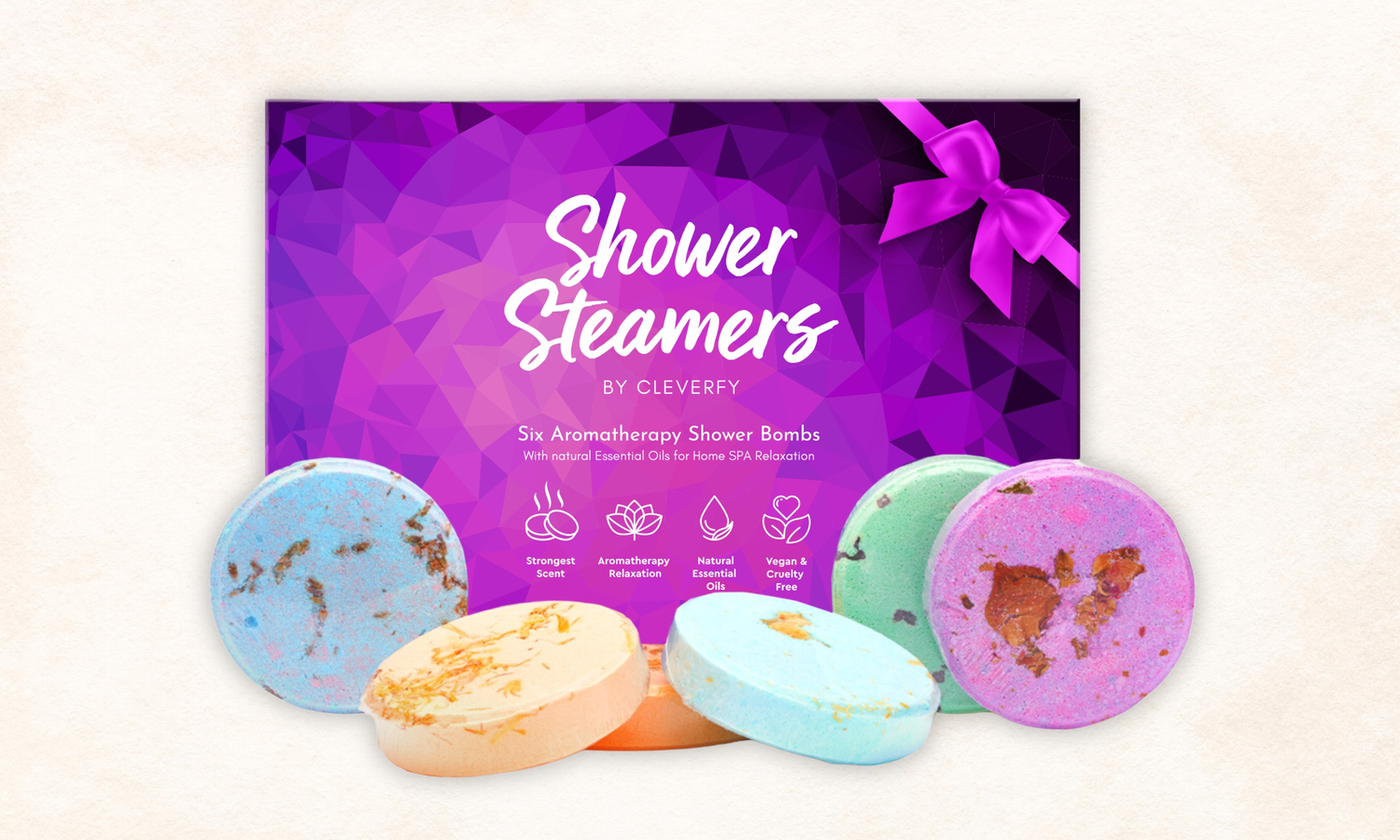
If you're building around aroma, an aromatherapy shower steamer set is an easy anchor because it fits into a daily shower without demanding extra time. Pre-themed 6-pack gift sets, including purple, men's, red, and teen assortments, help when you want to match the scent to the recipient without overthinking it, and 18-pack assortments work better when you want the gift to last. A small accessory, like silicone wrinkle pads, can widen the package from scent into a broader self-care moment without making it bulky.
Cleverly chosen scent also lowers the risk of gifting something they won't use. A clear money-back guarantee helps here, because it gives the sender more confidence when the package is built around personal taste. For a deeper look at matching scents to mood, the essential oil scent guide is a good reference before you finalize the box.
If you want a simple place to start, Cleverfy Beauty offers shower steamer sets, themed gift packs, and related wellness accessories that fit the kind of moment-focused self-care package delivery described here. Visit Cleverfy Beauty to build a scent-led gift around the shower routine your recipient already has.

