

10 Self Improvement Rituals for Busy Days
Your calendar is full, your phone keeps lighting up, and the small promise you made to yourself this morning already feels out of reach. You want more energy, clearer focus, calmer emotions, or better sleep, but adding another lengthy task to the day sounds impossible.
Self improvement doesn't have to mean rebuilding your entire lifestyle. It can look like a five-minute reset attached to something you already do, such as turning on the shower, finishing lunch, or putting your phone on charge at night. The most useful ritual is usually the one you can repeat without negotiating with yourself every day.
The ideas below include morning, midday, shower, and evening options. Choose one ritual for one specific need. Practice it consistently, notice how you respond, and adjust it when life changes. Treat the activity as a small experiment, not a total wellness program or another performance metric.
Table of Contents
- 1. Aromatherapy and Sensory Wellness
- 2. Habit Stacking and Routine Optimization
- 3. Stress Reduction and Cortisol Management
- 4. Mindfulness and Present-Moment Awareness
- 5. Sleep Optimization and Evening Routine Design
- 6. Cognitive Performance and Mental Clarity Enhancement
- 7. Emotional Regulation and Mood Stabilization
- 8. Self-Care Ritualization and Intentional Living
- 9. Social Connection and Relationship Building Through Gifting
- 10. Sensory Awareness and Body Connection
- 10-Point Self-Improvement Comparison
- Build a Ritual You Can Repeat
1. Aromatherapy and Sensory Wellness
A shower can become a compact sensory reset when you add a scent with a clear purpose. The warm water, rising steam, and essential-oil aroma create a moment when you aren't answering messages or switching between tasks. You can use that pause to support a calmer evening, a more alert morning, or a gentler transition into the workday.
Start by choosing the emotional direction you want. Lavender may suit a pre-sleep wind-down, while menthol and eucalyptus can feel refreshing in a morning shower. Citrus scents can make a daytime routine feel brighter. Aromatherapy isn't a replacement for medical care, but it can give an ordinary habit a deliberate sensory cue.
A simple shower reset
- Choose one scent: Match the aroma to your immediate need rather than collecting options without a purpose.
- Place the tablet safely: Set it on the shower floor away from the direct water stream, so it dissolves gradually.
- Breathe with attention: Notice the aroma as the steam moves through the space. Keep your breathing comfortable.
- Repeat the cue: Use the ritual at a consistent point in your day so the shower begins to signal that state.
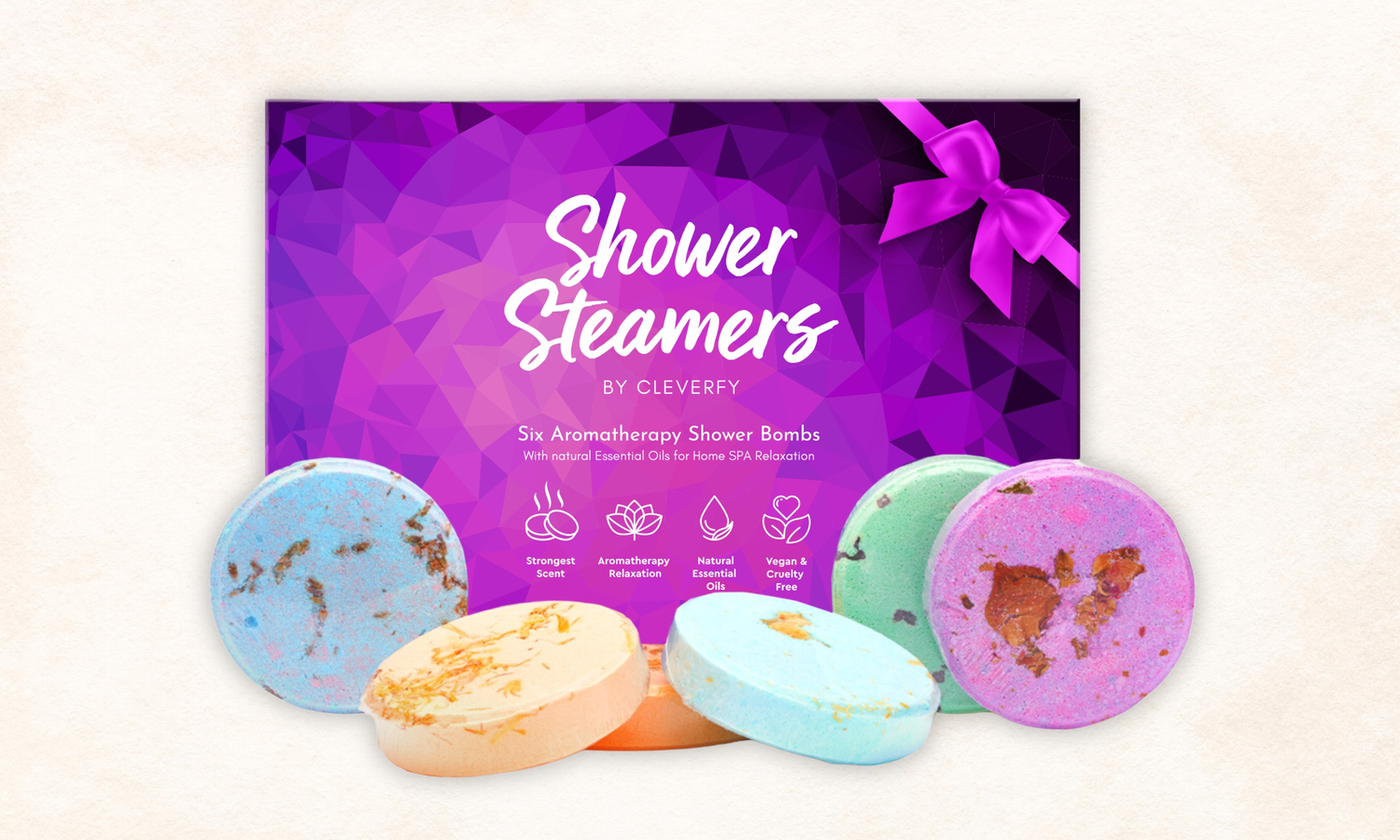
The Cleverfy Purple Gift Set of 6 Shower Steamers includes lavender, watermelon and vanilla, grapefruit and coconut, menthol and eucalyptus, orange, and peppermint options. It also uses essential oils and is described as vegan and cruelty-free in the catalog snapshot.
For a plain-language explanation of scent, stress, and emotional responses, see how aromatherapy works for anxiety, stress, and depression.
2. Habit Stacking and Routine Optimization
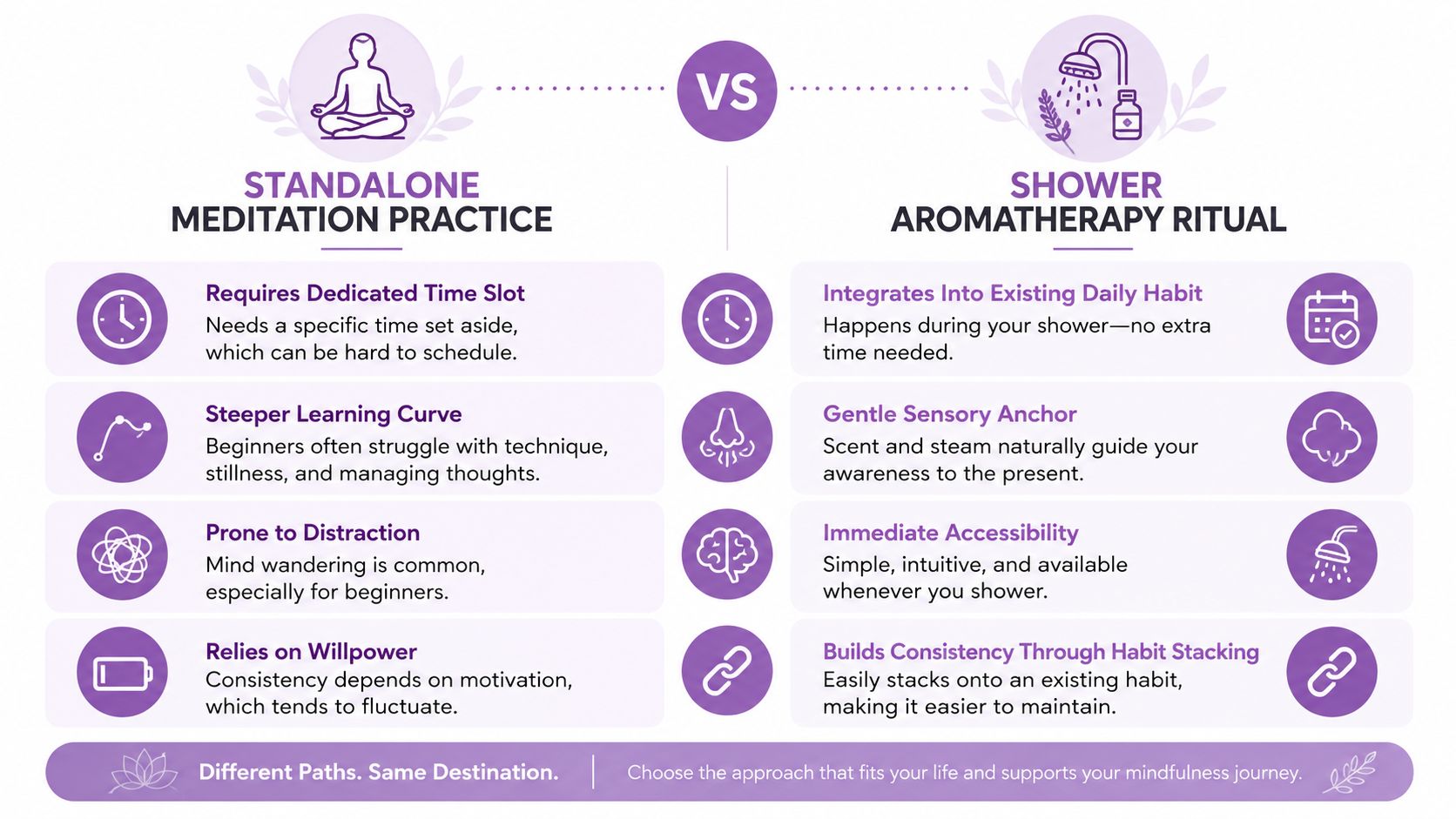
The easiest habit to keep is often the one attached to a habit you already perform. You don't need to find a new time slot if you connect the reset to a reliable cue, such as turning on the shower, brushing your teeth, or closing your laptop.
Use the shower as the anchor. Keep the steamer visible but out of the water until you're ready to use it. When you turn on the tap, make that action the reminder to choose a scent and set a brief intention for the next part of your day.
Build the chain gradually
Begin with one behavior, not a complete morning system. For example, place a steamer in the shower, take one deliberate breath when the water reaches temperature, and name the quality you want to carry forward, such as patience, alertness, or ease.
You can make the cue more personal by pairing different scent profiles with different routines. A bright citrus aroma might accompany a demanding workday, while lavender can mark the shift from household activity to rest. The point isn't to create a complicated schedule. The point is to make the desired action obvious.
Practical rule: Make the next step visible, easy, and tied to something you already do.
A small note on your bathroom shelf can help you observe patterns without turning the ritual into a judgment. After the shower, write one word describing your energy or mood. Over time, you'll learn which cues feel natural and which ones create friction. This guide to self-care habit stacking offers additional ways to attach supportive behaviors to established routines.
3. Stress Reduction and Cortisol Management
A tense jaw, raised shoulders, or unusual irritation can signal stress before you identify its cause. Use the daily shower as a short boundary between one demand and the next, giving your body a few minutes to change pace.
Try this during a difficult workday:
- Step under warm water and notice one physical sensation, such as water striking your shoulders or steam gathering on your skin.
- Breathe in comfortably, then make the exhale slightly longer.
- Name the pressure plainly: “I'm tense because this task feels urgent.”
- Release one area, perhaps by lowering your shoulders or opening your hands.
- Before leaving, choose the first action you will take.
This sequence works like pressing pause on an automatic response. A relaxing scent can support the pause by giving your attention a steady cue, but it cannot remove the source of stress. The goal is a clearer next choice, not instant calm.
For an evening reset, use a warm shower and a scent associated with settling down. Keep the transition simple: dim the lights, then read, journal, or stretch gently instead of moving straight into another demanding task. If you want broader context, this overview of evidence-backed cortisol reducers discusses approaches that may support cortisol management. Persistent or overwhelming stress calls for individual guidance from a qualified professional.
Start with one shower reset this week. Notice whether you leave feeling even slightly more able to choose your response, rather than reacting to the next demand.
4. Mindfulness and Present-Moment Awareness
Mindfulness can fit inside a normal shower because the setting already offers strong sensory information. Water creates a steady sound, steam changes the air around you, and scent gives your attention a moving point to follow.
Try a five-minute practice. At the start, choose one anchor, such as the aroma from the steamer. When your mind jumps to unfinished work or tomorrow's plans, acknowledge the thought and return to the scent. You don't need to empty your mind. You only need to practice returning.
Follow the changing sensations
Notice how the aroma develops as the tablet dissolves. Pay attention to intensity, temperature, and the way the scent seems to move through the room. Then shift your attention to the water on your skin and the sound around you.
You can add a simple intention, such as “move slowly” or “listen before reacting.” Keep it short enough to remember. A long phrase can become another task to manage.
“The practice is the return, not perfect concentration.”
Use this ritual before a demanding day, after a tense conversation, or whenever you notice yourself operating on autopilot. The shower gives you a dependable place to begin, but you can later transfer the same sensory anchor to a desk, a quiet corner, or a short walk.

5. Sleep Optimization and Evening Routine Design
At night, the shower can mark the point when planning and notifications end. A short, repeated sequence gives your attention fewer decisions to make: stop active tasks, shower comfortably, use one familiar aroma, then choose a quiet activity.
Begin with the boundary, not the product. Decide when work, scrolling, or household planning will finish. Put the phone aside if possible, dim the room, and let the shower become a five-to-fifteen-minute reset attached to something already in your day.
Build the sequence around one cue
- Choose a stopping point: End work and routine planning at a time you can repeat.
- Take a comfortable shower: Warm water may feel calming, but avoid heat that leaves you uncomfortable or overstimulated.
- Use one evening scent: Lavender or chamomile can become a familiar wind-down cue. Responses differ, so treat aroma as a reminder, not a promise of sleep.
- Keep the next activity quiet: After drying off, read, stretch gently, or write a few lines.
- Repeat the order: The sequence should feel like a path you already know, not another project to manage.
For more ideas, use this guide to creating an effective sleep routine to review habits surrounding bedtime. If sleep problems persist, disturb daytime functioning, or cause distress, speak with a healthcare professional rather than relying only on a scent-based ritual.
6. Cognitive Performance and Mental Clarity Enhancement
A crowded morning can begin with one clear action. Attach a five-to-fifteen-minute focus reset to your first shower, using the change from sleep to water as a familiar starting line for the day.
Before turning on the water, choose the task that needs your clearest attention. During the shower, let the steady sound and a fresh aroma create distance from notifications. After drying off, record the first visible action before opening email or social media.
Turn the shower into a focus cue
- Name one priority: Select the task that would give the day direction, such as drafting a report or reviewing study notes.
- Choose a bright aroma: Peppermint, rosemary, or lemon may feel refreshing, though personal responses differ.
- Breathe comfortably: Notice a few natural breaths without forcing deep inhalation.
- Write the entry point: Define the smallest action, such as opening a document or writing its first heading.
- Guard the handoff: Keep a short buffer free from unnecessary alerts so the intention can become action.
The sequence works like a runway. The shower provides a familiar surface, the scent marks the change in state, and the written first step gives your attention somewhere to land.
On a morning filled with quick decisions, peppermint might suit your preference. Rosemary may fit a reflective study session, while citrus can make a flat routine feel fresher. These aromas do not replace adequate sleep, food, planning, or professional care. They give an existing shower a clearer beginning.
7. Emotional Regulation and Mood Stabilization
Emotional regulation starts with noticing what is happening before you act on it. A scent ritual can serve as a repeatable pause when you feel irritable, anxious, discouraged, or overstimulated. It doesn't erase the emotion. It creates a small gap in which you can label the feeling and choose what comes next.
Try this sequence during a difficult afternoon. Step into the shower or another quiet space, identify the emotion in plain language, and notice where it appears physically. You might feel heat in your face, pressure in your chest, or tightness in your stomach. Then decide whether you need comfort, movement, information, a boundary, or a conversation.
Pair scent with an emotional label
Choose an aroma that feels grounding or uplifting to you, then use it repeatedly with the same kind of emotional check-in. Lavender might accompany a calming pause, while a citrus scent might mark an intentional lift after a disappointing message. These associations are personal, so don't assume another person's preferred scent will work the same way.
Keep the action modest:
- Pause before replying: Give yourself a few quiet breaths.
- Label the state: Use a specific word instead of “bad.”
- Notice the body: Find one physical signal.
- Choose a response: Delay, communicate, move, rest, or seek support.
- Review later: Ask what helped and what made the feeling stronger.
A repeated ritual can support awareness, but panic, persistent low mood, or severe distress calls for qualified mental health support.
8. Self-Care Ritualization and Intentional Living
A shower is usually treated as a task to finish. Ritualization changes the meaning of that task without requiring much extra time. You choose the setting, the scent, and the intention before the water starts, then give yourself permission to be present for the experience.
This approach matters on days when self-care feels undeserved. You don't have to earn a quiet moment by completing every obligation. A brief ritual can remind you that maintenance, recovery, and comfort belong in ordinary life.
Give the moment a defined purpose
Choose one phrase for the shower:
- “I'm starting gently.” Use it when the morning feels rushed.
- “I'm leaving work here.” Use it after a demanding shift.
- “I'm listening to my body.” Use it when you feel disconnected or tense.
- “I'm allowed to recover.” Use it during a crowded week.
Keep the sensory details consistent. Store the product where you'll see it, dim the bathroom light in the evening if that feels safe, and leave your phone outside the room. Tell household members that you need a few uninterrupted minutes, especially if the shower is one of the only private spaces in your day.
Seasonal changes can also refresh the ritual. You might prefer lighter scents during a warm morning and deeper, quieter aromas at night. For another perspective on making personal care feel intentional, explore winter self-care rituals for skin, while keeping your own needs at the center.
9. Social Connection and Relationship Building Through Gifting
A friend rushes through every morning. A partner prefers showers to baths. A colleague is carrying a demanding season. In each case, a small wellness gift can create a five-to-fifteen-minute pause that fits the person's existing day.
The useful part is not only the scent set. The gift also opens a conversation about rest, stress, and the routines that help someone feel cared for. Choose around the recipient's actual life, rather than a generic idea of what they should enjoy.
Turn a gift into an invitation
Use this simple sequence:
- Observe the routine: Notice whether the person showers in the morning, winds down at night, or rarely gets private time.
- Check preferences: Ask about strong scents, sensitivities, and ingredients when you can.
- Add a personal note: Write one sentence explaining why you selected the set.
- Suggest, don't prescribe: Offer to try a scent together during a visit or compare favorites afterward.
- Follow up lightly: Ask how it fit into their day, without turning the ritual into an assignment.
For example, a refreshing aroma may suit someone who wants a clearer start before work. A quieter profile may fit an evening shower after a crowded day. The recipient can keep the ritual brief, repeat it when useful, or leave it aside.
Gifting can also make self-care feel ordinary for people who do not connect with productivity culture. A teenager may value a private wind-down routine. A man may prefer a straightforward shower format. Someone under stress may appreciate an easy sensory pause more than another motivational book.
For broader ideas, explore this guide to gifts for women. Choose for the person, then let them decide how the ritual belongs in their life.
10. Sensory Awareness and Body Connection
After a day of screens, deadlines, or rumination, your attention may stay stuck in your head. The daily shower offers a ready-made reset. Water, steam, scent, skin, and sound give you several physical points to notice, like markers guiding you back to the present.
Turn the shower into a body check
Start with one quiet minute. Feel the water's temperature and pressure, the floor beneath your feet, and the sound filling the room. If you use a steamer, follow its aroma from the first release until the scent becomes lighter.
Then move through this sequence:
- Notice your feet: Feel the floor and check whether your toes are gripping.
- Scan upward: Bring attention to your calves, thighs, stomach, shoulders, jaw, and forehead.
- Soften one area: Release a single point of tension without forcing your entire body to relax.
- Listen openly: Hear the water and nearby sounds without judging them.
- Reorient: Notice the room, the time, and what you will do after the shower.
The whole reset can take five minutes. On a rushed morning, choose only your feet, jaw, and shoulders. During an evening shower, track how steam gathers on your skin or how the scent changes as the water runs.
You can try a comfortable temperature change, but stop if it feels unsafe or unpleasant. Sensory awareness is not a contest for intensity. A calm observation of humidity on your arms may help more than a dramatic routine.
Notice first. Improve second.
Repeated practice can make tension easier to recognize before it becomes an automatic reaction. That skill can support you beyond the bathroom, during meetings, conversations, exercise, or the moment you reach for your phone without choosing to.
10-Point Self-Improvement Comparison
| Item | Implementation Complexity 🔄 | Resource Requirements ⚡ | Expected Outcomes 📊 | Ideal Use Cases ⭐ | Key Advantages & Tips 💡 |
|---|---|---|---|---|---|
| Aromatherapy and Sensory Wellness | Low, simple integration into shower | Shower steamer/essential oils, water/steam | Immediate mood shifts, short-term stress relief | Daily mood regulation and relaxation | Place steamer off direct stream, rotate scents for effect |
| Habit Stacking and Routine Optimization | Low–Medium, setup of anchors and cues | Steamers, visible placement, tracking (optional) | Higher consistency, habit formation over weeks | Building lasting shower-based wellness habits | Start small, pair with existing trigger, keep visible |
| Stress Reduction and Cortisol Management | Medium, requires consistent timing and pairing | Regular steamer use, stress tracking for measurement | Reduced cortisol markers, improved sleep/mood with practice | Busy professionals needing fast relaxation tools | Use during peak stress, combine with deep breathing |
| Mindfulness and Present-Moment Awareness | Low–Medium, requires attention practice | Shower steamer, brief guided prompts or intentions | Reduced rumination, improved focus and emotional regulation | Micro-meditations for beginners during daily showers | Begin with 5 minutes, focus on scent evolution to anchor |
| Sleep Optimization and Evening Routine Design | Medium, needs consistent evening timing | Evening-specific steamers, consistent schedule | Faster sleep onset, improved sleep quality | People with difficulty winding down or sleep latency | Use 30–60 mins before bed, combine with warm shower |
| Cognitive Performance and Mental Clarity Enhancement | Low, morning add-on to routine | Invigorating scents (peppermint, rosemary, citrus) | Rapid alertness and improved morning focus | Pre-work routines, high-demand cognitive tasks | Rotate scents, pair with cold finish to boost alertness |
| Emotional Regulation and Mood Stabilization | Low, in-the-moment application | Targeted scent selections, brief practice | Quick mood shifts, better moment-to-moment regulation | Managing acute emotional episodes or mood swings | Create scent–emotion associations through repetition |
| Self-Care Ritualization and Intentional Living | Medium, requires deliberate habit and meaning | Curated steamers, time set aside, ritual elements | Increased self-worth, intentional daily practices | Elevating routine into meaningful self-care rituals | Choose consistent sensory elements and schedule them |
| Social Connection and Relationship Building Through Gifting | Low, product selection and presentation | Themed sets, packaging, personalized notes | Strengthened bonds, social wellness engagement | Thoughtful gifting for friends, partners, colleagues | Match recipient preferences, include usage suggestions |
| Sensory Awareness and Body Connection | Medium, gradual somatic skill development | Multi-sensory practice tools (steam, temperature control) | Improved embodiment, grounding, interoception | Trauma-informed grounding, somatic mindfulness | Start with short body scans, progress gradually and non-judgmentally |
Build a Ritual You Can Repeat
The best starting point is a specific need. If you feel slow in the morning, choose the cognitive-clarity ritual. If the afternoon repeatedly turns tense, try the stress reset. If your emotions feel close to the surface, begin with labeling and sensory grounding. If your mind stays active at night, build a short evening sequence that tells you the day is winding down.
Keep the first version to five minutes. Attach it to an existing cue, such as turning on the shower, closing your laptop, finishing dinner, or plugging in your phone. Decide the action in advance so you don't have to make several choices when you're already tired.
For a shower-based reset, the steps can stay simple:
- Choose the need: Energy, focus, emotional steadiness, or rest.
- Choose the cue: Pick the shower or another routine you already repeat.
- Choose one sensory anchor: Use a scent, the water sound, breathing, or physical touch.
- Choose one follow-up action: Write the priority, stretch, read, or begin a calmer conversation.
- Observe your response: Notice whether the ritual feels supportive, neutral, or irritating.
Don't promise yourself a universal result. Aromatherapy affects people differently, and a scent that feels comforting to one person may feel too strong to another. Test the routine gently, adjust the placement and intensity, and stop using anything that causes discomfort. If you have ongoing physical symptoms, persistent sleep problems, severe anxiety, or sustained low mood, aromatherapy can complement professional support, but it can't replace it.
The deeper lesson from habit formation is patience. In the University College London study described by this overview of the state of self-improvement, 96 participants tracked a new daily behavior, and the median time to automaticity was 66 days, with a range from 18 to 254 days depending on the behavior. That finding makes a short-lived burst of motivation less important than a routine you can return to after an imperfect day.
Self improvement should make daily life more workable, not turn every quiet moment into another scorecard. Let the ritual support relationships, recovery, attention, or self-respect. Some days, the achievement is noticing what you need and responding with care.
Cleverfy Beauty offers essential-oil shower steamer tablets, including gift-ready six-pack and larger assortment formats designed to fit shower-based wellness routines. Visit Cleverfy Beauty to explore scent sets and practical shower aromatherapy options for your next five-minute reset.

