

A Practical Guide to Stress Management and Relief
You're halfway through your day, and your brain still feels like it's juggling five tabs at once. The email you haven't answered keeps blinking in the back of your mind, your shoulders are tight, and even small decisions feel heavier than they should. That mix of mental clutter and body tension is exactly where stress management starts to matter, not as a perfect system, but as a practical set of tools you can use in real life.
Table of Contents
- What Is Stress and Why Does It Happen
- Recognizing the Common Causes and Symptoms of Stress
- Foundational Lifestyle Habits for Stress Resilience
- Cognitive Strategies to Change Your Relationship with Stress
- Quick Interventions for In-the-Moment Relief
- Building Your Personalized Stress Management Routine
- Your Path Forward and When to Seek Professional Help
What Is Stress and Why Does It Happen
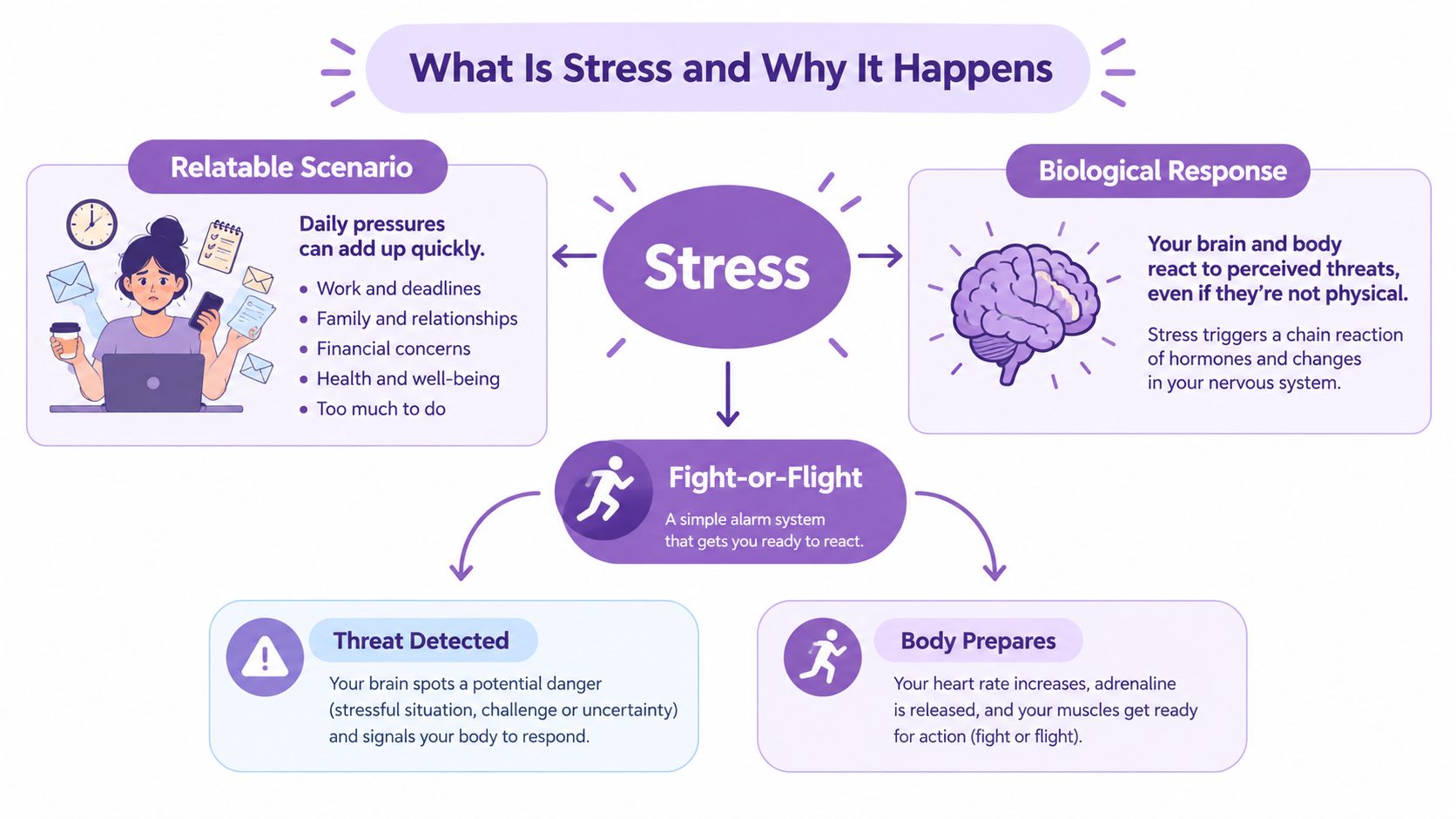
Stress is your body's built-in alert system. It's useful when you need to react quickly, like hitting the brakes in traffic or getting through a tough conversation, but it can become draining when the alarm stays on too long. A simple way to think about it is as a smoke detector, one that protects you from real danger, but can also get too sensitive and go off when the toast burns.
The body's alarm system
When your brain senses a threat, it signals your body to prepare. Your heart rate can rise, your muscles tense, and your attention narrows so you can act fast. That response is often called fight-or-flight, and it's meant to help you handle pressure, not live in it.
The problem is that modern stressors aren't always one-time threats. Work deadlines, family demands, financial strain, and constant notifications can keep the alarm active longer than your body likes. For a clear overview of how researchers describe this pattern over time, the science of stress for mental wellness is a useful background resource.
Acute stress and chronic stress
Short-term stress can be helpful. It can sharpen your focus before a presentation or get you moving when something needs attention. Long-term stress is different, because your system never fully gets to stand down.
That distinction matters because stress isn't a niche complaint. A peer-reviewed review summarizing Gallup-based research found that about 26% of people reported emotional stress in 2007, and that share rose steadily to roughly 38% by 2020, based on 2,450,043 valid observations worldwide, with the 2020 peak aligning with broad pandemic-era disruption (PMC review of worldwide emotional stress). A related overview on the science of stress and the body's response is also reflected in this explanation of stress physiology and mind-body impact.
Practical rule: if your body keeps acting like there's an emergency when there isn't one, the issue isn't weakness. It's a nervous system that needs support.
Recognizing the Common Causes and Symptoms of Stress
Stress usually becomes easier to manage once you can name what's feeding it. The trigger is often obvious in hindsight, but in the moment it can feel like everything is just “too much.” A 2025 international study found that 35.1% of respondents reported experiencing stress, with women at 36.1% versus men at 33.6%, and stress was more common in high-income countries at 36% than in low- and middle-income countries (PubMed study on global stress prevalence).
Common stressors you can actually spot
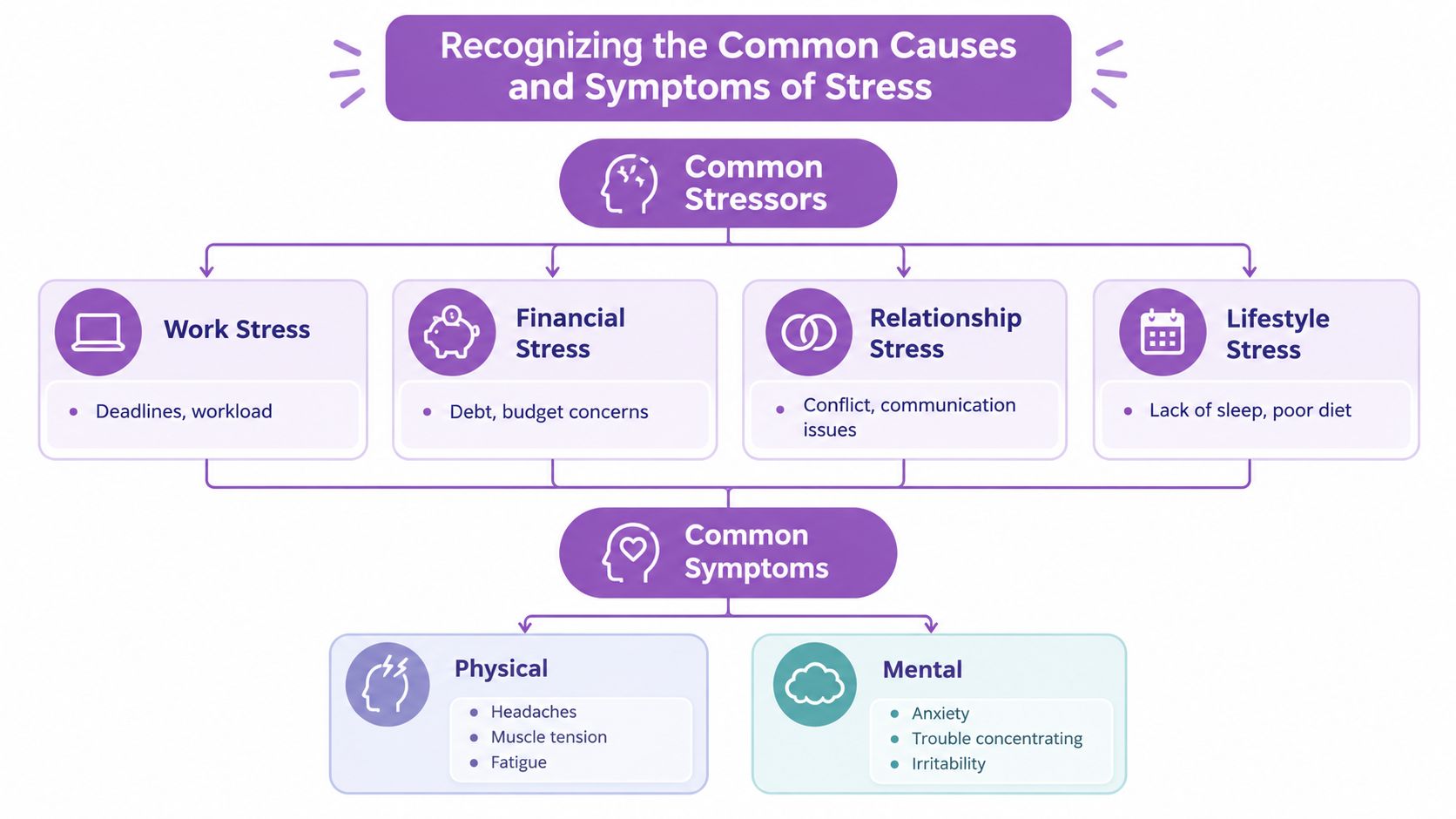
Most stressors fall into a few familiar buckets:
- Work stress, deadlines, too many meetings, unclear expectations, or feeling like you can't disconnect.
- Financial stress, bills, debt, budget pressure, or uncertainty about the future.
- Relationship stress, conflict, poor communication, or feeling misunderstood.
- Lifestyle stress, poor sleep, irregular meals, and a schedule that never gives you a real pause.
One practical example is a busy morning that starts with a rushed commute, jumps into back-to-back calls, and ends with no break for lunch. Nothing dramatic happened, but the body still registers pressure.
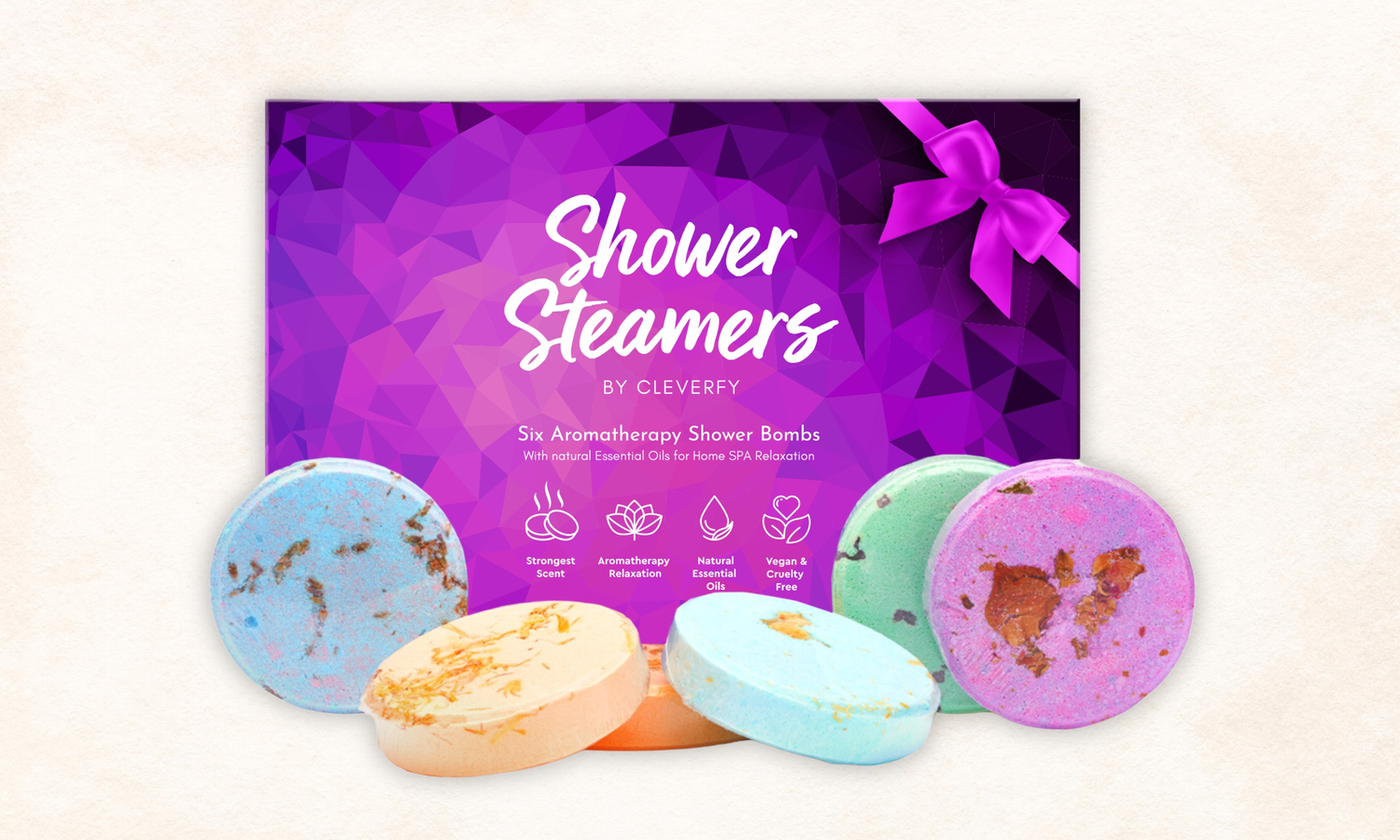
A shower routine can sometimes help create a buffer between those demands and the next task. For people who like a simple, sensory reset, Cleverfy Eucalyptus and Menthol Megapack of 18 Shower Steamers is one example of a shower-based aromatherapy product that uses menthol and eucalyptus scents in a tablet format.
Symptoms that hide in plain sight
Stress doesn't only feel emotional. It can show up as a tight jaw, headaches, low energy, irritability, restlessness, procrastination, or pulling away from other people. Sometimes the first clue is behavioral, like snapping at a coworker, doom-scrolling late at night, or avoiding a task that used to feel manageable.
A useful check-in: if your body, mood, and habits all seem a little “off” at the same time, stress may be the common thread.
The key is to connect symptoms to patterns. If your stress spikes after certain meetings, after checking your bank balance, or before bed, you've already found a starting point for change.
Foundational Lifestyle Habits for Stress Resilience
Quick fixes help in the moment, but resilience comes from the habits that support your nervous system every day. Sleep, food, and movement are the basics, and they work like the foundation under a house. If the foundation is shaky, even small pressures feel bigger than they are.

Sleep first
Poor sleep and stress tend to feed each other. A systematic review and meta-analysis found that stress management interventions, often paired with relaxation, sleep hygiene, and exercise, led to a medium improvement in sleep quality (PubMed meta-analysis on sleep and self-regulation). That's a strong reminder that stress management isn't separate from sleep, it often sits right inside it.
A simple way to start is to protect the last 30 minutes before bed. Dim lights, lower stimulation, and choose one repeatable wind-down action, like stretching, journaling, or a warm shower. Your brain likes signals, and a consistent routine tells it the day is over.
Food and movement as steadying tools
Think of meals as fuel for emotional steadiness, not just physical energy. Skipping meals or running on sugar and caffeine can make you feel more jagged, especially when pressure is already high. A steady eating rhythm is often more helpful than chasing a perfect diet.
Movement doesn't need a gym membership to count. Walking around the block, gentle yoga, dancing in your kitchen, or stretching on the floor all tell the body that it's safe to release some tension. The point isn't performance, it's letting your system discharge what it's been holding.
Build a routine you can repeat
The best habits are the ones you'll do on tired days. Pick one sleep habit, one movement habit, and one food habit, then make them small enough to survive a busy week. That's how a lifestyle becomes a buffer instead of another item on your to-do list.
Cognitive Strategies to Change Your Relationship with Stress
Some stressors can't be removed, but your interpretation of them can change. That doesn't mean “think positive” in a shallow way. It means noticing the story your mind is telling and checking whether that story is helping or hurting you.
A 2024 meta-analysis found that mindfulness and meditation-based interventions showed some of the largest measurable changes in cortisol, suggesting these practices can shift the body's stress-axis output, not just how stress feels subjectively (PubMed meta-analysis on cortisol and stress interventions).
A simple reframing exercise
When a stressful thought shows up, try this three-step reset:
- Name the thought. Say, “I'm having the thought that I'm behind.”
- Test it. Ask, “What's the evidence, and what's one more balanced version?”
- Replace it with something usable. For example, “I have a lot to do, but I can start with the next clear step.”
That shift matters because stress often grows when the brain turns one problem into a story about your whole capacity as a person.
A five-minute mindfulness practice
Use this when your mind feels noisy:
- Sit down and plant both feet on the floor.
- Breathe in through your nose for a count of four, then out for a count of six.
- Notice three things you can feel, like your hands, your chair, or the air on your face.
- When your thoughts wander, bring them back without arguing with them.
- End by asking, “What do I need in the next ten minutes?”
Good mindfulness is not emptying your mind. It's practicing a calm return.
This works best when you treat it like repetition, not a test. You're teaching your brain to step out of automatic panic and back into the present.
Quick Interventions for In-the-Moment Relief
Sometimes you don't need a long plan, you need relief right now. Maybe your chest feels tight before a meeting, or your mind starts racing after a difficult message. In those moments, the goal is not to solve everything, it's to lower the volume enough to think clearly.

Fast tools that work in the real world
Try this short list as a first-aid kit:
- Breathing reset. Inhale slowly, exhale longer than you inhale, and repeat for a few rounds.
- 5-4-3-2-1 grounding. Name five things you see, four you feel, three you hear, two you smell, and one you taste.
- Temperature shift. Wash your hands, sip cold water, or step outside for fresh air.
- Muscle release. Tighten your shoulders for a few seconds, then let them drop.
- Sensory cue. Use a smell, sound, or texture that tells your body, “I'm safe enough to slow down.”
Aromatherapy fits naturally into this category because scent is a fast sensory signal. If you want a plain-language explanation of how scent can support calm routines, this overview of aromatherapy and stress relief is a helpful read.
Make the shower work for you
A shower can become a reliable reset because it already marks a transition in the day. Warm water, steam, and scent give your brain multiple cues that it's time to soften, not brace. That's why shower-based rituals can feel so effective when you need a low-effort pause.
The key is to pick one sensory action and repeat it often enough that your body recognizes it. Scent, breath, and water can become a very small routine that feels surprisingly grounding.
Building Your Personalized Stress Management Routine
A good routine isn't rigid. It's a menu. On a calm day, you might do more. On a hard day, you might do the minimum and still count it as success.
Morning, midday, and evening options
Start with one anchor in each part of the day:
- Morning: hydrate, take a few slow breaths, and set one intention for the day.
- Midday: stand up, step outside, or do a five-minute reset before stress piles up.
- Evening: reduce screen time, stretch gently, and choose a cue that tells your brain to power down.
If you prefer supplements as part of your broader wellness research, stress relief supplements is a topic you can compare with lifestyle and sensory habits before deciding what fits your routine.
The most useful routine is the one that matches your actual life. If you work long shifts, your reset might need to happen in the car or during a shower. If you have children, your calm time may need to be short, private, and realistic.
Build around your stress pattern
Match the tool to the problem. If your stress shows up as racing thoughts, use breathing or reframing. If it shows up as body tension, use movement or a warm shower. If it shows up as sleep trouble, keep the evening routine simple and repeatable.
You can also think in layers. One layer is a daily lifestyle habit. Another is a quick in-the-moment tool. A third is a support plan for harder weeks, when you need extra rest, fewer commitments, or more help from other people.
Your routine should reduce friction, not add it. If it feels too complicated, it probably won't survive a stressful week.
For a simple example of a shower-based self-care habit, the self-care routine guide can help you turn an ordinary shower into a more intentional pause.
Your Path Forward and When to Seek Professional Help
Stress management works best when you treat it as an ongoing practice. Some weeks you'll handle pressure well, and other weeks you'll feel stretched thin. That doesn't mean you failed, it means you're human.
A 2026 employee survey found that 42% of workers identified constant availability demands as their biggest source of workplace stress, which is a reminder that some stressors are systemic, not personal (Business Standard summary of the employee survey). When the source of stress is built into the environment, self-care helps, but it may not be enough on its own.
Signs it's time to get extra support
Consider talking to a doctor or mental health professional if:
- stress is interfering with work, school, or relationships,
- you feel persistently down, numb, or hopeless,
- you're relying more on alcohol, nicotine, or other unhealthy coping habits,
- sleep problems are becoming routine,
- your body feels tense or exhausted for long stretches,
- you've tried several strategies and still feel stuck.
Asking for help isn't a last resort. It's a smart next step when your own tools aren't getting you back to steady.
You deserve a routine that fits your life, not one more thing to perform. If you want a simple way to build calming moments into your day, explore Cleverfy Beauty for shower steamers and other aromatherapy-friendly options that can support a short, restorative reset.

