

How to Relax After Work with a Calm Evening Routine
You close the laptop, but your mind stays at work. Dinner needs making, messages are waiting, and the easiest option seems to be dropping onto the sofa with your phone. An hour later, you're still scrolling, your shoulders are tight, and sleep feels no closer.
Learning how to relax after work doesn't require an elaborate self-care schedule. It requires a dependable transition that separates work from the rest of your evening, lowers stimulation, and gives your body a clear route toward rest. The most useful routine is short enough for a weekday, sensory enough to interrupt rumination, and flexible enough for a small apartment, shared bathroom, remote-work setup, or late shift.
Table of Contents
- Why Relaxing After Work Feels Harder Than It Should
- Create a Quick Transition Ritual When You Get Home
- Mental Reset Techniques That Help You Switch Off
- Physical Ways to Release Tension Without a Long Workout
- Build a Calming Aromatherapy Shower Ritual to End the Day
- Make It Stick With Timing Tweaks and Troubleshooting
Why Relaxing After Work Feels Harder Than It Should
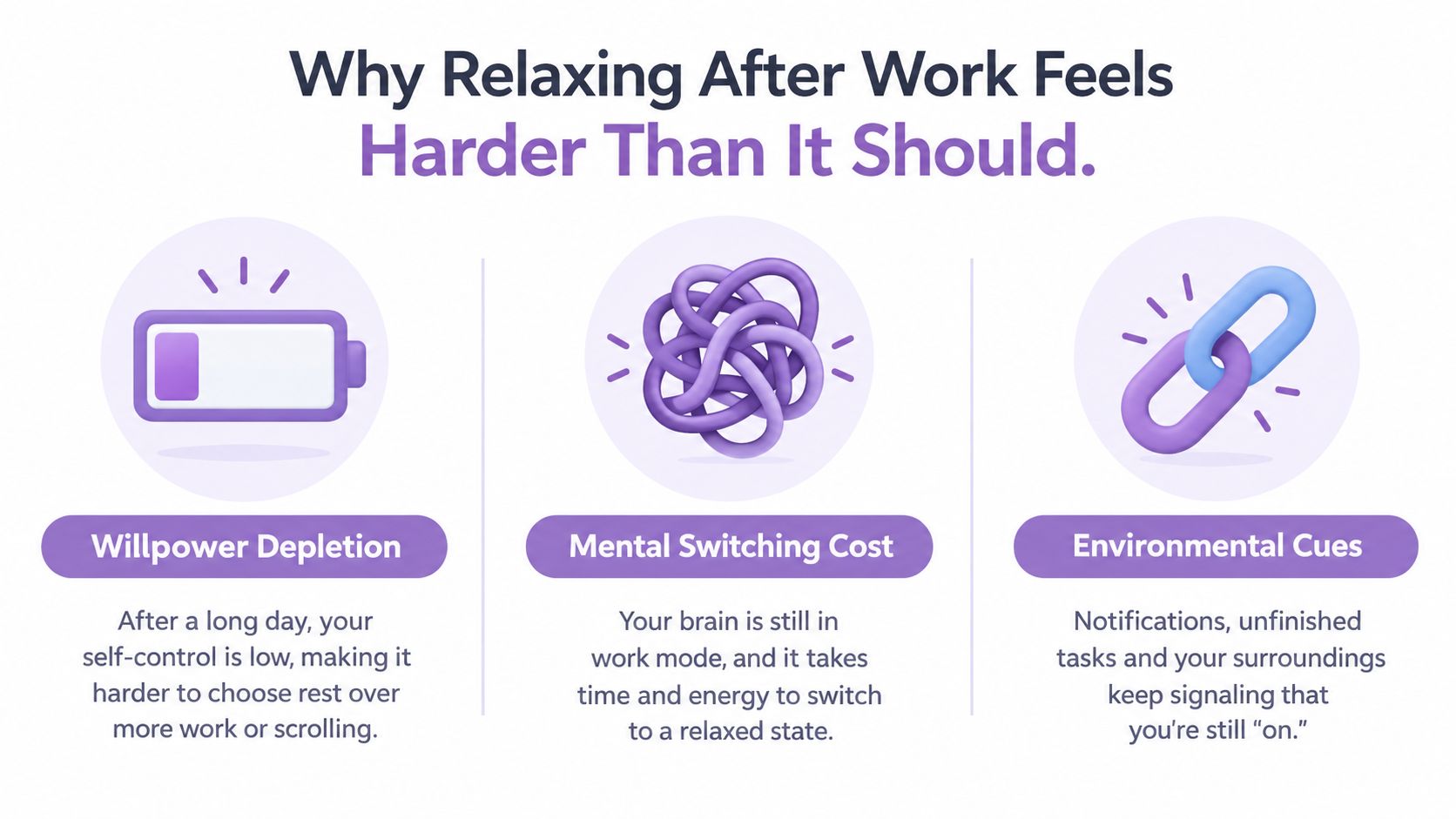
A demanding workday leaves you with less decision-making capacity at exactly the moment you need to choose what happens next. You might know that a walk, shower, or breathing exercise would help, yet still reach for the familiar screen because it asks almost nothing from you.
That response makes sense. Free time is already constrained. In the UK, adults spent an average of 3 hours and 44 minutes per day on entertainment, socialising, and other free-time activities in March 2023, down from 4 hours and 30 minutes in March 2020, according to the Office for National Statistics time-use data. The same data records 8 hours and 56 minutes spent on sleep and rest each day, so recovery, leisure, and sleep are competing for space inside one tightly packed day.
Distraction isn't the same as recovery
Watching television can feel restful because it occupies your attention. Scrolling can briefly pull you away from work, but it may also keep your brain in a state of constant input. Psychological detachment means mentally releasing work concerns during non-work time, rather than just replacing one stream of stimulation with another.
That distinction matters because work stress is widespread. An OSHA workplace-stress overview reports that 75% of adults have identified work as a significant source of stress, while 84% of employees said workplace conditions adversely affected their mental wellbeing. Ipsos also found that 46% of employees worldwide felt under constant strain at work during the previous six months, as summarized in the supplied workplace-stress evidence. The need for an after-work off-switch isn't niche, and it shouldn't depend on having an empty evening.
Practical rule: Don't ask yourself to relax on command. Give your brain the same small signals every evening until the transition becomes familiar.
A workable routine follows four movements: arrive, reset your attention, release physical tension, and finish with a shower-based sensory anchor. You won't need to complete every part on every night. The value comes from making the sequence predictable enough that even a difficult day has somewhere to go.
Create a Quick Transition Ritual When You Get Home
The first ten minutes set the direction of the evening. If you open email, answer work messages, or sit down with your phone immediately, you're allowing work cues to remain in charge. A brief arrival ritual creates a boundary before chores, entertainment, or family demands take over.
Use the same arrival sequence
Keep the order simple:
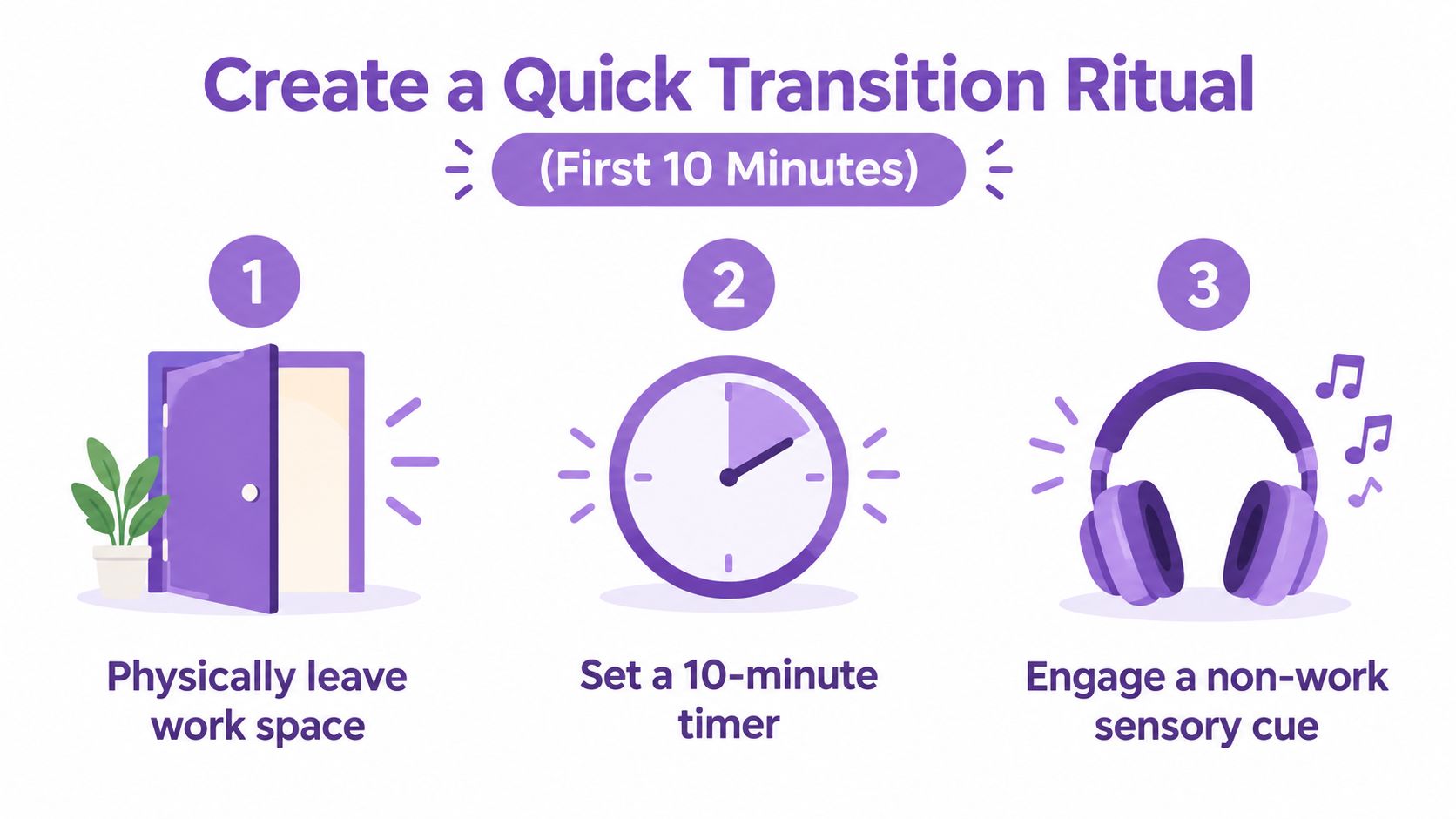
- Leave the work zone. Shut the laptop, place work materials out of sight, and physically move to a doorway, hallway, or another room. If you work remotely, the movement matters because your home otherwise contains both your office and your recovery space.
- Change your physical state. Remove work clothes, wash your hands and face, or put on clothes you associate with evenings. This isn't about looking different. It's a practical cue that tells you the workday has ended.
- Set a short timer. Use a ten-minute timer to prevent the ritual from expanding into another task. During that pause, put your bag in its usual place, drink water, and avoid opening a feed that can keep you activated.
- Add one non-work sensory cue. Choose low lighting, quiet music, a warm drink, or the scent of a shower steamer. The cue should be repeatable and pleasant, not another item to manage.
A consistent anchor spot helps. In a small apartment, that might be the hook beside the door or one corner of the kitchen counter. In a shared home, tell housemates or family that you need a short arrival pause, then make it visible by using headphones, closing a door, or placing your phone face down.
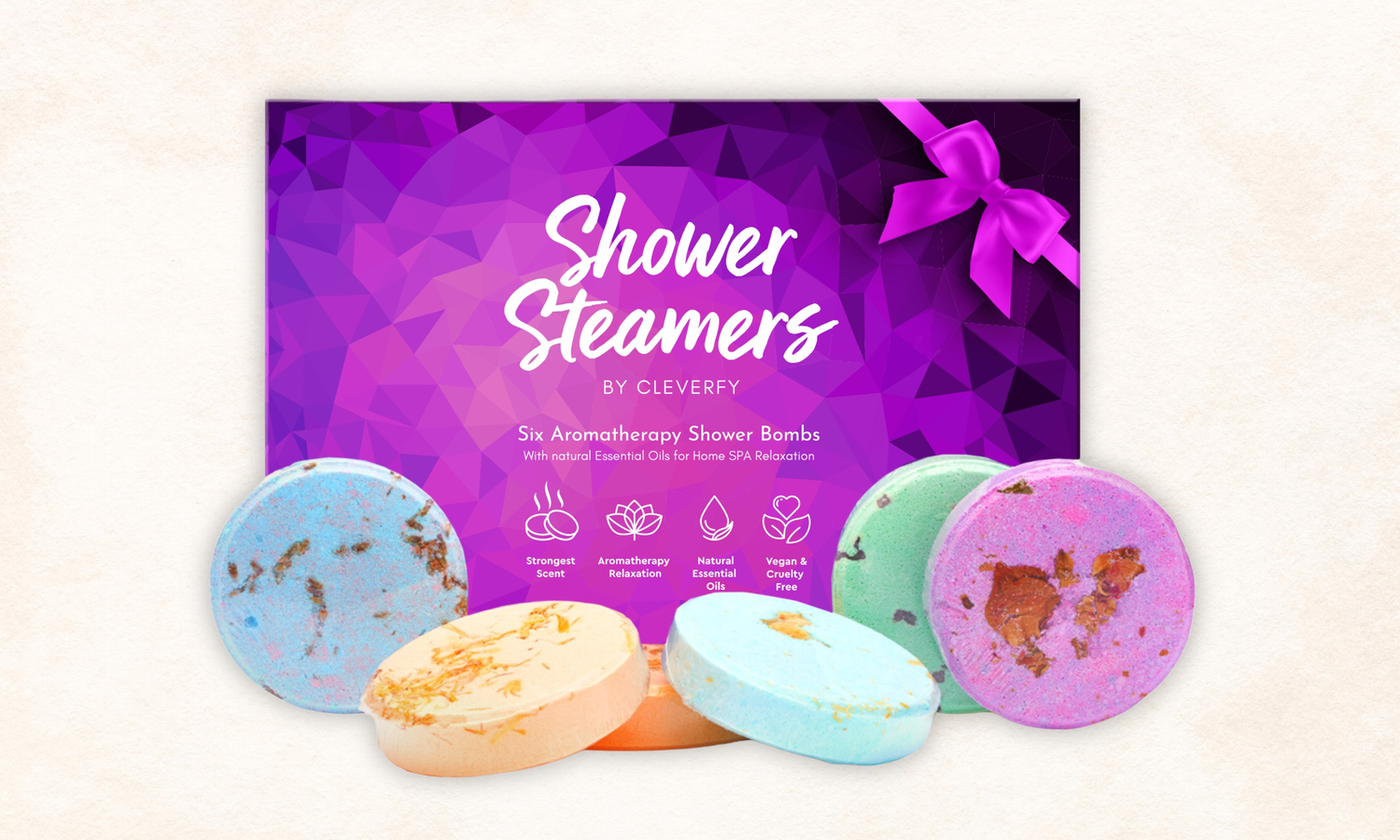
For people who want to pair the routine with a recovery-focused shower, the Cleverfy Purple Gift Set of 6 Shower Steamers includes lavender, watermelon and vanilla, grapefruit and coconut, menthol and eucalyptus, orange, and peppermint scents. The product snapshot describes the tablets as made with essential oils and vegan and cruelty-free, with one tablet placed in the shower and activated by water.
The point isn't to create a perfect homecoming. It's to stop work from flowing directly into the next activity. If you're interested in broader recovery principles for managing physical fatigue, you can also recover faster with MEDISTIK, then keep your evening ritual focused on a calm transition rather than another performance goal.
Here's a visual demonstration of how a short sensory reset can fit into an ordinary routine:
Mental Reset Techniques That Help You Switch Off
Once you've left the work area, give your attention a small task that isn't work. The goal isn't to empty your mind. It's to reduce the grip of the same thought loop, especially the unfinished conversation, unanswered message, or tomorrow's deadline replaying in the background.
Choose breathing when your body feels wired
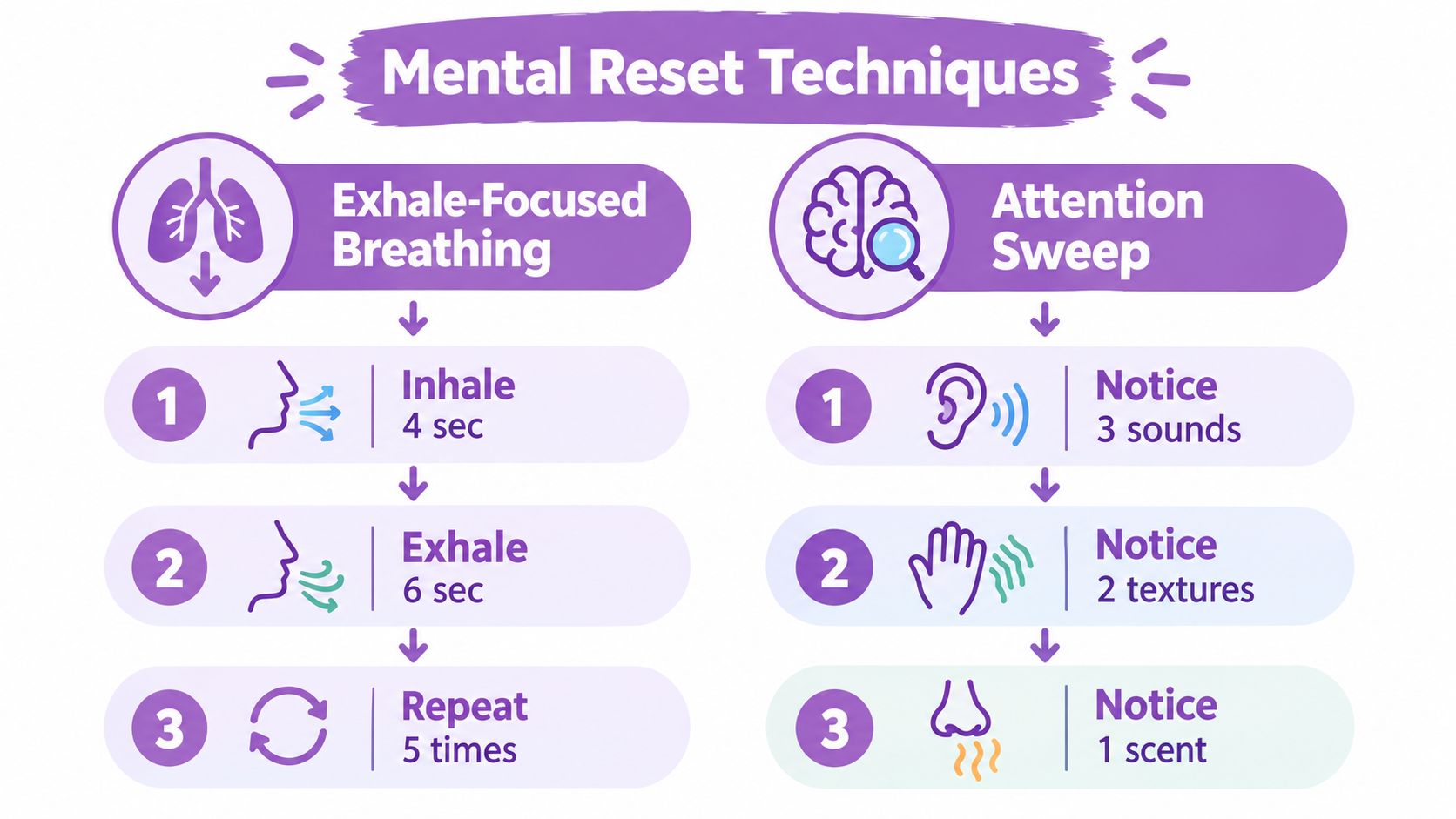
Sit on a sofa or kitchen chair with both feet supported. Keep your shoulders loose and your jaw unclenched. Try exhale-focused cyclic sighing for about five minutes:
- Inhale gently through your nose.
- Take a second, smaller inhale before breathing out.
- Exhale slowly and fully, letting the breath leave without forcing it.
- Repeat the cycle for roughly five minutes.
A randomized controlled study found that a five-minute daily session of exhale-focused cyclic sighing outperformed mindfulness meditation for improving mood and reducing respiratory rate, while box breathing and other brief patterns were also tested, according to the study record on Europe PMC. The operational lesson is straightforward. If you feel restless or physically keyed up, give the exhale more attention than the inhale.
If the double inhale feels awkward, use a gentler alternative: inhale for four seconds and exhale for six seconds. A separate 12-week randomized trial involving 100 healthy adults found that slow breathing significantly reduced psychological stress, with PROMIS Anxiety improving by about 4.85 points from baseline, although the difference between breathing ratios was small and not statistically significant, as reported in the same evidence summary. Consistency matters more than hunting for a perfect ratio.
Use an attention sweep when your mind feels foggy
Breathing can feel frustrating when you're mentally scattered. Instead, look outward and notice:
- Three sounds, such as a refrigerator, traffic, or a family member moving nearby.
- Two textures, such as the fabric under your hand and the floor beneath your feet.
- One scent, perhaps soap, tea, or the air after a shower.
Name each sensation, then return to the room. This exercise gives your attention a defined landing place without requiring an app, a timer, or a completely quiet home. You can find more practical ideas for pairing scent and simple sensory cues in these daily relaxation tips.
The evidence isn't a reason to become rigid. A 2024 systematic review of 19 included studies found significant anxiety improvement in 12 and significant stress improvement in 9, with no adverse events reported, but the evidence base still lacks large randomized trials. Individual responses also vary, so judge the practice by a simple before-and-after check: rate your tension from 1 to 10 before starting, then notice whether your breathing, jaw, shoulders, or thought speed has changed afterward.
Don't measure success by whether your mind becomes blank. Measure it by whether you can choose your next evening action with less friction.
Physical Ways to Release Tension Without a Long Workout
Your body may still be holding the shape of the workday. A clenched jaw, raised shoulders, tight hands, or compressed hips can keep you feeling alert even after your thoughts begin to settle. Passive rest sometimes helps, but deliberate release gives your attention something physical to follow.
Try progressive muscle relaxation
Progressive muscle relaxation, or PMR, uses a simple contrast. You gently tense one muscle group, notice the sensation, then release it and observe the difference. A workplace study found that 10 to 15 minutes per session was enough to reduce self-perceived stress among employees, according to the published workplace recovery research.
Use a chair, sofa, or floor. Keep the effort moderate rather than forceful, and stop if you feel pain.
- Tense your feet and lower legs briefly, then release.
- Tighten your thighs and hips, then let them soften.
- Make gentle fists, draw your shoulders upward, and release both together.
- Press your lips together lightly, notice your jaw, and allow it to loosen.
- Finish with one slow scan from forehead to feet, looking for areas you're still gripping.
The sequence should feel intentional, not rushed. The common mistake is treating PMR as background activity while watching television or answering messages. A structured session works better as a transition because you can feel the change between effort and release.
Pick a lighter substitute when PMR isn't appealing
You don't have to force a formal exercise on a night when it will create resistance. A slow walk around the block, gentle shoulder circles, calf stretches while dinner cooks, or a warm shower can provide a lower-effort route into the same evening boundary.
Use the smallest dose that you can repeat. A brief, deliberate release is more useful than an ambitious routine you avoid after demanding days.
The Recovery Experience Questionnaire literature treats relaxation as a distinct recovery experience alongside psychological detachment, mastery, and control. That framing helps explain why lying down with a phone can feel different from deliberately releasing tension. If persistent tightness or restricted movement is part of your routine, learning about Aspen Falls Wellness myofascial care may help you understand options beyond an at-home wind-down.
Keep your start and stop signals obvious. Begin when you put on evening clothes, and finish when your hands, shoulders, and jaw feel less engaged. You can do the whole sequence before dinner, after dinner, or while waiting for the shower to warm.
Build a Calming Aromatherapy Shower Ritual to End the Day
A shower works well as an evening anchor because it combines a physical boundary, warmth, sound, and scent in one ordinary activity. You don't need a bathtub or a large bathroom. You need a few minutes when you're no longer solving work problems.
Set up the shower for a slower pace
Place a shower steamer on the floor where it receives occasional water rather than sitting directly under the strongest stream. That position lets the tablet dissolve gradually and release its aroma into the steam instead of disappearing immediately down the drain. Follow the specific product instructions, especially if the bathroom is compact or ventilation is limited.
Choose comfortably warm water, not water so hot that you feel dizzy or irritated. Keep the lights softer if possible, leave your phone outside the bathroom, and decide before you step in that this is a transition rather than a second productivity block.
Match the scent to the job
Scent choice can make the ritual feel purposeful:
- Lavender suits a quieter, sleep-oriented mood.
- Menthol and eucalyptus can feel clearer and more refreshing after a congested or mentally heavy day.
- Peppermint or citrus profiles may feel brighter when fatigue is the main problem.
- Sweet or fruit-based scents can make the shower feel comforting rather than clinical.
Treat these as personal associations, not medical promises. Essential oils can irritate some people, and shower steamers aren't designed to be swallowed or applied directly to the skin unless the label specifically says so. Keep the bathroom ventilated and discontinue use if the aroma causes discomfort.
For more guidance on easy aromatherapy practices, start with a scent you already enjoy rather than buying several strong fragrances at once. A small set can also help you compare moods without committing to one aroma every evening.
Give the ritual a clear beginning and end
Aim for a shower of roughly 10 to 15 minutes, then finish with the same closing action each time. Dry off, put on sleep-friendly clothes, lower the lights, or make a caffeine-free drink. This final cue prevents the shower from becoming just another interruption before you return to messages.
If you're unsure where to position a tablet or how much water to use, follow this practical guide on how to use shower steamers. The ritual works because it is repeatable, not because every shower feels profound.
Make It Stick With Timing Tweaks and Troubleshooting
A routine survives when it matches the evening you have. Don't design a long sequence for your ideal day, then abandon it when dinner runs late or a child needs help with homework. Build three versions instead.
| Evening available | Practical sequence |
|---|---|
| 20 minutes | Arrival cue, five-minute breathing reset, quick shower with one closing action |
| 40 minutes | Arrival ritual, PMR or attention sweep, unhurried shower, low-light transition afterward |
| 60 minutes | Full arrival boundary, mental reset, physical release, shower, quiet screen-free time before bed |
These aren't rules. They're menus. On a late shift, skip the formal breathing and use changing clothes plus the shower as your primary boundary. If the bathroom is shared, keep a towel, clean clothes, and shower tablet ready so your turn requires no searching. If the home is noisy, use headphones during the attention sweep, or choose PMR because it doesn't require silence.
Screen use deserves its own practical limit, especially in bed. Evidence summarized by the BBC reports that each additional hour of screen time in bed was associated with a 63% higher insomnia risk and 24 minutes less sleep, so move entertainment earlier in the evening and keep the bed reserved for sleep whenever possible. The goal isn't a moral victory over your phone. It's protecting the final transition after your shower.
Motivation will fluctuate. Use a weekly check-in rather than judging yourself nightly:
- Which cue happened most naturally?
- Which step felt like effort with little return?
- Did the shower help you stop thinking about work?
- What can you remove on busy evenings?
Keep the shower as the anchor, then attach only one optional practice to it. The self-care routine guidance can offer additional ideas, but you don't need a larger routine to get started. You need a repeatable handoff from work to home.
Start tonight by placing your phone outside the bathroom, setting out clean clothes, and choosing one shower scent. When you finish work, change, pause, and let the shower mark the end of the day rather than waiting for exhaustion to do it for you.
Cleverfy Beauty offers aromatherapy shower steamer tablets made with essential oils, including gift-ready six-tablet sets and larger assortments for regular routines. Visit Cleverfy Beauty to explore shower-first options that can make your after-work transition simple, sensory, and easy to repeat.

